


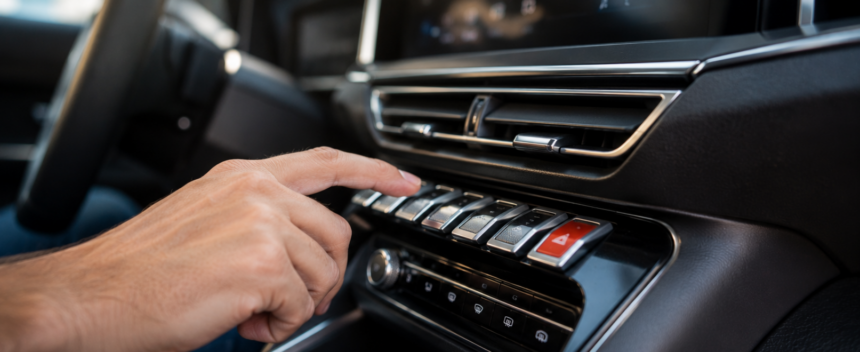
The return of car interior’s physical controls is the automotive story nobody predicted — and the one every driver quietly hopes for. Three separate announcements recently confirm that the pendulum has officially swung back. Chevrolet‘s Corvette ZR1X won a 2026 Wards 10 Best Interiors and UX Award specifically because it found the right balance between buttons and touchscreens. Audi‘s brand-new Q9 flagship SUV previewed an interior that celebrates a twisting volume knob like it is a design choice worth press releasing about. And Lexus retired a touchpad controller so universally disliked that owners still write angry posts about it a decade later. These are three different cars from three different brands. They share one insight: drivers never actually wanted to tap through five menu layers to adjust the fan speed. The industry is finally listening.
What’s Happening & Why It Matters
The Corvette Wins By Getting Back to Basics
The 2026 Corvette ZR1X won a spot on WardsAuto‘s 2026 10 Best Interiors and UX list — an award that evaluated 28 vehicles across aesthetics, comfort, materials, connectivity, displays, controls, and value. That last word matters. A $35,000 Nissan Sentra and a $200,000+ Corvette both made the list. The judges are not measuring price. They are measuring whether the car actually works for the person inside it.
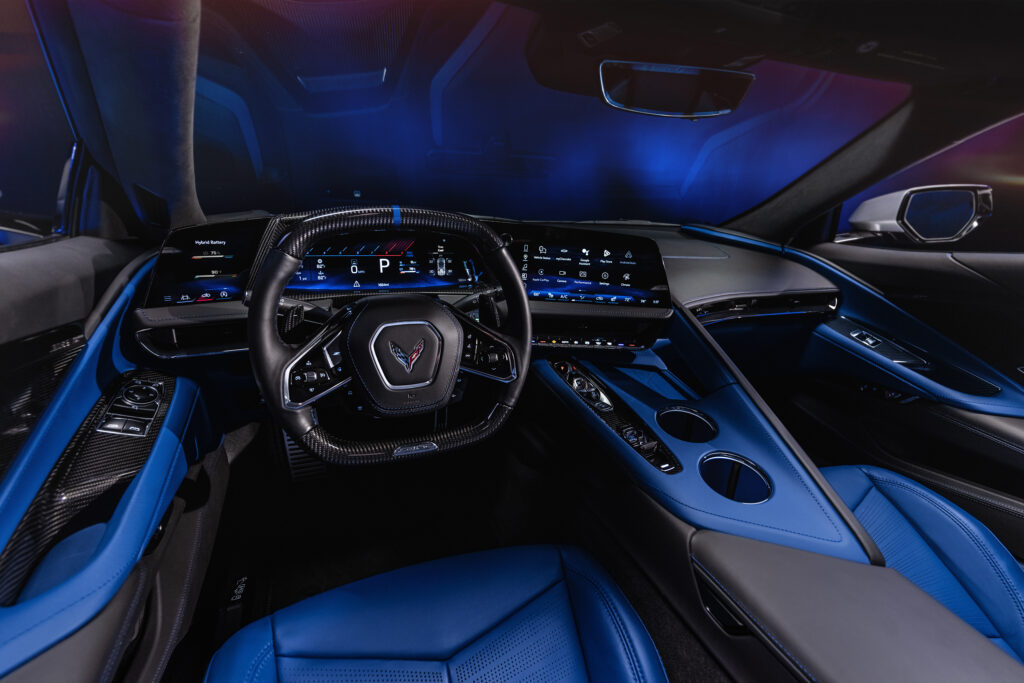
The Corvette earned its award by solving a very specific problem. The C8 generation launched with what owners called the “Great Wall of Buttons” — a vertical strip of physical controls forming a spine between the driver and passenger that was divisive from day one. Chevrolet’s 2026 redesign killed it. Climate controls moved to a clean row of physical buttons beneath the air vent. Temperature, fan, and direction — all right there, tactile, accessible without looking. Secondary functions like heated and ventilated seats moved into the touchscreen where they belong. The volume knob stayed, grew bigger, and gained a lit base for visibility.
Three Screens, One Volume Knob, All Better
The Corvette’s new screen setup grew substantially. A 12.7-inch centre touchscreen, a 14-inch driver information centre, and an all-new 6.6-inch auxiliary screen now handle the digital layer. The whole system runs on Android with full Google integration. Voice control handles navigation, temperature, music, messages, and more. An enlarged Performance Traction Management interface sits behind physical buttons. None of that is revolutionary. What makes it work is the hierarchy. Digital screens handle complex tasks. Physical controls handle the quick, frequently repeated actions — the ones you perform while keeping your eyes on the road.
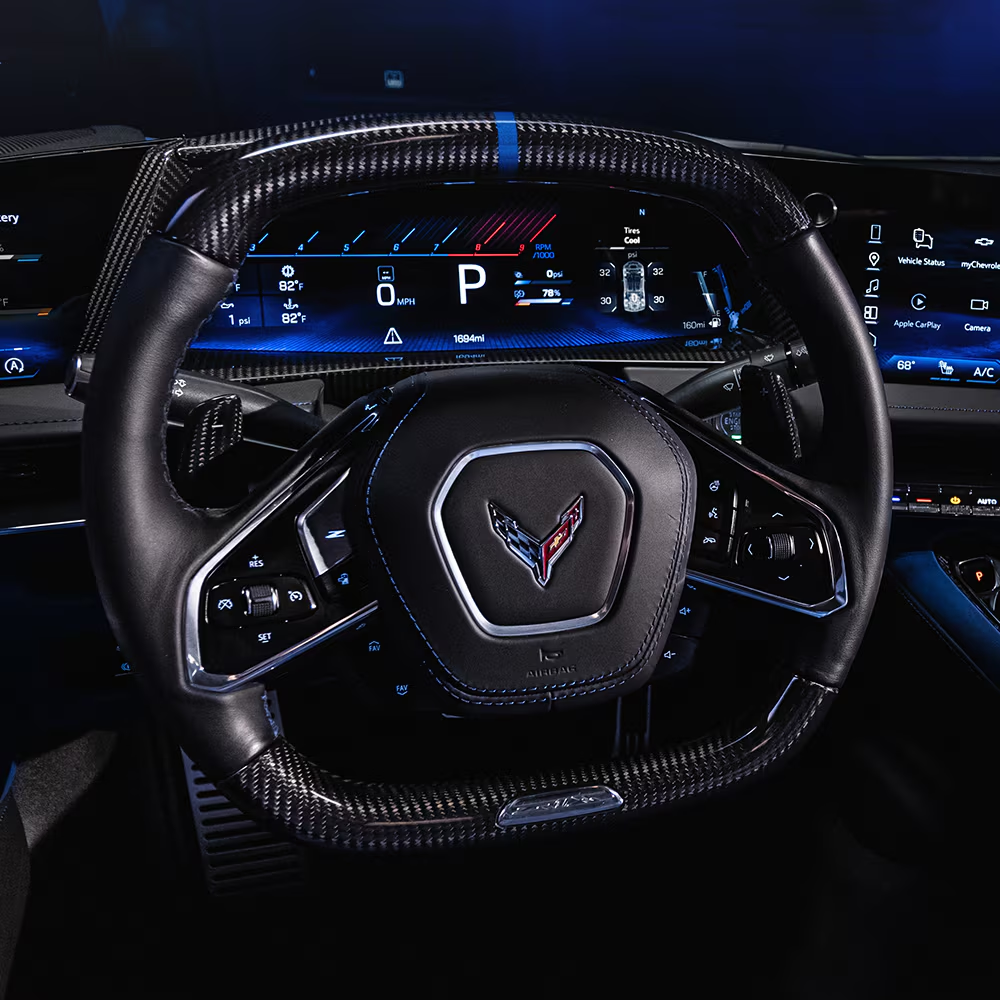
Corvette Performance Driving Product Manager Dusty Smith described the philosophy plainly. “There’s an intentional balance of physical and virtual controls. For example, the head-up display controls are now virtualized, which opens space for Performance Traction Management controls to be intuitive physical buttons.” That sentence is the entire UX lesson of the past decade condensed into one sentence. Intentional balance. Not a touchscreen for everything, not buttons for everything — but the right tool for each task.
The Audi Q9: Luxury Rediscovered a Volume Knob
Meanwhile, Audi previewed the interior of its first-ever full-size three-row flagship SUV — the Q9, set for a world premiere on 29 July 2026 with first US deliveries in Q4 2026. The interior borrows the wraparound dashboard concept from Audi’s 2021 Grandsphere concept. Curved displays pair with matte surfaces and ambient lighting that syncs with the music’s album art. The moving map view returns to the Virtual Cockpit instrument cluster — a feature Audi fans missed for years.
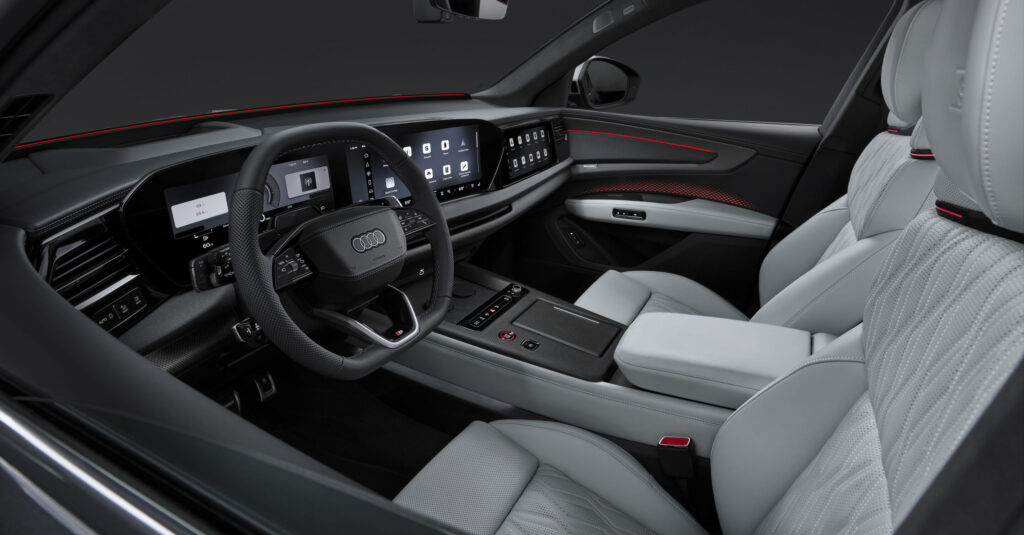
By contrast, the Q9 is not entirely a return to old ways. Audi designer Chris Koelle described the intent: “When you close the car… what we wanted to create is it’s calming you down in a way and giving this kind of luxury approach that everything is controlled, everything’s floating, everything is quiet and everything is in its place.” That calm is partly achieved through screens — a triple-display layout, including a passenger-facing screen, handles most functions. At the same time, Audi preserved specific physical controls with care. The centre console strip handles hazard lights cleanly. A proper twisting volume knob doubles as a track-skip control. Turn signals and wiper stalks use column-mounted controls that feel identical to conventional stalks. None of this is accidental. Every physical control that survived the Q9’s design review survived because the team decided it was worth keeping.
What the Q9 Sacrificed to the Screen Gods
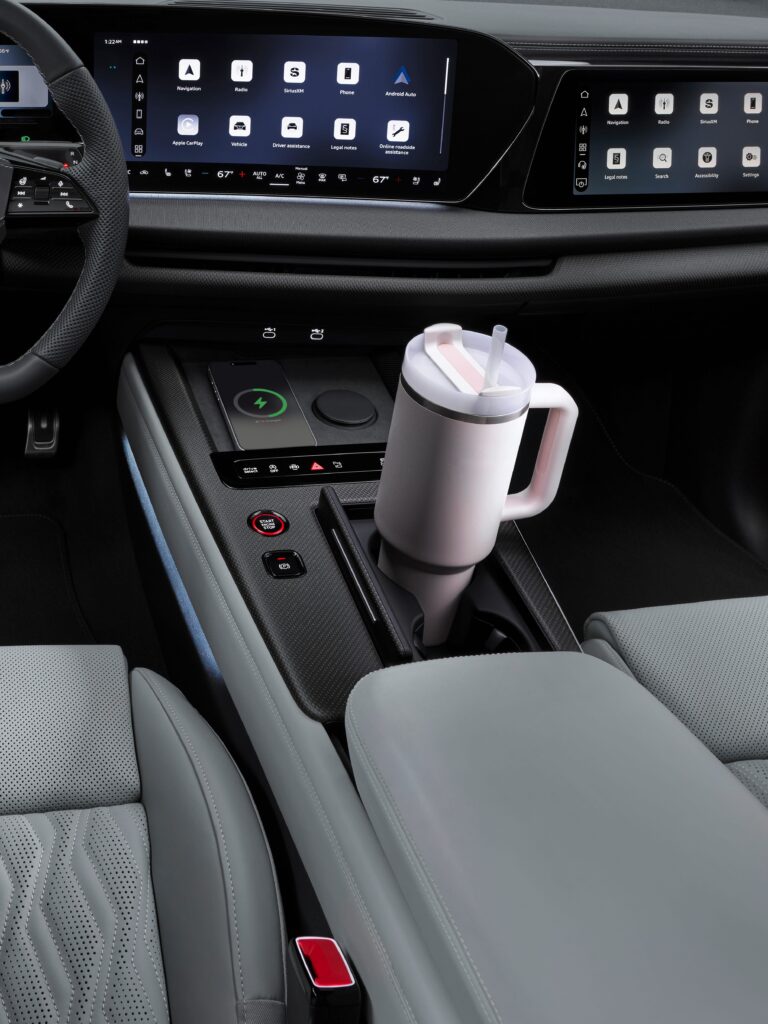
Not everything in the Q9 is a victory for the physical controls comeback. The Ars Technica preview noted one specific regression: aiming air from the vents now requires tapping through the screen rather than nudging a physical louvre. That is the exact kind of tactile task that should stay physical. Anyone who has tried to redirect a vent at highway speed while maintaining lane discipline knows why this matters. At the same time, every door on the Q9 opens and closes electrically — including the tailgate — which is genuine luxury engineering applied to physical interaction in a positive direction.
At approximately 205 inches (521 centimetres) in length, the Q9 is Audi‘s most direct challenge to the BMW X7 and Mercedes-Benz GLS. US deliveries begin in Q4 2026. The full exterior unveiling arrives on 29 July. Until then, the cabin — where Audi knows it needs to win the sales argument — is carrying the story.
Lexus Finally Fixed Its Infotainment
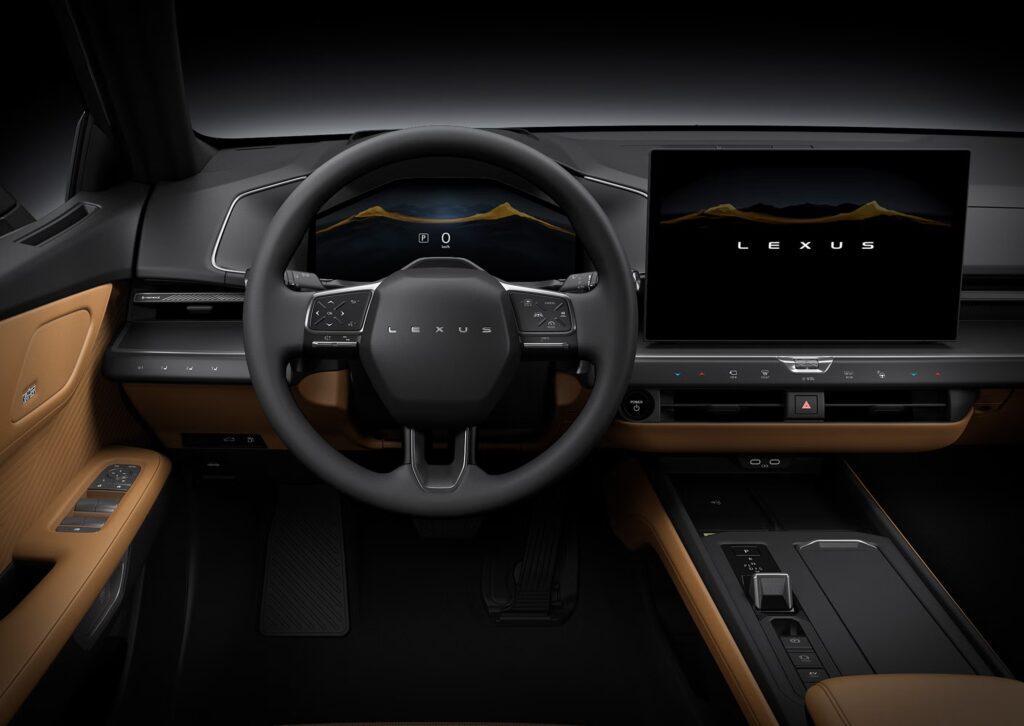
The third story this week is the most overdue. Lexus unveiled the Lexus Interface Multimedia Experience — a completely overhauled infotainment system debuting on the 2026 Lexus ES and rolling out across the brand’s lineup over the coming years. The announcement is significant because Lexus has operated under a specific reputational burden for roughly a decade: the Remote Touch Interface, a mouse-like touchpad controller that required users to navigate a screen cursor with their fingertip. It was as bad as it sounds. Every comparative review of the Lexus ES from 2015 to 2022 contained some version of the same sentence: great car, maddening infotainment.
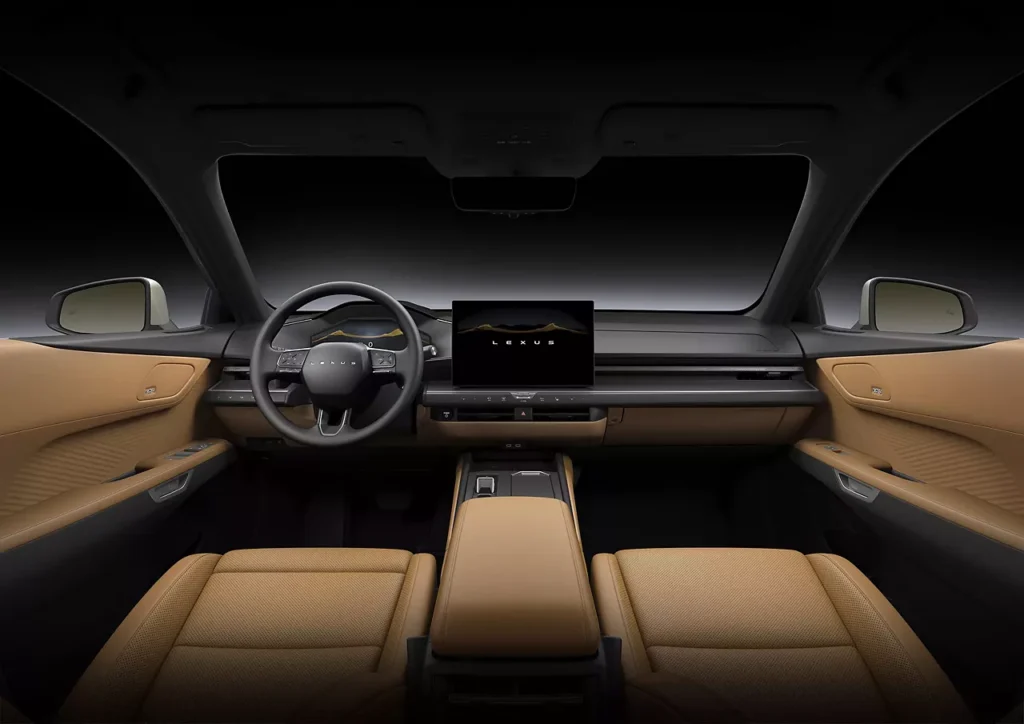
The new system runs on a 14-inch touchscreen with a customisable home screen and widget-based layout. A Quick Control Menu in the upper-right corner provides instant access to Bluetooth, screen brightness, ADAS settings, and frequently used features. The system includes AT&T 5G connectivity — a first for the Lexus lineup. The Lexus Voice Assistant is faster, handles more complex requests, and now lets owners choose between a male or female voice. Navigation pulls live traffic data. A built-in Drive Recorder dashcam stores up to 90 one-minute clips on a continuous loop.
Why This Lexus Launch Actually Matters
The Lexus announcement is not purely a software story. It represents a brand explicitly acknowledging that its previous system was a competitive disadvantage. Lexus Chief Engineer of Connected Experiences Brian Inouye stated: “We’ve made bold updates to Lexus Interface that deliver both function and performance, with every detail meticulously designed to delight, inform and entertain.” That choice — delight, inform, entertain — is the language of a brand that understands the infotainment experience has become as important to purchase decisions as leather quality or ride comfort.
Meanwhile, the WardsAuto 2026 results published this week signal that the industry has turned a corner. The judging noted that top-performing interiors this year share common themes: premium materials, intuitive physical controls for everyday tasks, simplified driver-assistance systems, and smarter screen use. The era of touchscreen maximalism — where carmakers competed to eliminate every physical button as a signifier of modernity — produced a decade of frustrated drivers, distracted navigation, and half-baked voice recognition. What replaced it is more considered. Screens for complex tasks. Buttons for the things you do blind. Voice for the rest.
TF Summary: What’s Next
The Audi Q9 makes its full global debut on 29 July 2026, with US deliveries starting in Q4. The 2026 Lexus ES with the new multimedia system is available now in fully electric form, with hybrid variants arriving in US showrooms in June. The Wards 10 Best Interiors results represent a snapshot of the 2026 model year — the full lineup of honourees includes the Genesis GV70, Mercedes-Benz CLA Electric, Porsche Macan, Subaru Outback, Toyota RAV4, and Volkswagen Tiguan alongside the Corvette ZR1X. Notably, the Wards judges also flagged a decline in the number of EVs considered this year, pointing to a segment recalibration as EV sales growth has moderated.
MY FORECAST: The car interior design physical controls comeback is not a trend. It is a permanent correction. The industry tried removing every button between 2017 and 2023, discovered that voice recognition could not replace tactile feedback for routine tasks, and has been quietly reversing course ever since. By 2028, the word “intuitive” in a car review will mean something that works with buttons and voice together — not a touchscreen that handles everything badly. BMW, which retreated from full touchscreen interiors earlier than most, will look like the smartest brand in retrospect. And somewhere, the engineers who fought to keep the volume knob are feeling very justified right now.