


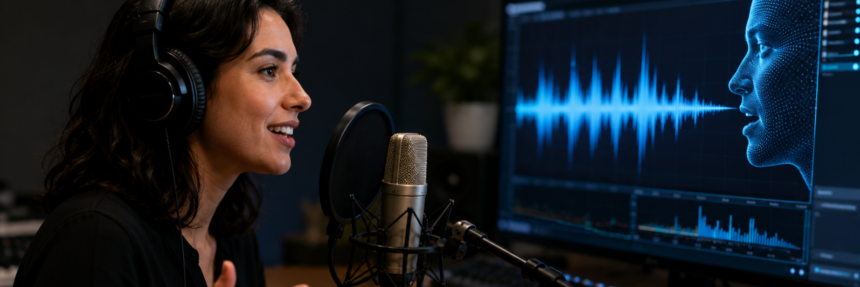
AI voice cloning technology is at the sharpest edge of the AI dual-use problem in 2026. The same tools that restore a person’s voice after cancer surgery allow scammers to make a terrified parent hear their child crying for help on the phone. ElevenLabs — launched a commercial AI voice of the late Stan Lee — is simultaneously the leading platform for consented celebrity voice licensing and the technology stack underlying an explosion in voice-based fraud. Americans lost $893 million to AI-related scams last year, according to the FBI — and voice cloning attacks were among the fastest-growing categories within that total. At the same time, the FTC has described medical voice preservation as one of the most genuinely promising applications of the same technology. One tool. Thousands of uses. The good ones and the harmful ones are identical from the outside.
What’s Happening & Why It Matters
The California Mum Who Lost Thousands
Deborah Del Mastro received a phone call that sounded exactly like her daughter in distress. The voice was urgent. It described a specific emergency. It needed money immediately. Del Mastro sent the money. Then she called her daughter’s real number. Her daughter answered from work. She was fine. Del Mastro was one of thousands of Americans scammed in 2026 by criminals who cloned a loved one’s voice using AI tools that require as little as a few seconds of real audio to generate a convincing replica.
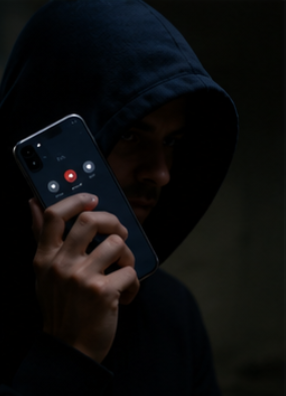
The mechanics are frighteningly accessible. Scammers collect audio clips from social media posts, voicemail greetings, TikTok videos, and public YouTube content. They feed those clips into an AI voice model. The model generates a synthetic voice that replicates the target’s tone, pitch, cadence, and regional accent. The entire process takes minutes. By contrast, the emotional impact on the person receiving the fake call is immediate and overwhelming.
“There Was No Time to Think”
Philadelphia attorney Gary Schildhorn described the psychological mechanism precisely. He received a call in his son’s voice saying the son had been in a car accident and landed in jail. “There was no time to think,” Schildhorn told CNN. “It was all, ‘I have to react to help my son. He’s in trouble.'” Schildhorn nearly sent $9,000 before a FaceTime call from his actual son — not in jail, not in a car accident — stopped him. The scam works because it hijacks the most powerful human instinct: protecting family. Criminals design that urgency deliberately. They want the target to act before thinking.
By contrast, Henry Ajder — one of the world’s leading researchers on synthetic media and AI disinformation — offered a pragmatic and darkly funny piece of advice. “Ultimately, if you suspect that something might not be right, it is much better to have your mum or your brother or your friend laugh at you for thinking that they’re a robot, than it is to potentially be running to an ATM.” That observation is both practical and revealing. The solution to one of the most sophisticated AI applications in 2026 is a phone call.
The Fraud Problem’s Scale
The FBI reports that Americans lost $893 million to AI-related scams in 2025. Voice cloning attacks form a significant portion of that total. The FTC has documented a sustained increase in “virtual kidnapping” scams — where a cloned voice simulates a family member in distress or danger. Senior citizens are disproportionately targeted. They are less likely to verify through social media channels. They are more likely to trust a voice they recognise. The scam’s effectiveness scales with how convincingly the voice is cloned — and that accuracy improves every time a new model generation is released.
Pindrop — a voice security company that works with banks and financial services — estimates that AI voice fraud attempts increased tenfold between 2023 and 2025. Their technology identifies synthetic voices by detecting subtle inconsistencies in audio waveforms that human hearing cannot perceive. At the same time, the AI models generating those voices are simultaneously improving — making detection progressively harder as both sides of the arms race advance.
How to Protect Yourself
The experts’ collective advice is practical and does not require technical expertise. First, establish a family code word — a phrase known only to a small group of people and not discoverable from any public source. Use it as a verbal password in any urgent financial situation. Second, always call back on a known number before sending money or taking action on an urgent request. Do not use a callback number provided by the caller. Third, pause before acting. Legitimate emergencies can withstand a 60-second verification delay. Scams depend on eliminating that pause.
Financial institutions are also implementing voice-based protections that customers should activate. TD Bank and Chase both offer voice verification programmes for account holders. At the same time, banks have begun moving away from voice-as-authentication precisely because of AI cloning risks — a direct parallel to Microsoft‘s simultaneous elimination of SMS two-factor authentication as TF covered in its Security Tech article. The weakest authentication methods are the ones that AI attacks most effectively.
The Legitimate Side: Restoring Voices, Preserving Lives
By contrast, AI voice cloning produces genuinely extraordinary results. ALS patients — who progressively lose the ability to speak as the disease attacks their motor neurons — can bank their voice before they lose it. A person diagnosed with ALS today can record a few hours of speech. AI models train on those recordings. Later, when the person can no longer produce natural speech, they communicate through an AI-generated version of their own voice. Their children hear their own parents. Their grandchildren know what they sound like.

The application is not theoretical. Project Revoice — a partnership between the ALS Association, Lyrebird AI, and Dessa — has been banking voices for ALS patients since 2019. The FTC has explicitly recognised the application as one of the technology’s most promising legitimate uses. The BBC has invested in voice banking programmes for accessibility — enabling people with motor neurone disease, throat cancer, and other conditions affecting speech to maintain their vocal identity. That is the same AI voice cloning technology that Del Mastro’s scammer used. The difference is consent, intent, and oversight.
The Healthcare Pipeline: Beyond ALS
The medical use cases extend further than ALS. Patients preparing for laryngectomy — surgical removal of the larynx — can bank their voices before the procedure. Stroke patients recovering language function can use their own banked voice during speech therapy. Children with degenerative neuromuscular conditions can preserve age-appropriate speech for use as they grow older. Speech pathologists have begun incorporating voice banking into treatment plans for any condition with a predictable trajectory of speech impact. McKinsey estimates that generative AI voice technologies could contribute up to $4.4 trillion in economic value across multiple sectors — healthcare being among the most significant.
At the same time, the media and entertainment industry’s adoption of voice cloning — from the **ElevenLabs Stan Lee partnership to Spotify’s AI narration and the audiobook market’s expansion — runs in parallel. Commercial applications generate the revenue that funds the R&D that makes the medical applications more accurate. The industries are economically linked even when their ethical contexts could not be more different.
Regulation: Catching Up Fast
The legal framework around AI voice cloning is developing rapidly — though not yet at the speed of the technology itself. The FCC ruled in 2024 that AI-generated voices in robocalls are illegal under the TCPA — the Telephone Consumer Protection Act. The FTC has issued consumer guidance on voice cloning fraud. Several US states — including California, Illinois, and New York — have enacted or are advancing right-of-publicity laws that extend personality rights to digital representations, including AI voices. The EU’s AI Act designates certain AI voice applications as high-risk. The EU’s new rules on deepfake pornography — which TF covered in its social media restrictions article — set legal precedent for AI-generated audio acting as a means of harassment and fraud.
Beyond legislation, a set of industry-level consent standards is emerging. ElevenLabs requires explicit permission from voice owners or their estates before a voice enters the Iconic Marketplace. Descript‘s Overdub feature requires users to record a consent statement before building a voice model of themselves. Respeecher — used in film and TV production — requires all voice work to be authorised by the original speaker or their estate. That consent architecture is the industry’s attempt to draw a line between legitimate use and abuse. It is not yet universal.
TF Summary: What’s Next

The FBI and FTC both expect AI voice cloning fraud to continue accelerating through 2026. Voice fraud losses among Americans are projected to exceed $1 billion annually before year’s end. Pindrop and Nuance are deploying AI detection upgrades in Q3 2026. Healthcare voice banking programmes are expanding capacity in partnership with ALS and MND charities. The FCC is evaluating extended rules that cover AI voice use in non-robocall contexts.
MY FORECAST: AI voice cloning technology will produce both its most remarkable healthcare application and its highest-profile fraud conviction within the same 12-month window. The medical applications are approaching clinical mainstream — voice banking is a standard care component for ALS diagnosis by 2027, supported by insurance reimbursement in at least three US states. At the same time, the first major criminal conviction specifically for AI voice cloning fraud — distinct from wire fraud generally — will be handed down in a federal court before the end of 2026. That conviction will establish a legal precedent that using AI to impersonate a specific individual’s voice for financial gain constitutes a distinct and prosecutable form of identity theft. It will not stop the scams. But it will give prosecutors a framework that dramatically simplifies future cases. The technology will not wait for the law. The law has to run faster than it ever has before.