


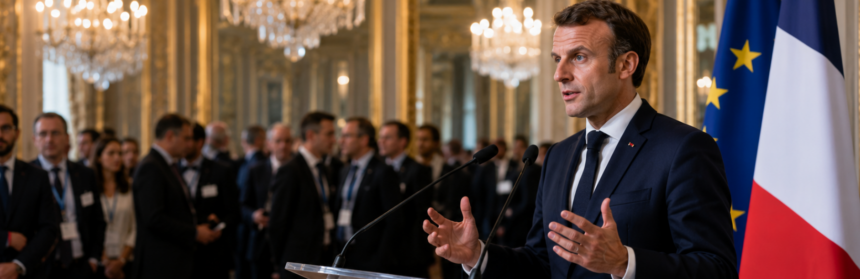
The Choose France 2026 investment summit produced the largest foreign investment announcement in French history on 1 June 2026. President Emmanuel Macron welcomed approximately 200 global executives to the Palace of Versailles for France’s ninth annual “Choose France” conference — and the numbers they brought with them were staggering. Confirmed investment commitments reached €93 billion ($108 billion / £85 billion) — more than the combined €87 billion pledged across all eight previous editions of the summit. That single-day total includes €45 billion from SoftBank alone — the first phase of a commitment that reaches €75 billion in full. Macron was unambiguous. “This edition of Choose France alone will make it possible to crystallize a record amount of €93 billion in confirmed investments, for more than 15,000 jobs. It is obviously by far a record edition, and it is historic.” He was right.
What’s Happening & Why It Matters
SoftBank’s €75 Billion: The Deal That Changed the Summit

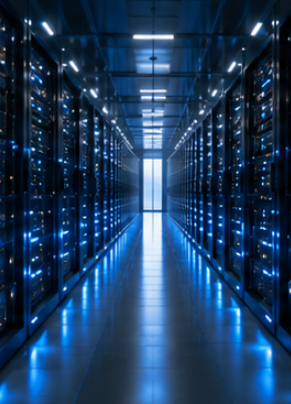
The Choose France 2026 investment summit‘s centrepiece is SoftBank‘s commitment — the largest foreign infrastructure investment in French history. Masayoshi Son, Chairman and CEO of SoftBank Group, confirmed the company will develop and operate 5 gigawatts (GW) of AI data centre capacity across France. The full investment programme runs to €75 billion ($87 billion). The first phase — €45 billion — delivers 3.1 GW of AI data centre capacity in the Hauts-de-France region of northern France by 2031. Specific sites already confirmed include data centres at Dunkirk’s Loon-Plage, Bosquel, and Bouchain.
Son explained the rationale directly. “AI is entering a new era, and the countries that build the infrastructure for this transformation will shape the future of technology, industry and society,” he said. “SoftBank is proud to make this major commitment to France. With its industrial capabilities, talent base and national ambition, France is uniquely positioned as a leading AI infrastructure hub in Europe.” He separately cited France’s nuclear-powered electricity as a primary reason for selecting the country. France generates approximately 70% of its electricity from nuclear power — giving it among the lowest and most stable energy costs in Europe. That energy advantage is not theoretical for data centres. It is the deciding factor in any large-scale AI infrastructure investment decision.
Why Nuclear Power Makes France Uniquely Attractive
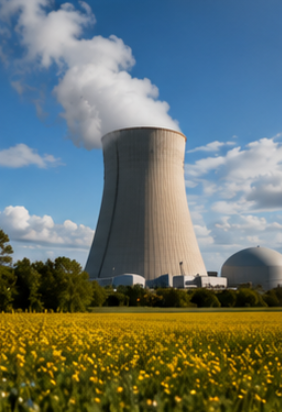
The SoftBank rationale is a structural reality that Macron has deliberately cultivated since Choose France began in 2018. AI data centres consume extraordinary amounts of power. A single NVIDIA H100 GPU draws approximately 700 watts. A cluster of 30,000 H100s — standard for a serious AI training facility — requires more than 20 MW of dedicated power. At the scale Son is describing — 5 GW total — France’s data centre infrastructure would require the equivalent of five large nuclear reactor outputs running continuously. Only a country with stable, low-cost, high-volume electricity generation can host that infrastructure commercially.
By contrast, Germany closed its last nuclear plants in 2023. The UK is rebuilding its nuclear fleet, but capacity is years away. France never stopped. Its 58 operational nuclear reactors provide the most stable, low-carbon electricity grid in Western Europe — a competitive advantage that foreign investors like SoftBank are explicitly pricing into their infrastructure decisions. As TF covered in its energy breakthroughs article, the global competition for AI infrastructure is a competition for a stable energy supply. France is winning that competition.
Other Major Announcements Beyond SoftBank
The Choose France 2026 investment summit produced significant commitments beyond SoftBank‘s headline deal. Investment firm Ardian and Nordic data platform Verne committed $5 billion (€4.6 billion) to a data centre in the Paris region. Salesforce announced $2 billion (€1.84 billion) in French investments by 2030, including an AI hub in Paris. Foxconn — Taiwan’s largest electronics manufacturer — committed €120 million to a production line for AI motherboards in the western city of Angers, in partnership with French supercomputer specialist Bull. Amazon — which had already announced €15 billion in French investment over three years earlier in May — confirmed it would create an additional 1,000 jobs at three logistics centres. Separately, commitments in the rare earth supply chain are expected to be formalised at the conference’s close.
Macron’s Eight-Year Strategy’s Dividends
The Choose France 2026 investment summit is the result of a deliberate long-term strategy. Macron launched the first Choose France conference in 2018 — using the Palace of Versailles as a venue specifically chosen to project French ambition to the world’s most powerful business leaders. The choice of setting was not incidental. Versailles communicates historic confidence and institutional permanence. No German chancellor or British prime minister has a comparable venue for corporate diplomacy.
Since 2018, Choose France has generated a cumulative total of €87 billion in commitments across eight editions. The year’s summit adds €93 billion in a single day — exceeding the entire prior cumulative total. That trajectory is Macron‘s sustained personal diplomacy. His trip to Japan specifically to meet Son was the direct precursor to the SoftBank commitment. Bloomberg reported that Son had initially floated the idea of investing as much as $100 billion in France — a figure that settled into the €75 billion announced at Choose France. The difference between that number and $100 billion is the gap between what Macron could deliver and what Son originally imagined.
France’s AI Leadership in Europe — and the Industrial Paradox
France has attracted more AI-related foreign investment projects than any other European country. The country also launched Mistral AI — the European AI lab that signed major deals with Airbus and BMW this week, as TF covered in its cybercrime round-up article. France has committed €1.55 billion in public funding for AI through Macron’s domestic AI programme. The European AI policy debate — from the Digital Omnibus to the proposals for an under-16 social media ban — is significantly shaped by the French government’s positions.
By contrast, the Choose France summit’s critics raise a legitimate concern that is below the headline number. Economist Sylvain Bersinger offered a pointed challenge. “The announcements in Versailles must not obscure the fact that overall corporate investment in France is depressed, that reindustrialization is more of a pious wish than a reality and that France does not necessarily appear more attractive for foreign investors than its neighbors.” That critique distinguishes between headline foreign investment pledges — which are real and significant — and the domestic corporate investment environment, which faces structural challenges related to labor flexibility, energy transition costs, and manufacturing competitiveness. Both things are simultaneously true.
SoftBank’s Strategic Position
The Choose France 2026 investment summit announcement fits a pattern in SoftBank‘s 2026 strategy. The Japanese conglomerate acquired data centre investor DigitalBridge for $4 billion earlier in the year. Its shares rose 14% on Monday — and have appreciated more than 70% in 2026 as markets price in the returns on its AI infrastructure investments. SoftBank‘s bet on AI infrastructure extends beyond France. It has invested more than $30 billion in OpenAI, generating $45 billion in investment gains in the year ended March 2026. SoftBank‘s fortunes are closely tied to the AI boom through its stake in ARM Holdings — whose chip designs power the AI servers and data centres where NVIDIA‘s systems operate. A SoftBank-built AI data centre cluster in France is, from Son‘s perspective, both a physical infrastructure investment and a strategic bet on the AI compute market that his other holdings depend on for growth.
TF Summary: What’s Next
The Choose France 2026 investment summit runs through 2 June at Versailles. Additional commitments — including rare earth supply chain agreements — are expected in the conference’s final sessions. SoftBank‘s Phase 1 construction of data centres at Dunkirk’s Loon-Plage, Bosquel, and Bouchain begins immediately on regulatory clearance. The 3.1 GW Phase 1 capacity targets completion by 2031. Macron‘s office will publish the full investment commitment register later this week.
MY FORECAST: The Choose France 2026 investment summit‘s €93 billion headline will prove commercially real — but the delivery timeline for most commitments will slip materially beyond their announced targets.
SoftBank‘s 2031 deadline for Phase 1 is achievable, but only if France’s grid infrastructure — specifically the high-voltage transmission capacity in Hauts-de-France — expands at a pace that Réseau de Transport d’Électricité (RTE) has not yet publicly confirmed it can support.
The Choose France portfolio will create significantly more than 15,000 jobs if the full commitments are realized — but realization rates for announced foreign investment pledges have historically ranged between 60% and 75% within the stated timelines.
The €93 billion headline is €55 to €70 billion in actual deployed capital by the end of 2030. That is still the most consequential single year of foreign investment in French history. It still establishes France as the leading European node for AI infrastructure. And it still makes every other European government ask what Macron did that they haven’t.