



Stan Lee’s AI digital resurrection became a commercial reality on 27 May 2026 — nearly eight years after the Marvel Comics co-creator died at the age of 95. ElevenLabs, the AI voice and audio company currently valued at $11 billion, announced a landmark partnership with Stan Lee Universe — the joint venture between Genius Brands International and POW! Entertainment that controls Lee’s name, likeness, and intellectual property. The agreement places Lee’s AI-cloned voice on the ElevenLabs Iconic Marketplace for commercial licensing. His likeness appears on ElevenLabs Creative Templates for video cameo creation. His voice narrates audiobooks through the Eleven Reader app. Two Stan Lee-inspired music filters are being released on ElevenCreative Music. The partnership is the most comprehensive celebrity digital resurrection announced in 2026. The reaction it generated is the most instructive data point about where society stands on grief tech’s expanding reach.
What’s Happening & Why It Matters
What ElevenLabs Built — and What It Does
The Stan Lee AI digital resurrection package is built from archival professional recordings of Lee’s voice — decades of convention appearances, interviews, radio work, and promotional material. ElevenLabs engineers trained an AI model on those recordings to replicate Lee’s signature delivery: the enthusiasm, the cadence, the warmth, the characteristic “Excelsior!” energy. The trained voice is not a simple audio loop. It can generate new speech — reading text it has never encountered, in Lee’s voice, with his characteristic inflexions.
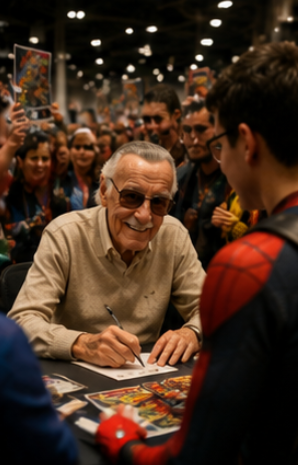
The ElevenLabs Iconic Marketplace is the commercial engine. Businesses, content creators, and approved partners can license Lee’s AI voice for audiobooks, podcasts, promotional materials, and other commercial applications. Each licence generates revenue shared with Stan Lee Universe. The first application is the Stan Lee Book of the Month Club — launching with Robert Louis Stevenson’s Treasure Island and adding 11 further audiobook adaptations over the next 12 months.
The Likeness Layer: Cameos Beyond Death
Beyond voice, the partnership enables users to generate AI-created visual content featuring Lee’s likeness. ElevenLabs’s Image and Video Marketplace includes Lee among its licensed personalities — enabling users to create the kind of brief cameo appearances that became Lee’s trademark during his lifetime. He appeared in virtually every Marvel Cinematic Universe film released between 2000 and 2018. Audiences beloved those cameos as playful acknowledgements of the creator behind the characters. The digital cameo creator allows that tradition to continue — with AI generating new Lee appearances in user-created contexts.
Chaz Rainey of Stan Lee Universe described the commercial logic in terms of continuity. “Stan always believed in meeting his fans where they were: in the pages of a comic, at a convention, or in a quick on-screen cameo. Partnership is a way of continuing that.” By contrast, the L.A. Comic Con hologram that preceded the announcement — where fans held short conversations with a digital Lee and posed for photographs — sold out appearances. The commercial demand is real. So is the discomfort.
The AI Voice Industry Behind the Partnership

ElevenLabs did not choose Stan Lee arbitrarily. The company has systematically built a catalogue of what it calls “Iconic Personalities” — AI-generated voices and likenesses of figures ranging from living celebrities to historical icons. The current Iconic Marketplace includes Michael Caine, Judy Garland, Laurence Olivier, Maya Angelou, David Hasselhoff, Burt Reynolds, Albert Einstein, and J. Robert Oppenheimer. Each represents a different category of the celebrity digital afterlife market — living stars who have consented and receive royalties, and deceased figures whose estates or rights holders have licensed posthumous representation.
In February 2026, ElevenLabs raised $500 million in a Series D round led by Sequoia Capital — valuing the company at $11 billion. That valuation more than tripled from its previous mark of $6.6 billion in September 2025. At the time of the Series D, ElevenLabs was generating $330 million in annual recurring revenue. The Stan Lee partnership — and the Iconic Marketplace — is one of the key commercial drivers of that growth.
The Precedent: Ian Holm, James Earl Jones, Val Kilmer
The Stan Lee case is not the first time AI has been used to restore a deceased performer’s voice or likeness to active entertainment use. In 2024, the film Alien: Romulus used AI to restore British actor Ian Holm, who played the android Ash in the original film and died in 2020.
Voice actor James Earl Jones signed an agreement before his death allowing his Darth Vader voice to be cloned by an AI firm. The agreement produced an AI-voiced Darth Vader in the video game Fortnite.
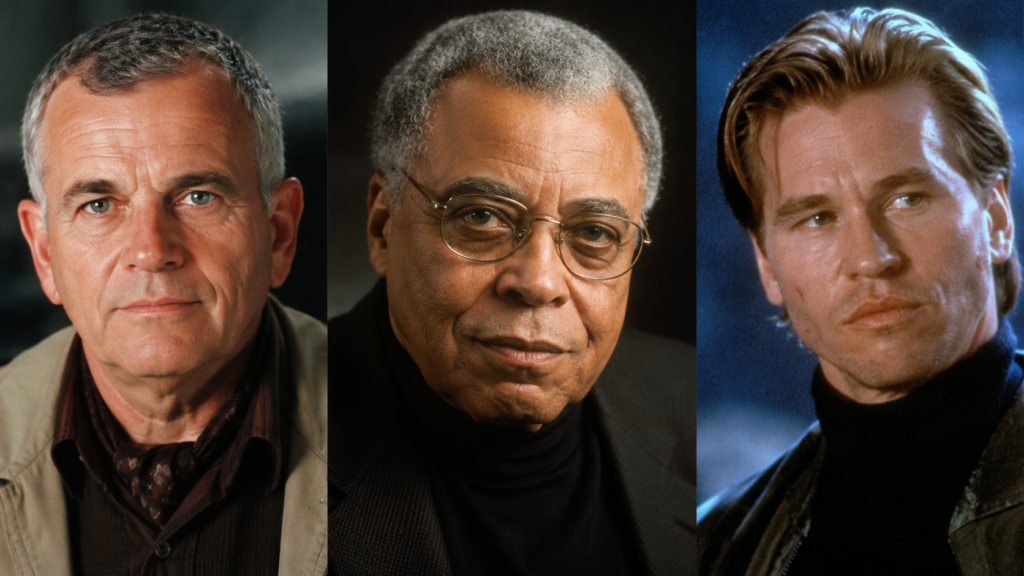
Actor Val Kilmer agreed before his death from throat cancer to star in the film As Deep as the Grave — a commitment his AI voice fulfils posthumously. Each of those cases involved consent at some stage. Each was also contested by audiences who found the results uncomfortable.
Stan Lee’s situation differs in one critical respect. There is no documented evidence that Lee consented to AI voice cloning before he died in 2018 — a time when the technology in its current form did not exist.
The Fan Reaction: Swift, Negative, and Specific
The online response to the AI-driven digital resurrection of Stan Lee was immediate and largely hostile. On X, early reactions described the partnership as “corny,” “weird,” and “exploitative.” One user’s comment — “Even in death, he’s still being exploited” — attracted significant engagement. That response connects directly to Lee’s documented history with the companies that controlled his intellectual property during his lifetime. Lee filed multiple lawsuits against Marvel Entertainment and associated companies over royalties and financial disputes. He described being cheated out of millions of dollars in earnings from the characters he co-created. The disputes were partially settled before his death. The concern that entities controlling his posthumous rights may again prioritise commercial extraction over a genuine creative legacy has specific historical grounding.
The news comes against the backdrop of the 2023 SAG-AFTRA strike, in which actors and writers protested for AI-protection clauses specifically designed to prevent studios from digitally replicating performers without consent or compensation. Efforts continue into 2026. The Stan Lee partnership exists within an industry that is simultaneously fighting over AI consent frameworks and signing deals that test their limits.
What Grief Tech Is — In the Spotlight
Stan Lee’s AI digital resurrection is the intersection of what technologists call “grief tech” — the growing category of AI applications designed to maintain a relationship between the living and people who have died. That category includes services like HereAfter AI, which allows families to upload recordings of a deceased person and create a conversational AI from them, and StoryFile, which enables people to record answers to thousands of questions for interactive replay after death.

The ElevenLabs partnership is not grief tech in the personal sense — it is not aimed at helping Lee’s family maintain a connection with him. It is aimed at commercial and fan entertainment. By contrast, the technology it uses and the ethical questions it raises are structurally identical to more personal grief-tech applications. If society accepts that deceased cultural icons can be commercially resurrected without documented pre-mortem consent, that acceptance shapes the norms governing more intimate applications too. The ElevenLabs Iconic Marketplace sets commercial precedent. The families of ordinary people who want to create an AI voice of a deceased parent or partner will navigate a world whose ethical norms were partly shaped by comparable deals.
The Business Case the Estate Cannot Resist
It is worth understanding why Stan Lee Universe said yes. Genius Brands International and POW! Entertainment are businesses with shareholders. Lee’s likeness and name are their primary commercial assets. The ElevenLabs Iconic Marketplace offers a revenue stream assets that operate independently of any single film, book, or convention appearance. Every audiobook narrated in Lee’s voice generates licensing fees. Every commercial cameo creation generates usage revenue. The economic logic is straightforward. The ethical question — whether posthumous commercial licensing without documented consent is appropriate — is one that Stan Lee Universe‘s legal advisers are not required to resolve before signing.
TF Summary: What’s Next

The Stan Lee Book of the Month Club launches immediately on the Eleven Reader app with Treasure Island. Eleven more audiobook adaptations follow over the next 12 months. Lee’s voice is available for commercial licensing through the Iconic Marketplace. His AI likeness is live for video cameo creation on ElevenLabs Creative Templates. ElevenLabs has not confirmed whether the partnership includes any ongoing oversight by Stan Lee Universe over how the voice is used in licensed commercial applications.
MY FORECAST: Stan Lee’s AI digital resurrection will generate more revenue than any previous licensing deal Stan Lee Universe has struck — and more sustained ethical controversy than any previous grief tech application. The audiobook model will succeed commercially. The voice is accurate, the subject is beloved, and the application is benign. By contrast, the Iconic Marketplace model — where any approved commercial entity can license Lee’s voice for their own promotional purposes — will produce at least one application that generates significant public backlash within 12 months. When that happens, it will force ElevenLabs, Stan Lee Universe, and the entertainment industry to answer the question they have been avoiding: what would Stan Lee actually have wanted — and does anyone have the authority to speak for him now that he cannot?