


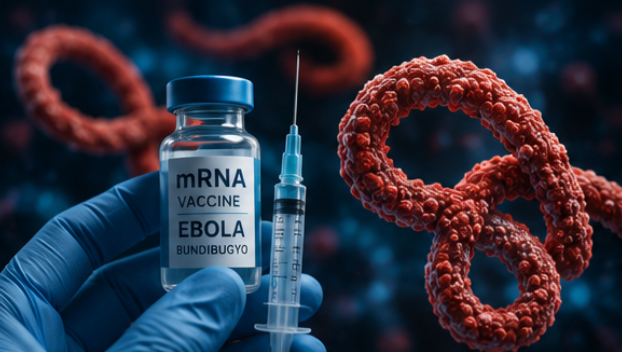
Moderna’s mRNA Ebola vaccine programme received its critical funding on 1 June 2026 — and the timing could not be more urgent. The Coalition for Epidemic Preparedness Innovations (CEPI) committed up to $50 million to Moderna‘s investigational mRNA-1235 vaccine candidate against Bundibugyo ebolavirus (BDBV). The announcement arrived as the World Health Organisation and the Africa Centres for Disease Control and Prevention had already declared the ongoing outbreaks in DRC and Uganda a Public Health Emergency of International Concern (PHEIC) — the highest alert level available. The outbreak has recorded more than 900 suspected cases and 220 suspected deaths. There are currently no licensed vaccines or approved treatments for the Bundibugyo strain. None. Not one.
NOTE: This article covers an active infectious disease outbreak with significant mortality. For current health guidance, please consult the WHO or your national health authority.
What’s Happening & Why It Matters
What Makes Bundibugyo Different From the Ebola You’ve Heard Of

Most people associate Ebola with the Zaire strain — the species behind the devastating 2014–2016 West Africa outbreak that killed more than 11,000 people. Two licensed vaccines exist for Zaire ebolavirus: Ervebo from Merck, which uses a live-attenuated VSV-based platform, and Zabdeno/Mvabea from Janssen. Neither protects against Bundibugyo. The two strains differ sufficiently genetically that cross-protection is unreliable.
Bundibugyo is not a new virus. It caused a documented outbreak in western Uganda in 2007–2008 — infecting 131 people and killing 42, a case fatality rate of approximately 32%. By contrast, Zaire strain fatality rates in uncontrolled outbreaks have reached 70% to 90%. Bundibugyo is not the deadliest Ebola strain. At 25% to 40% case fatality, however, it is extraordinarily dangerous — and the current outbreak has demonstrated it can spread fast and far. By May 2026, cases had appeared in both the Democratic Republic of Congo and [Uganda] — a cross-border spread that historically indicates greater outbreak complexity.
The mRNA Advantage: Speed Changes the Calculus

The core reason CEPI selected Moderna‘s platform is the same reason mRNA changed the COVID-19 pandemic response: it enabled rapid development and deployment. Traditional vaccine development — using inactivated virus, live-attenuated strains, or protein subunit platforms — takes months to reformulate for a new target. Moderna’s mRNA platform takes weeks. The mRNA-1235 candidate can be digitally designed from the Bundibugyo virus’s genetic sequence, synthesised rapidly, and moved into preclinical testing without the biological production lag associated with older platforms.
CEPI CEO Richard Hatchett stated the urgency directly. “With Bundibugyo virus spreading rapidly and no licensed vaccines, every day counts in the race against this deadly disease.” The statement is a hard-learned lesson from the 2014–2016 West Africa Ebola outbreak, where the absence of ready vaccine candidates cost months that cost lives. The $50 million funds three parallel tracks: preclinical development, Phase 1 clinical testing, and parallel manufacturing activity — meaning doses are produced while clinical evaluation is underway. The parallel structure is the critical innovation. Traditional development is sequential. The approach compresses the timeline by running multiple phases simultaneously.
The Funding: Three Candidates, Global Mobilisation

Moderna‘s mRNA-1235 is not the only candidate CEPI is accelerating. Reuters reported that approximately $60 million in total has been committed across three vaccine candidates for Bundibugyo Ebola. IAVI — the International AIDS Vaccine Initiative — is developing a separate candidate. Hatchett told Reuters that it is “possible to get vaccines against Ebola Bundibugyo ready for trials within a couple of months” — referring specifically to Moderna‘s candidate. The IAVI candidate will take seven to nine months to reach clinical trials, according to the BBC.
The response is significant. Gavi, the global vaccine alliance, committed a separate $50 million to the outbreak response. The World Bank‘s Pandemic Fund announced $220.6 million in grants to support outbreak control efforts. Moderna itself has relevant prior partnerships — including a BARDA project award in July 2024 and a pandemic-preparedness agreement with Mexico in February 2026. The Bundibugyo programme builds on infrastructure already in place.
The Outbreak: Conflict, Distrust, and Burning Treatment Centres
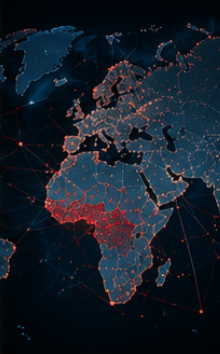
The scientific response is only one dimension of the challenge. Eastern DRC is one of the world’s most complex humanitarian environments. The region has experienced continuous armed conflict for decades. Health worker access is limited and sometimes actively blocked. On 21 May 2026, angry residents in Rwampara, Ituri Province, set fire to an ALIMA-run Ebola treatment centre after authorities refused to release the body of a suspected victim for traditional burial. That incident is not the first of its kind in the history of the DRC outbreak. Community distrust of external health interventions is deep, historically grounded, and cannot be resolved by vaccine development alone.
Dr. Mark Feinberg of IAVI described the scale concern plainly. “I think this is clearly threatening to be as severe an outbreak as that, if not even worse” — referring to the 2014–2016 epidemic. That comparison has a specific implication. The 2014–2016 outbreak was containable only after international community engagement and, eventually, the rapid development of what became Ervebo. A comparable mobilisation — the time for Bundibugyo — is what the CEPI funding is designed to initiate.
What Comes After Phase 1
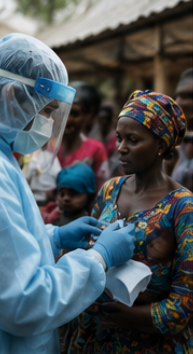
If Phase 1 safety and immunogenicity data are positive, the $50 million includes provisions to fund large-scale Phase 2/3 trials — the evidence required for emergency use authorisation or full licensure. That pathway is enormously important. Without a licensed vaccine, the global health community cannot pre-position doses for rapid deployment. With one, the DRC and Uganda outbreaks — and future Bundibugyo events — can be addressed within weeks of detection rather than years. Moderna‘s COVID-19 experience demonstrated that the mRNA platform can compress the vaccine development timeline from years to months when funding, regulatory pathways, and manufacturing scale are aligned from the start. The question is whether the same alignment can be achieved for a disease that primarily affects low-income countries, without the commercial market pressure that accelerated COVID-19 vaccine development.
TF Summary: What’s Next
Moderna‘s mRNA-1235 candidate advances immediately into preclinical testing. Phase 1 clinical evaluation may begin as early as late 2026 if preclinical data support the transition. Parallel manufacturing begins simultaneously. IAVI’s candidate reaches clinical trials within 7 to 9 months. The WHO and Africa CDC are coordinating outbreak response on the ground in DRC and Uganda. The World Bank’s $220.6 million grant supports containment measures, including contact tracing, community engagement, and treatment facilities.
MY FORECAST: Moderna’s mRNA Ebola vaccine programme will reach Phase 1 human trials before the end of 2026 — making it the fastest Bundibugyo vaccine programme in history by a significant margin. The mRNA platform’s speed advantage is real and proven at scale. By contrast, the challenge is not scientific. It is logistical, geopolitical, and social. Getting a safe and effective vaccine into production is achievable within 12 to 18 months under the CEPI funding timeline. Getting it to people in eastern DRC who distrust external health institutions — in an active conflict zone where treatment centres are being burned — requires a different kind of investment than $50 million can buy. The vaccine is the necessary condition for ending the outbreak. It is not sufficient.
If you are concerned about Ebola exposure or have been in affected regions, please consult the WHO or your national health authority immediately.