


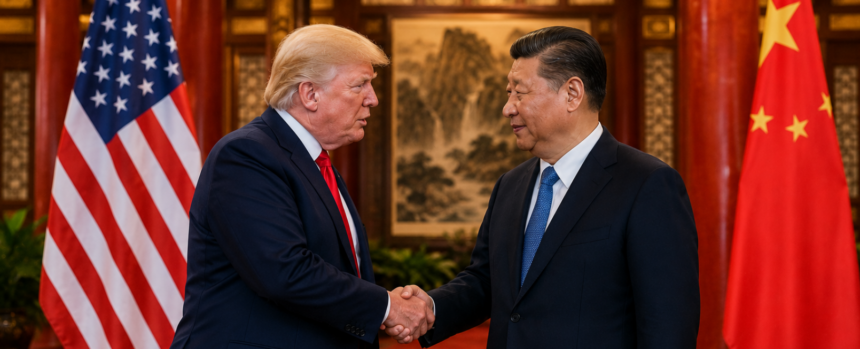
The Trump-Xi Beijing tech summit opened on 14 May — and the delegation standing behind President Trump on the Beijing tarmac told the entire story. Elon Musk of Tesla and SpaceX. Tim Cook of Apple. Jensen Huang of Nvidia — who boarded Air Force One in Anchorage, Alaska after Trump called him personally. Kelly Ortberg of Boeing. Leaders from BlackRock, Meta, Micron, Qualcomm, Goldman Sachs, and Visa. Seventeen executives in total. The most commercially powerful American delegation ever sent to a foreign summit. Four technology disputes dominate the agenda: AI semiconductors, rare earth exports, Taiwan’s future, and a geopolitical crisis reshaping global energy markets.
What’s Happening & Why It Matters
The First Beijing Visit Since 2017
The Trump-Xi Beijing tech summit carries historical weight beyond its agenda. This is the first visit by a sitting US president to Beijing since Trump’s 2017 trip. That nine-year gap reflects the depth of deterioration in US-China relations during the intervening years. Trade wars, export-control battles, pandemic-era accusations, Taiwan tensions, and the AI chip conflict have combined to create one of the most contested bilateral relationships in modern geopolitics.
China arrived at this summit more confident than at any comparable previous meeting. Its economy grew 5% in 2025 and maintained that trajectory into Q1 2026 — despite aggressive US tariffs. Beijing retaliated against Trump’s “Liberation Day” tariffs in April 2025. It weaponised its rare earth dominance. It accelerated domestic AI and semiconductor development. As CSIS senior adviser Scott Kennedy summarised: “China comes into this meeting far more confident than in 2017, when it feared even a small rise in U.S. tariffs.” Xi Jinping‘s opening remarks set an expansive act. He asked whether the two countries could avoid the “Thucydides Trap” — the historical pattern where a rising power and an established power slide toward conflict. Both leaders know the answer to that question depends partly on what happens in the next 36 hours.
The Jensen Huang Story: His Presence Matters
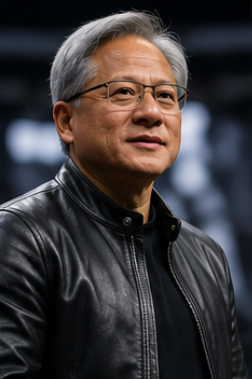
The most revealing moment of the Trump-Xi Beijing tech summit happened before the summit began. Nvidia CEO Jensen Huang was not originally invited. The White House excluded him deliberately. The reasoning was specific. Huang’s presence in Beijing would invite scrutiny of the ongoing Nvidia chip sales debate — a politically charged topic that China hawks in the Republican Party had already attacked Trump over. “Sitting out the visit would have prevented the ‘awkward conversations’ that surround the highly contested sale of Nvidia chips to China,” one source told Semafor.
Trump reversed that decision after seeing media coverage of Huang’s absence. He called Huang directly. Huang flew to Anchorage and boarded Air Force One mid-journey. A Nvidia spokesperson confirmed the trip in one sentence: “Jensen is attending the summit at the invitation of President Trump to support America and the administration’s goals.” The last-minute reversal is the clearest signal of how central AI chip policy is to the summit’s agenda. China is Nvidia‘s largest single market opportunity — valued at $50 billion by Huang himself. The US has banned the most advanced chips from that market. Huang’s place at the table makes that dispute impossible to ignore.
AI Chips: The Fight That Has Been Running for Two Years
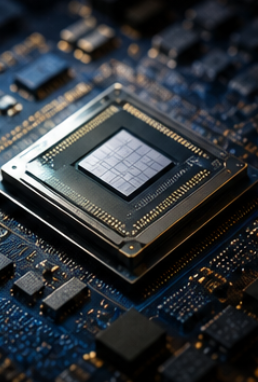
The AI semiconductor agenda of the Trump-Xi Beijing tech summit is two years of escalating restrictions. The US banned Nvidia‘s H20 chip — a capability-limited version engineered specifically to comply with export rules — from Chinese sales in April 2025. That ban cost Nvidia a $5.5 billion inventory charge. The Trump administration reversed course in July 2025, permitting H20 sales. In December 2025, it licensed more advanced H200 chips for China. By early 2026, the US was taking a 25% fee on chip sales to China that cleared the review process.
Meanwhile, Beijing responded by restricting Chinese companies’ ability to purchase Nvidia chips at all — creating a situation where US export controls and Chinese import restrictions now block the same trade from both ends. Chinese firms pivoted toward domestic alternatives. Huawei‘s Ascend chips, Cambricon, and other domestic GPU alternatives all gained market share during the restriction period. The damage to Nvidia‘s market position in China is real. The question in Beijing is whether both sides want to reverse it — and at what price.
Rare-Earths: China’s Most Powerful Lever
China mines more than 60% of the world’s rare-earth materials. It processes roughly 85% of global output. For 12 specific rare-earth elements — including terbium and dysprosium, essential for F-35 jet magnets, EV motors, wind turbines, missile guidance systems, and AI data centre hardware — China’s processing share exceeds 90%. No short-term substitute exists. No alternative processing base operates at a comparable scale.
Beijing demonstrated exactly how sharply it can pull this lever in April 2025. It introduced licensing requirements for seven heavy rare-earth elements in direct retaliation against Trump’s tariffs. American manufacturers — defence contractors, EV makers, electronics producers — felt the impact within weeks. The licensing requirement is in place. Discussions in Beijing will include whether China lifts those controls in exchange for US concessions on chip exports, Taiwan arms sales, or tariff reductions. That exchange logic is the commercial core of the summit.
What Each CEO Wants From Beijing
The 17 executives, alongside Trump, arrived with specific interests. Apple’s Tim Cook needs two things simultaneously. Apple manufactures approximately 90% of its products in China through partners, including Foxconn. Any tariff escalation directly raises iPhone production costs. At the same time, Apple sells $60 billion in products annually to Chinese consumers — a market it cannot afford to lose to locally preferred rivals. Cook wants manufacturing stability and market access. Neither has been guaranteed.
Tesla‘s Musk faces a more complex dynamic. Tesla‘s Shanghai Gigafactory produces a large share of its global vehicle output. The factory serves Chinese consumers directly. Chinese EV competitors — BYD, Xiaomi Auto, and others — have been closing the technology gap. Musk needs both favourable manufacturing terms and market access in a segment that is genuinely competitive. Boeing’s Ortberg wants aircraft orders. China is one of Boeing’s largest long-term markets. Political tension has blocked the delivery of dozens of ordered aircraft. A resumption of deliveries would be commercially significant for a company still recovering from its recent operational crises.
Taiwan, Iran, and the Global Context
The technology agenda of the Trump-Xi Beijing tech summit is within a geopolitical context. Taiwan is the summit’s highest-stakes issue. Xi Jinping stated in his opening remarks that Taiwan was “the most important issue for US-China relations” and that if not handled well, it would send the relationship toward a “dangerous” place. Trump put Taiwan’s arms sales on the agenda. Beijing wants them stopped. The two positions are not close.
The Iran war adds a further dimension. The ongoing conflict has disrupted global energy markets and contributed to supply chain pressure on both sides. Huawei‘s sourcing of helium and bromine — both used in semiconductor manufacturing — has been affected by Middle East supply disruption. Both Washington and Beijing have incentives to stabilise that situation. Whether those shared incentives translate into concrete cooperation is a different question.
TF Summary: What’s Next
The summit runs through 15 May. Trump’s schedule includes a visit to the Temple of Heaven and a state banquet. Substantive outcomes — if they arrive — are expected to include tariff pause arrangements, Chinese agricultural purchase commitments, and potentially a framework for AI safety dialogue between the two governments. A US-China Board of Trade and a US-China Board of Investment have been floated as structural outcomes. Xi is expected to reciprocate with a visit to the US later in 2026, potentially alongside APEC or G20 events.
MY FORECAST: The Trump-Xi Beijing tech summit will produce a tariff truce extension and Chinese commitments to purchase US agricultural goods and Boeing aircraft — outcomes both sides need politically and that are achievable in 36 hours. The AI chip dispute will not be resolved here. The structural gap between Huang’s $50 billion market ambition and Washington’s national security restrictions is too wide for a two-day summit to bridge. What Beijing and Washington may agree on is a framework for AI safety dialogue — a process, not an outcome, that gives both sides political cover while the underlying competition continues. The rare earth licensing restrictions are the most likely immediate concession if the summit goes well. China has the most direct short-term leverage here and can offer relief in exchange for the relaxation of chip exports without fully abandoning its strategic position. Expect a narrow, transactional outcome — significant enough to move markets, insufficient to resolve the underlying rivalry.