


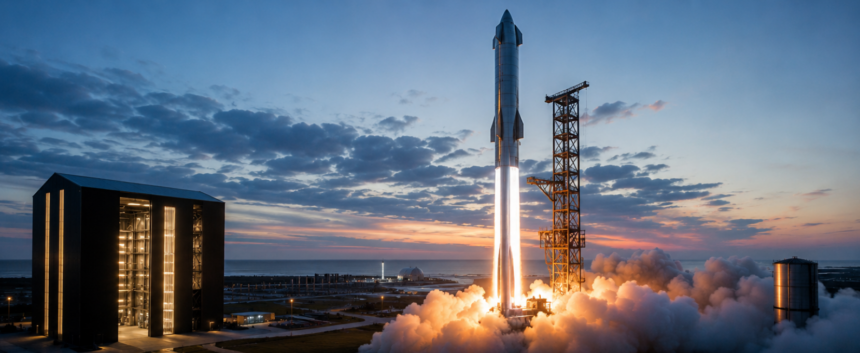
SpaceX filed for an IPO that strips shareholder rights. Filed plans for a $55 billion chip factory. Began moving away from Falcon 9. And signed a compute deal with Anthropic — the company Musk calls “misanthropic and evil.”
SpaceX news dominated the technology and business landscape this week in a way that few single companies manage. Between 5 and 7 May 2026, SpaceX filed IPO registration excerpts revealing extraordinary governance terms that strip investors of their rights. The company filed plans for a $55–$119 billion chip manufacturing facility in Texas called Terafab. It began visibly shifting its operational infrastructure away from the world’s most successful rocket. It closed a landmark compute deal with Anthropic — giving the AI safety company access to the entire Colossus 1 supercomputer in Memphis. And Anthropic expressed interest in eventually placing AI compute in orbit. That is five major SpaceX news stories in three days.
What’s Happening & Why It Matters
SpaceX IPO: Only Musk Can Fire Musk
The most consequential SpaceX news of the week came from excerpts of the company’s IPO registration statement, reviewed by Reuters on 6 May. SpaceX is targeting a June 2026 public listing. The target valuation is $1.75 trillion (€1.61 trillion). The company hopes to raise up to $75 billion (€69.1 billion) in proceeds — potentially the largest IPO in US history.
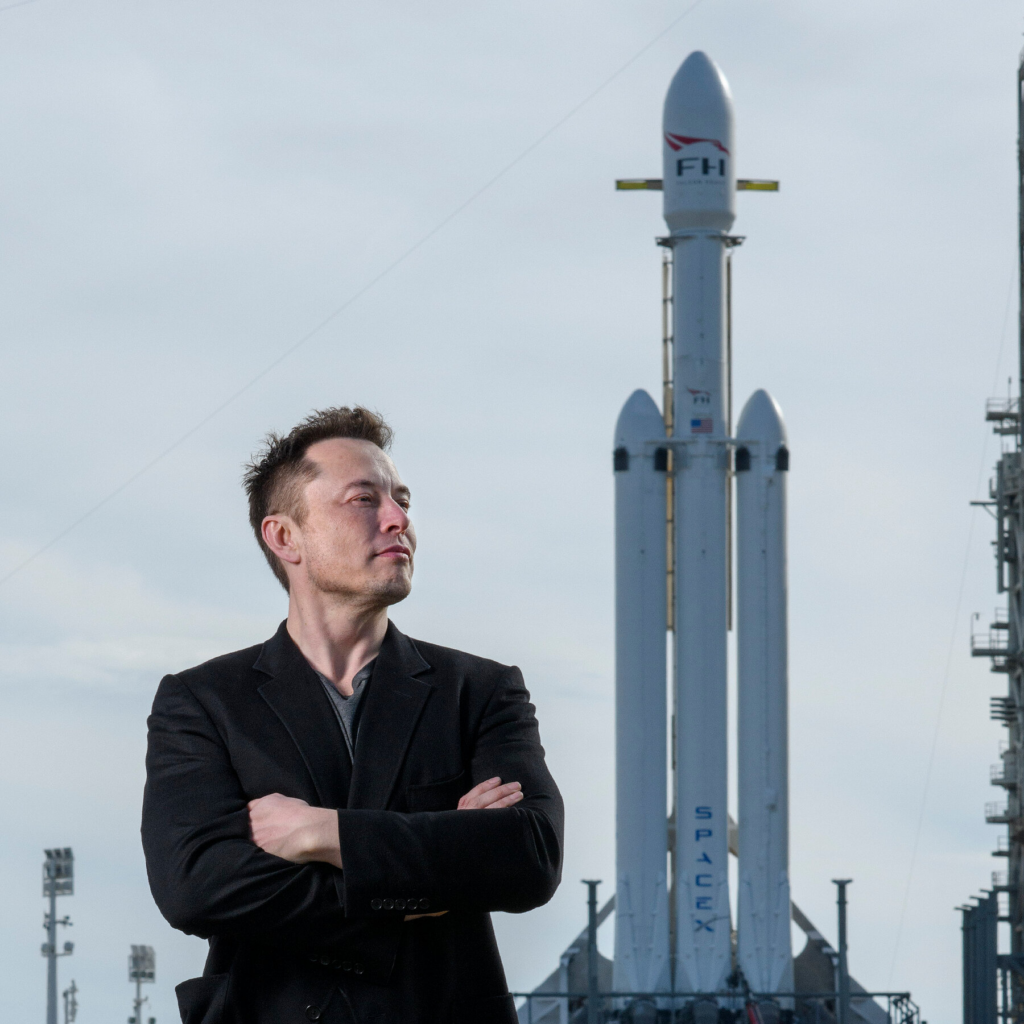
The governance structure embedded in that registration is extraordinary. SpaceX is combining supervoting shares, mandatory arbitration, stricter rules on shareholder proposals, and Texas corporate law to give Musk and other insiders near-total control. Under the proposed structure, Musk holds 42.5% of equity and 83.8% of voting control. The only person who can fire Musk is Musk himself.
The shareholder rights provisions are equally striking. Investors who buy into the IPO must waive their right to sue SpaceX in court. Disputes go to mandatory arbitration. Shareholders face stricter rules on filing proposals for governance votes. Bruce Herbert, CEO of Newground Social Investment, described the combination directly. “It closes the voting door, the courthouse door, and the proposal door simultaneously. It’s unprecedented in terms of creating a total lack of accountability.”
At the same time, many investors are undaunted. Joel Shulman, founder of ERShares, holds SpaceX shares and supports the structure. “I would rather have him making these decisions and be in control,” he said. “He may be controversial and polarizing, but he’s a brilliant guy when it comes to building something completely new and building wealth for shareholders.” SpaceX did not respond to a request for comment.
Terafab: SpaceX News Enters the Chip Wars
On 6 May, SpaceX filed plans for Terafab — a proposed semiconductor manufacturing facility in Grimes County, Texas. The first phase is estimated at $55 billion (€50.7 billion). The full buildout could reach $119 billion (€109.7 billion) across multiple phases. That would make it the largest single semiconductor facility investment in US history.
Terafab is a joint venture between SpaceX, Tesla, and xAI — the AI company now absorbed into SpaceX following the February 2026 merger. Intel joined the project in April 2026. Musk described why the project exists with characteristic directness. “We either build the Terafab, or we don’t have the chips, and we need the chips, so we build the Terafab.” He claimed the global semiconductor industry currently produces roughly 2% of what Tesla and SpaceX will need across all their AI, robotics, and space programmes combined.
The facility targets two primary chip types. The first is an edge-inference processor for Tesla‘s Full Self-Driving systems, Optimus humanoid robots, and Robotaxi fleets. The second is a high-performance variant hardened for space environments — supporting SpaceX satellites, orbital data centres, and xAI AI initiatives. Tesla handles the research fab at its Austin campus — a $3 billion pilot line targeting a few thousand wafer starts per month. SpaceX takes responsibility for high-volume manufacturing at full scale.
Terafab targets 2-nanometer process technology, with Intel‘s upcoming 14 angstrom (14A) process planned for volume production. Small-batch production is anticipated in 2026. Volume production is targeted for 2027.
SpaceX Is Moving On From Falcon 9
The third major SpaceX news item is a structural shift in how the company organizes its launch infrastructure. Ars Technica reported on 6 May that SpaceX is deliberately restructuring its Florida and California operations around Starship — and reducing its reliance on the Falcon 9.
SpaceX President Gwynne Shotwell stated earlier this year that Falcon 9 launches in 2026 would number approximately 140 to 145 — compared to the 165 launched in 2025. She also confirmed that Falcon launches would gradually decline once Starship enters full operational use. LC-39A at NASA’s Kennedy Space Center — previously a primary Falcon 9 pad — is being converted into a dedicated Starship launch site. SpaceX has also ended operations for one of the two drone ships stationed in Florida. That vessel will now transport Starship and Super Heavy boosters from the Texas factory to Florida.
Starship V3 — the next-generation variant standing over 400 feet (122 metres) tall and capable of carrying more than 100 metric tons (220,000 pounds) to low Earth orbit — completed a full-duration static fire in April 2026. The first Starship V3 test flight is targeted for May 2026. A single Starship launch could theoretically replace more than a dozen Falcon 9 Starlink missions. That scale advantage reshapes the entire economics of SpaceX‘s launch manifest.
SpaceX News Meets AI: The Anthropic Colossus Deal
The most unexpected SpaceX news of the week is also the most commercially consequential. On 6 May, Anthropic and SpaceX announced a compute deal. Anthropic gains access to all compute capacity at SpaceX‘s Colossus 1 data centre in Memphis, Tennessee. That gives Anthropic access to more than 300 megawatts of power — equivalent to over 220,000 NVIDIA GPUs — within one month of the deal closing.
The announcement landed as a surprise for multiple reasons. Musk previously called Anthropic “misanthropic and evil” — a characterization he updated on X when the deal was announced. “I spent a lot of time last week with senior members of the Anthropic team… and was impressed,” he wrote. “Claude will ‘probably’ be good.” The deal also lands weeks before SpaceX‘s planned IPO — giving the company a named AI infrastructure customer that strengthens its pitch as more than a rocket launch and Starlink business.
The immediate effect on Anthropic‘s products is concrete. Claude Opus API rate limits increased immediately. Claude Code’s five-hour rate limits doubled for Pro, Max, Team, and Enterprise plan subscribers — effective the same day as the announcement. Both changes address complaints from Anthropic‘s enterprise customers about the usage limit throughout Q1 2026.
The Orbital Ambition: Data Centres in Space
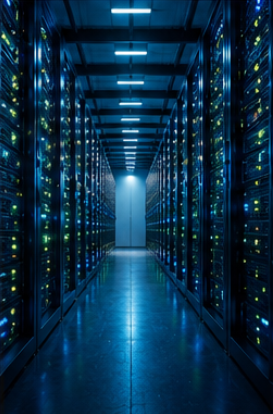
The fifth and most speculative SpaceX news story is Anthropic‘s expressed interest in “partnering with SpaceX to develop multiple gigawatts of orbital AI compute capacity.” SpaceX separately filed paperwork with the FCC indicating plans to launch one million satellites to create an orbital data centre network. No public timeline, financing plan, or deployment schedule accompanies those plans. They remain aspirational. At the same time, much of Musk’s pay at SpaceX is tied to launching massive data centres in space and colonizing Mars. The Terafab chip designs explicitly include space-hardened variants. The Colossus deal already positions Anthropic as a compute partner with direct access to SpaceX‘s infrastructure.
As Ann Lipton, a professor at the University of Colorado Law School, observed about the IPO: “SpaceX is going to be such a huge part of the market that for most portfolio managers it’s very difficult not to buy.” The orbital compute ambition reinforces that observation. The company is not just building rockets — it is building the infrastructure stack underneath next-generation AI.
TF Summary: What’s Next
SpaceX‘s IPO roadshow is expected ahead of a June 2026 listing. The governance structure disclosed in the registration statement will face scrutiny from institutional investors — particularly pension funds and governance-focused asset managers bound by fiduciary rules. The Terafab property tax abatement hearing in Grimes County is scheduled for June 2026. The first Starship V3 test flight is targeted for May. That test is the prerequisite for NASA’s Artemis 3 lunar landing mission and SpaceX‘s own next-generation Starlink deployment.
MY FORECAST: The Anthropic Colossus deal closes over the next month as SpaceX provides access to the 220,000-GPU cluster. Anthropic‘s compute partnership stack now includes Amazon (5 GW), Google (5 GW), Microsoft/NVIDIA ($30 billion in Azure), Fluidstack ($50 billion), and now SpaceX (300+ MW, 220,000 GPUs). The company has more infrastructure coming online in the second half of 2026 than at any prior point in its history. Whether that capacity resolves the Claude usage limits that slowed its enterprise growth in Q1 will determine whether Anthropic‘s revenue trajectory maintains the momentum needed for its own planned IPO in October 2026.