


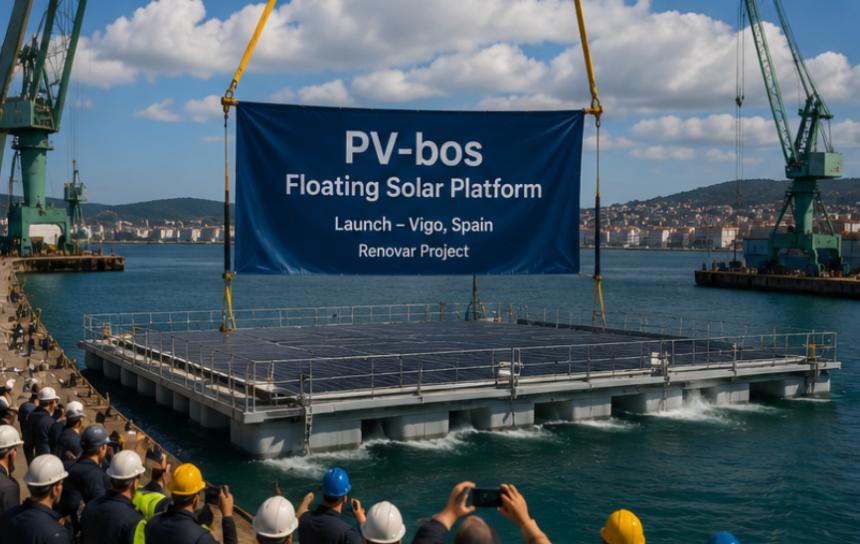
The launch of Spain’s floating solar platform is the country’s entry into a uniquely new category of renewable energy. BlueNewables, a Canary Islands-based marine renewables engineering firm, lowered the first unit of its PV-bos (PhotoVoltaic-BlueNewables Offshore Solutions) technology into the water at the San Enrique Shipyard in Vigo on that date. The platform is named Paiporta — a tribute to the Valencian municipality that became a symbol of grief after the catastrophic DANA storm system killed more than 220 people in the Valencia region in October 2024. The choice of name carries weight. Spain’s deadliest weather disaster in living memory lends its name to a clean energy breakthrough. The two events are connected by a single theme: climate.
What’s Happening & Why It Matters
What PV-Bos Actually Is — and Why the Sea Helps
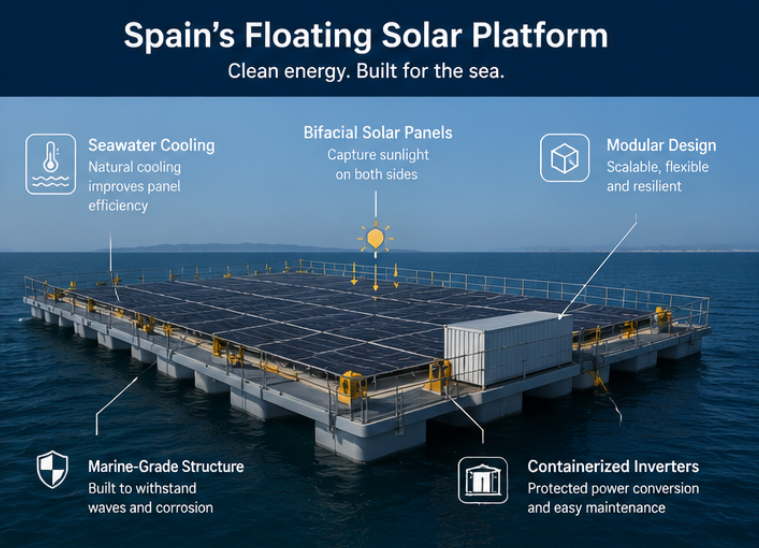
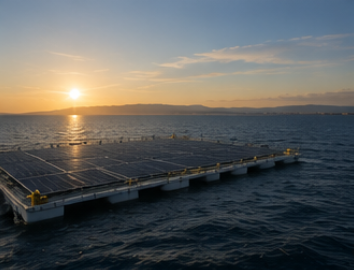
Spain’s floating solar platform launch is not simply a solar panel on a pontoon. The PV-bos design is a purpose-built catamaran-type structure — a twin-hulled platform engineered specifically for open ocean operation. Traditional floating solar arrays are on lakes and reservoirs. They were never designed for waves, salt corrosion, or deep-water mooring loads. In contrast, the PV-bos platform addresses each of those challenges through deliberate engineering choices.
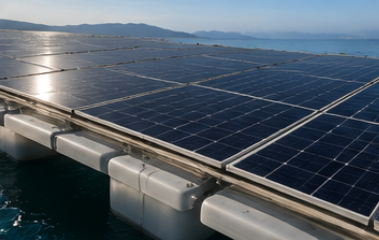
The catamaran hull design raises the platform’s deck above direct wave impact. That elevation simultaneously improves panel performance — the bifacial solar modules capture both direct solar radiation from above and reflected light from the ocean surface below. The ocean reflection effect is a meaningful efficiency gain. By contrast, land-based panels and freshwater floating arrays only receive incident light from one direction. On open water, the reflective surface beneath provides a second source that conventional solar installations cannot access.
Seawater as a Cooling System — the Key Innovation
The most technically striking element of the PV-bos design is its use of seawater as a natural refrigerant to improve energy output. Solar panel efficiency drops as temperature rises. This is one of the most significant limiting factors in hot-climate solar deployments. Land-based panels in Spain’s Mediterranean summer regularly exceed surface temperatures of 45°C (113°F) — a range at which efficiency losses are commercially meaningful.
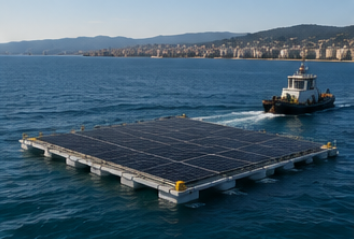
The PV-bos system uses the surrounding ocean — which maintains stable temperatures in the surface layers year-round — to cool the panel array passively. That cooling effect keeps panels operating closer to their rated efficiency in precisely the climate where solar resources are highest. BlueNewables describes the combined effect as a higher energy yield under open-sea conditions compared with comparable land-based installations with the same panel capacity. Independent verification from the Valencia sea trials will be the first real-world test of that claim.
The Platform’s Physical Scale and Technical Specifications
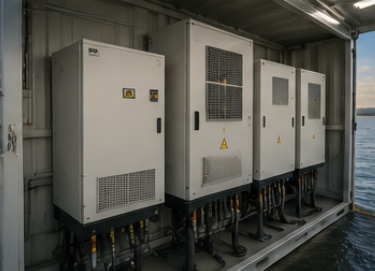
The Paiporta platform is substantial. Each PV-bos unit measures 64 metres by 41 metres (210 ft by 135 ft) — roughly equivalent to half a football pitch. It carries 600 bifacial photovoltaic modules along with containerised inverters and transformers integrated directly into the platform structure. Each unit is rated at 500 kilowatts (kW) of generating capacity.
The full BlueNewables programme covers two platforms. Combined, they form a 1 megawatt (MW) floating offshore solar array. The target deployment site is the Port of Valencia, where the array will supply the port’s electricity needs during operational trials. A 1 MW installation is modest by utility-scale standards — but the purpose here is validation, not volume. BlueNewables, Naturgy (the Spanish energy major backing the project), and IDAE (Spain’s national energy efficiency institute, which provided grant funding) are explicitly defining the project as a technology demonstrator. The data from Valencia will define the economics and engineering parameters for commercial-scale deployment.
The Manufacturing Process: Built Like a Ship, Not a Solar Farm
The Paiporta platform was constructed at a shipyard, not a solar installation facility. That is not a logistical coincidence. It is a design philosophy. BlueNewables specifically partnered with San Enrique Shipyard in Vigo because open-sea solar platforms require the same structural engineering, corrosion resistance, and marine hardware expertise as commercial vessels. Standard solar contractors lack those capabilities.
The construction approach enables industrial-scale modular production — a key element of BlueNewables‘ long-term commercial case. Traditional offshore wind installations require bespoke engineering for each site. The PV-bos platform uses standardised components that can be manufactured in volume at any capable shipyard and then towed to the site. That manufacturing model reduces per-unit cost as production scales. San Enrique Shipyard general manager José Luis Torres placed the significance plainly. “The launch of the PV-bos represents a milestone of enormous significance both for Astillero San Enrique and for the maritime and energy industries as a whole.”
Spain’s Solar Leadership — and the Gap
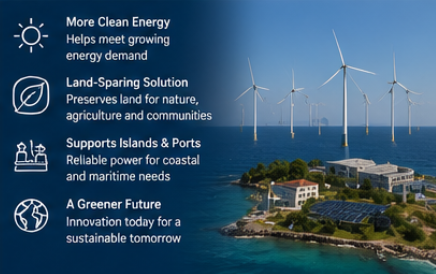
Spain generates approximately 58.6 TWh of solar electricity annually — accounting for roughly 20.9% of its national electricity generation. It leads Europe in concentrated solar power (CSP) and carries an installed solar PV capacity of 38.59 GW as of 2024. By any measure, Spain is among the world’s most advanced solar nations. That context makes the PV-bos launch more significant, not less. Spain is not a country that is discovering solar energy. It is a country that has already deployed solar across its available land area and is moving to the ocean. Land scarcity is a genuine constraint on Spain’s renewable expansion. The country’s buildable coastal and inland areas increasingly face competing land use pressures from agriculture, urbanisation, and biodiversity conservation.
Offshore floating solar directly addresses that constraint. Spain’s Mediterranean coastline and island territories offer an enormous marine area with no competing land-use claims. The same coastline that generates high direct solar irradiance also provides the reflective surface enhancement and passive cooling that the PV-bos system exploits. Additionally, offshore floating solar enables hybrid deployment alongside offshore wind farms — sharing grid connections, mooring infrastructure, and maintenance logistics across two generation technologies. BlueNewables has explicitly flagged this hybrid potential as a commercial pathway.
Global Context: Why Open-Sea Solar Is Different From Reservoir Solar
Floating solar on reservoirs and lakes is a mature technology. China, South Korea, India, and the Netherlands all operate large freshwater floating solar installations. By contrast, open-ocean floating solar is almost entirely at the prototype stage globally. The engineering challenges are categorically different. Saltwater corrosion attacks structural components and electrical connections. Ocean waves impose dynamic loading that freshwater installations never experience. Deep-water moorings require anchoring systems that shallow reservoirs do not need. Biofouling from marine organisms degrades equipment surfaces. Each of those challenges requires engineering solutions that are not part of the inland floating solar playbook.
The Paiporta platform is designed to address all of them simultaneously. The catamaran hull distributes wave loads across a wider structural base. The raised deck keeps panels clear of direct wave contact. Salt-resistant materials and coatings are specified throughout. Modular containerised inverters can be extracted and replaced without dry-docking the platform. Whether those solutions hold under real Mediterranean sea conditions is exactly what the Valencia trials will determine.
The Paiporta Name — and What It Carries
BlueNewables co-founder and CEO Bernardino Coñago named the platform in tribute to the victims of the DANA flood. That choice deserves attention. The DANA storm system killed more than 220 people in the Valencia region in October 2024. Paiporta, the Valencian municipality, lost more residents than any other community. Spain’s national meteorological agency directly linked the storm to the intensification of Mediterranean weather patterns associated with climate change.
Naming a renewable energy demonstration platform after those victims is not a marketing gesture. It is a statement about causality. The climate conditions that killed people in Paiporta are the same conditions that make deploying clean energy technologies urgent. Coñago described the project as demonstrating “the high industrial and technological potential of Spain and Galicia in creating innovative green solutions for the international market.” That ambition is real — and the platform’s name lends it moral weight.
TF Summary: What’s Next
The Paiporta platform completes commissioning at San Enrique Shipyard in Vigo over the coming weeks. After commissioning, it is towed to Valencia for open-sea operational validation. The second PV-bos unit — the second 500-kW platform — follows. Together, both platforms form the 1 MW array at the Port of Valencia. BlueNewables and Naturgy will publish performance data from the Valencia trials. That data determines the commercial case for scaling the technology.
MY FORECAST: Spain’s floating solar platform launch will prove the PV-bos technology viable at the 1 MW scale — and that validation will unlock the commercial financing for a significantly larger second project. The Port of Valencia is the right proving ground. It offers the Mediterranean conditions, operational supervision infrastructure, and grid connection access that a commercial validation requires. BlueNewables will publish performance data within 12 months of the Valencia deployment — almost certainly showing that the seawater-cooling and bifacial-reflection benefits are real and measurable. That data will attract the attention of port authorities across the Mediterranean, the Gulf, and Southeast Asia — all regions that combine high solar irradiance with dense coastal energy demand and limited buildable land. Spain will become the reference point for open-ocean solar deployment. The Paiporta platform is the beginning of that story.