


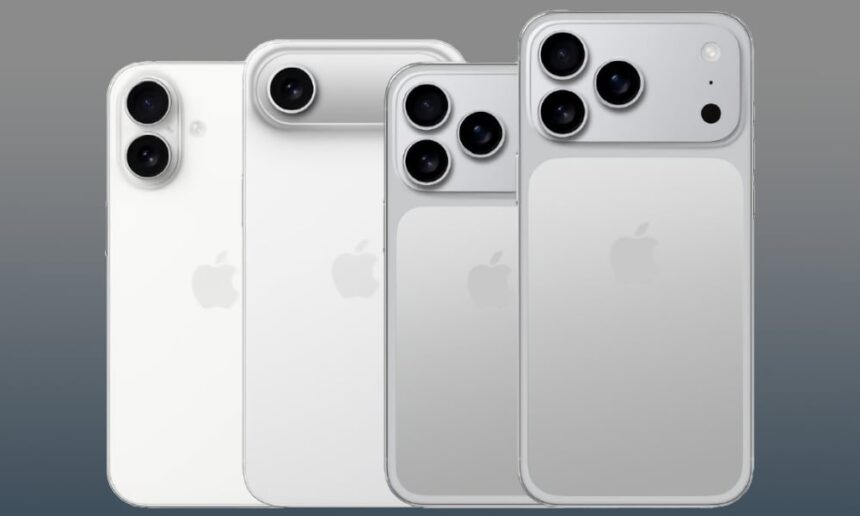
AI data centres are eating the world’s memory chips. Apple can no longer absorb the cost. Tim Cook told the Wall Street Journal that price increases are “unavoidable.” The same day, Trump announced Apple will make chips with Intel in the United States. Both stories are connected.
In a not-so-surprising development, Apple’s iPhone prices are increasing. Tim Cook did not soften the message. Speaking to the Wall Street Journal, Cook confirmed Apple is raising prices on its devices: “Unfortunately, price increases are unavoidable. We’re doing our best to mitigate the huge increases that are being passed to us, and we’ve been trying to shield our customers from the increases, but the situation is unsustainable.”
The cause is specific and structural. Demand from AI companies for high-bandwidth memory has quadrupled the cost of both DRAM and NAND chips since last year, squeezing consumer electronics makers who now compete for supply against hyperscalers signing three-to-five year prepayment agreements. On the same day Cook spoke to the Journal, President Trump announced via Truth Social that Apple and Intel have agreed to manufacture chips together in the United States. The two announcements are not unrelated.
What’s Happening & Why It Matters
The Memory Chip Crunch
Apple’s iPhone price increase announcement is a supply crisis unlike anything in recent consumer electronics history. Global smartphone memory costs surged roughly 90–95% in the first quarter of 2026 alone, per IDC data. The average selling price of a smartphone worldwide has already risen 14% year-on-year to a record $523. The shortage is not expected to ease before 2027.
The root cause is competition. Cook warned the situation is a “hundred-year flood unlike anything he had seen in over four decades in the electronics supply chain.” AI companies — the hyperscalers building the data centres behind ChatGPT, Claude, Gemini, and Grok — sign multi-year prepayment agreements directly with Samsung, SK Hynix, and Micron for priority access to high-bandwidth memory. By contrast, Apple — the world’s largest smartphone manufacturer — now competes for whatever supply is after those hyperscaler contracts are fulfilled. Morgan Stanley estimates that memory wafers available for consumer technology will fall up to 15% short of demand by 2027 as chipmakers redirect capacity toward AI customers.
What Apple Price Rises Mean for iPhone 18
The price increase applies to all Apple devices — but the iPhone 18 is the most commercially significant. TechInsights calculates that passing through current cost increases while maintaining Apple’s profit margins would add around $270 to the price of the next iPhone Pro model. Cook did not specify which products would be affected first, or when the increases take effect. He declined to give specific numbers.
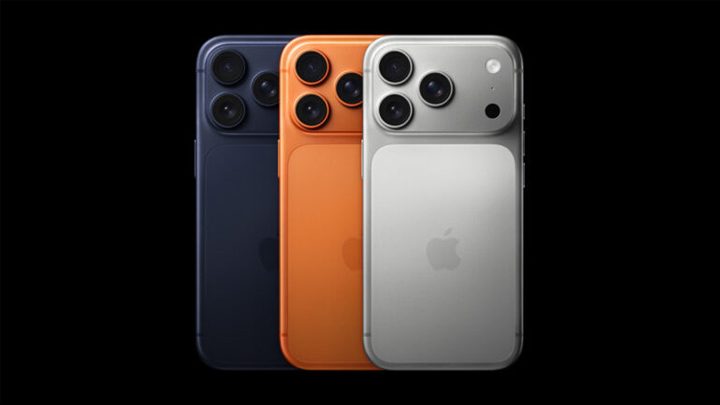
Additionally, budget Android brands — Xiaomi, Transsion, Honor — are facing a far steeper squeeze, with global shipment declines of 20–32% projected for 2026 across those brands, according to IDC. Apple has more structural resilience than most. Its scale, supply chain integration, and premium customer base mean it absorbs some costs that would bankrupt smaller rivals. By contrast, absorbing a 90–95% memory cost surge is beyond the capacity of any consumer electronics company — including Apple.
Trump Announces Apple-Intel US Chip Deal
The second story of the day arrived via Trump‘s Truth Social overnight. “I decided to help Intel because we need to design and build our Chips right here in America,” Trump wrote. “Stupid Presidents took our Economy for granted, and let Taiwan and others steal our Semiconductor Factories.”
The announcement confirmed that Apple has agreed to use Intel‘s foundry for chip manufacturing. The deal is specific in scope. Any arrangement is purely a foundry deal — with Intel acting as a contract manufacturer for chips Apple designs in-house. The Intel 18A-P process will be used for lower-end chips only, not flagship silicon. TSMC keeps more than 90% of supply. Furthermore, supply chain analyst Ming-Chi Kuo estimates first shipments in Q2 or Q3 2027. Intel is expected to spend 2026 on production testing at 50–60% yield rates, with a full ramp through 2028.
Intel shares rose 10.5% on the announcement. The US government holds approximately a 10% stake in Intel — a position Trump noted had grown from roughly $8.9 billion to more than $60 billion in nine months as Intel’s stock climbed. Additionally, Trump cited NVIDIA and Elon Musk‘s TeraFab — a chip manufacturing complex planned in Austin, Texas — as further foundry commitments already secured by his administration.
The Connection
Apple’s iPhone price increase announcement and the Apple-Intel deal are not separate news items that happened to land on the same day. They are connected by a single constraint: Apple needs more control over its chip supply chain. Apple CEO Tim Cook acknowledged during Apple’s Q2 2026 earnings call that iPhone 17 production had been “constrained” because TSMC could not produce enough A19 chips to satisfy demand. The Intel foundry deal addresses that constraint directly — giving Apple a second manufacturing partner and reducing its dependence on a single TSMC relationship that is under extraordinary demand pressure from every major AI chipmaker simultaneously.
TF Summary: What’s Next
Apple‘s price increases apply to products launching in fall 2026 — most significantly the iPhone 18 lineup. No specific price has been confirmed. The Apple–Intel deal moves into production testing across 2026. First devices using Intel-made Apple chips arrive in 2027. John Ternus — Cook’s successor as CEO from 1 September — will manage both the price increase rollout and the Intel manufacturing ramp-up.
MY FORECAST: Apple’s iPhone price increase announcement will produce the most significant iPhone pricing revision since the original iPhone Pro Max. The iPhone 18 Pro will launch at $1,299 — a $100 increase over the iPhone 17 Pro starting price. By contrast, Apple‘s brand pricing power means that increase will not substantially impact launch sales. The iPhone 18 waitlist is nearly identical to the iPhone 17 waitlist. The Intel deal is the more consequential long-term story. Apple Silicon built on Intel 18A-P process — even for lower-end devices — begins reducing Apple‘s TSMC dependency at exactly the moment AI companies are making that dependency most commercially dangerous.