


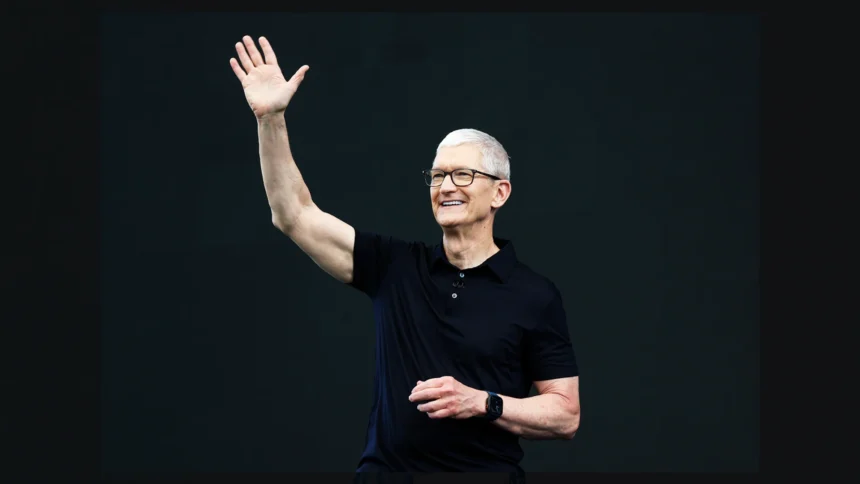
Tim Cook delivered his final WWDC keynote as CEO this morning. Siri finally got the AI upgrade promised two years ago. macOS Golden Gate drops every Intel Mac ever made. And Siri won’t work in Europe at all. Apple’s biggest software event in a decade.
Apple WWDC 2026 keynote announcements came yesterday morning (10 a.m. Pacific time) — and they delivered exactly what the AI-watchers needed to hear. Apple CEO Tim Cook opened the event at Apple Park in Cupertino. He announced sweeping updates across every major platform. Siri finally received the full AI overhaul Apple first promised at WWDC 2024. macOS 27 officially drops support for every Intel Mac ever made. And in a notable snag for European users, Apple confirmed that Siri AI will not be available in the EU or China at launch. Cook closed his remarks with an emotional personal note — widely understood as a farewell. He steps down as CEO on 31 August 2026. John Ternus, currently Apple‘s head of hardware engineering, takes over on 1 September.
What’s Happening & Why It Matters
Siri AI: Two Years Late, Finally Here
Siri AI is the headline product of the Apple WWDC 2026 keynote announcements. Apple unveiled a completely rebuilt assistant — conversational, context-aware, and capable of understanding what is happening on your screen. The new Siri reads your emails, calendar, and photos. It handles multi-step tasks across apps in a single instruction. It generates text, images, and code directly within the interface. By contrast, the previous Siri handed many queries off to ChatGPT — a workaround that frustrated users who expected a native Apple solution.
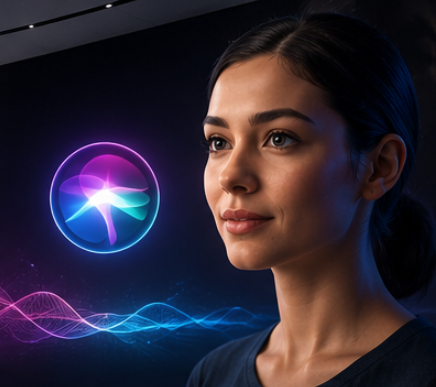
The new assistant runs on a custom 1.2 trillion parameter Google Gemini model — licensed by Apple for approximately $1 billion per year. Apple emphasised privacy throughout the announcement. The system uses on-device processing where possible. Where cloud processing is required, Private Cloud Compute ensures no user data is retained by Apple‘s servers. Additionally, users choose which extensions to enable. Siri AI launches in beta in September 2026 alongside iOS 27’s public release.
The EU Problem: Siri AI Blocked by DMA
Siri AI’s launch carries a significant carve-out that affects millions of users. Apple confirmed the assistant will not be available in the European Union or China at initial launch. In the EU, the Digital Markets Act (DMA) requires Apple to allow interoperability between Siri and third-party AI providers. Apple stated plainly. “Due to the Digital Markets Act, Apple will not be able to ship Siri AI in the European Union with the release of iOS 27 and iPadOS 27. Over the past several months, EU regulators did not accept Apple’s proposed solutions.”
That decision will affect every iPhone, iPad, and Mac user across the EU’s 27 member states. In practice, EU users will receive iOS 27 with standard Siri — the previous, non-AI version — while US users get the rebuilt assistant immediately. The gap in product experience between US and EU Apple users just widened significantly. Meanwhile, Apple noted it will continue discussions with EU regulators. A resolution — and EU Siri AI availability — may arrive in a later update.
iOS 27: AI Throughout, Hardware Refinement
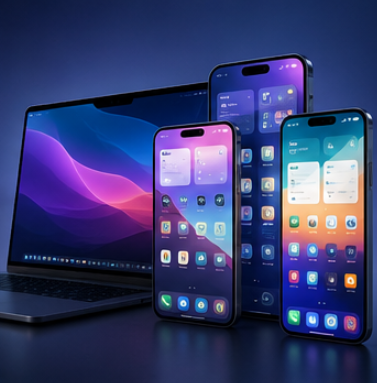
iOS 27 is a deliberately tight update. Apple senior VP Craig Federighi described the design philosophy as “refinement over reinvention.” In practice, that means Apple Intelligence features are distributed deeply across the platform — rather than concentrated in one headline app. Notification summaries, writing assistance, photo editing, and email prioritisation all receive AI enhancements. A new Foundation Models framework gives developers on-device model access within their apps. Additionally, the framework supports custom skills — letting third-party apps train specialist AI behaviours on device without sending data to the cloud.
iOS 27 drops no iPhones from support. The oldest supported device is the iPhone 15 — maintaining Apple‘s pattern of broad backwards compatibility that Android manufacturers cannot match. Notably, the full Siri AI experience — including expressive voices and advanced dictation — requires an iPhone 17 Pro or iPhone Air. Developer betas of iOS 27 are available today.
macOS 27 Golden Gate: Intel Era Ends
macOS 27, named Golden Gate, marks the end of Apple‘s Intel transition. The update requires Apple Silicon — any Mac running an Intel processor will not receive macOS 27. That transition began in November 2020 with the M1 chip. Golden Gate completes it. By contrast, Apple confirmed that macOS 26 Tahoe — the current release — will continue receiving security updates for Intel machines through 2027. No Intel Mac owner loses security support immediately.
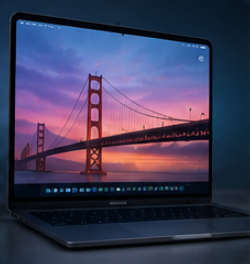
Golden Gate brings Apple Intelligence to the Mac platform fully for the first time. Siri AI, Visual Intelligence, and the full Foundation Models developer framework all arrive on Apple Silicon Macs. Touch optimisations for a future foldable MacBook Pro appear in the developer documentation — suggesting a hardware category not yet publicly announced.
Tim Cook’s Final Keynote Moment
Cook’s closing remarks at the Apple WWDC 2026 keynote carried unmistakable emotional weight. “On a personal note,” he told the audience, “some of the greatest highlights of my time as CEO have been events like this. Sharing powerful tools with all of you and then seeing what you create with them has been a constant reminder that imagination has no limits. And with the incredible capabilities we introduced today and so many more still to come, I truly believe the best is still ahead.” He received a standing ovation inside Apple Park.
Cook’s fifteen-year tenure included the M-series silicon transition, the growth of Services to a $100 billion business, the launch of Apple Vision Pro, and the addition of hundreds of millions of users to Apple‘s ecosystem. By contrast, the Siri delay — two years from promise to delivery — is the counterpoint his successors will have to resolve. John Ternus did not appear at WWDC 2026. His absence was widely noted.
TF Summary: What’s Next
Developer betas of iOS 27, iPadOS 27, macOS Golden Gate, watchOS 27, tvOS 27, and visionOS 27 are available to enrolled developers today. Public betas follow in July 2026. Final releases ship in fall 2026 — traditionally September or October, alongside new iPhone hardware. Siri AI launches in beta with the fall release in the US. EU availability depends on ongoing DMA negotiations. Tim Cook formally transitions to executive chairman on 1 September 2026.
MY FORECAST: The Apple WWDC 2026 keynote announcements will be remembered as the event that settled the Siri question — and raised a new one. Siri AI is finally real. The Google Gemini foundation, Apple‘s privacy architecture, and deep system integration produce a genuinely differentiated assistant. By contrast, the EU exclusion is the story that will dominate Apple‘s autumn cycle. When US users activate Siri AI on day one in September and EU users cannot, the DMA becomes a consumer complaint, not just a regulatory dispute. That consumer pressure will accelerate Apple‘s negotiations with the European Commission. Siri AI will arrive in the EU within six months of the US launch — either through an interoperability compromise or a revised DMA interpretation. And John Ternus’s first product event as CEO will either validate Cook’s farewell confidence or reveal exactly why Apple spent two years delaying its most important software feature.