


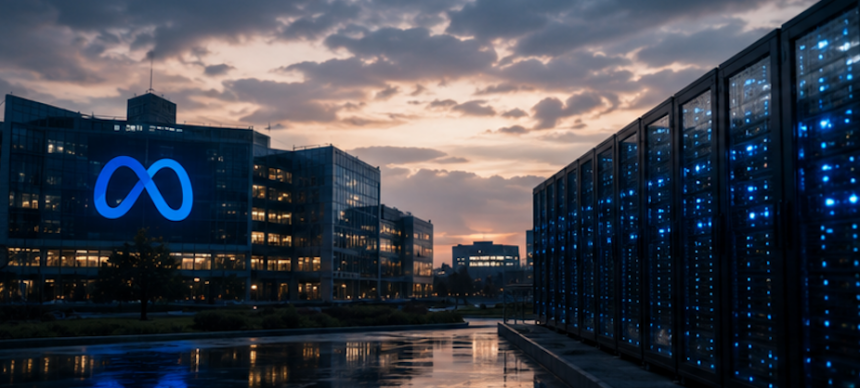
Revenue up 28%. Net income down anyway. Meta plans to spend up to $145 billion on AI this year. The market’s response: erase nearly 10% of the stock’s value in a single after-hours session — even after Zuckerberg announced a $14 billion data centre deal to help pay for it.
Meta’s Q2 2026 earnings news came on 29 July, and the numbers told two different stories at once. Revenue reached $60.8 billion, up 28% year-over-year. Net income fell to $15.8 billion, down from $18.3 billion a year earlier — despite the higher revenue base. Diluted earnings per share came in at $6.18, well short of the $7.14 to $7.20 analysts expected. Shares tumbled as much as 9.64% in after-hours trading, falling near $529, close to the bottom of Meta’s 52-week range.
CEO Mark Zuckerberg called the quarter around momentum, not margin pressure. “AI is accelerating our core business today, powering our next generation of products, and opening the door to [new] enterprise opportunities,” he said. Investors heard a different message: costs climbed 55% to $42 billion, and there’s no clear end in sight.
What’s Happening & Why It Matters
The Capex Spooked Wall Street
Meta is forecasting $125 billion to $145 billion in total AI capital expenditure for 2026. That’s not a modest bump from prior guidance — it’s the second time Meta has raised the number. CFO Susan Li defended the pace, arguing the industry has “under-built historically for the wave of AI adoption,” which makes existing capacity “highly valuable.” That’s a bet that scarcity, not just scale, will pay off.
The problem is timing. Meta’s earnings followed as new Federal Reserve Chair Kevin Warsh held rates steady but revealed a split committee; three of twelve members wanted a hike. Markets were already jumpy. A capex number this large, paired with an EPS miss, gave investors a reason to sell first and ask questions later.
Meta Tries to Answer Its Cloud Question

One detail matters more than the headline numbers: Meta doesn’t have a cloud business. Every other hyperscaler — Amazon, Google, Microsoft — can point to AWS, Google Cloud, or Azure as proof that AI infrastructure spending turns into revenue outside advertising. Meta can’t. That’s the central bear case against the stock.
Zuckerberg is starting to answer it. The New York Times reported Meta is negotiating to lease roughly $10 billion in computing power to Anthropic over two years. Separately, Meta and BlackRock announced a $14 billion, 1-gigawatt data centre in Texas — BlackRock holds 80%, Meta the remaining 20%. Zuckerberg told Bloomberg that leasing out data centre capacity “makes sense,” and hinted he might investigate SpaceX’s own leasing model for inspiration.
Why Bulls Aren’t Giving Up
Despite the sell-off, the stock trades at roughly 18 to 22 times forward earnings — below its own three-year average near 23 times. Fifty-seven Wall Street analysts still carry Buy ratings. Gross margin is at 82%. The bull case rests on real numbers: 3.6 billion people use at least one Meta app daily, and ad pricing power hasn’t cracked despite the spending spree.
The bond market tells a quieter, more honest story. Investors are demanding higher yields to fund Meta’s data centres than they did nine months ago — the credit market’s own way of pricing AI infrastructure risk, independent of what the stock does day to day.
TF Summary: What’s Next
Meta’s Anthropic leasing talks are unconfirmed by either company. The BlackRock Texas data centre begins construction on an undisclosed timeline. Q3 guidance calls for revenue near $63.2 billion, a bar management will need to clear after the quarter’s stumble. No formal cloud business announcement has been made, despite Zuckerberg’s public openness to the idea.
MY FORECAST: Meta will announce a formal cloud leasing business within two quarters — the Anthropic talks and the BlackRock deal are both dress rehearsals for that pivot. The bigger question is whether Meta can convert AI infrastructure into a genuine B2B revenue stream fast enough to satisfy investors who just watched net income fall on rising revenue. If the Anthropic deal closes and generates real, disclosed revenue by Q4, expect the stock to recover most of today’s losses. If it stalls, expect the “no cloud business” criticism to harden into the dominant narrative heading into 2027.
Related Stories
- AI Stocks Sell Off as Markets Ask Whether the Spending Will Ever Pay Off
- Sour Sentiment Triggers AI, Chip Stocks Sell Off
- Anthropic’s $1.5 Billion Copyright Settlement With Authors