


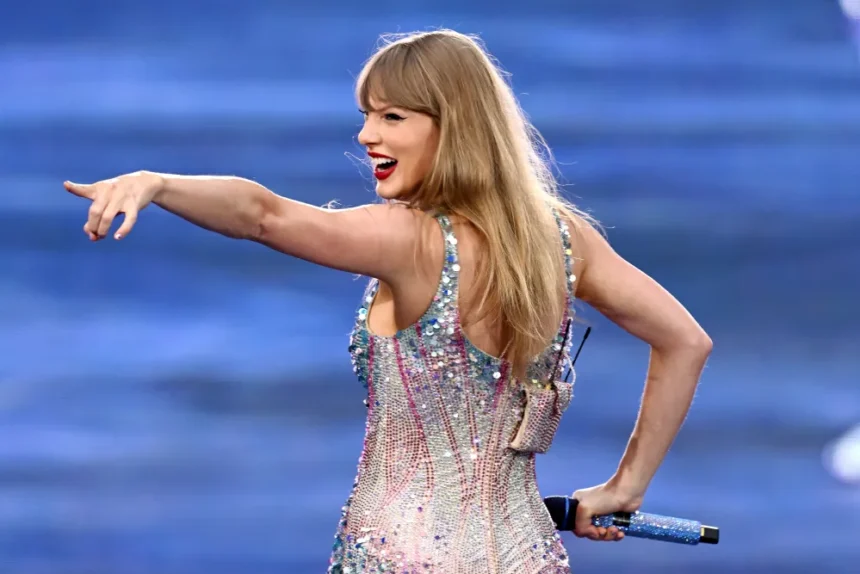
Taylor Swift just filed to trademark the sound of her own voice. That is not a publicity move. It is a legal weapon — and every artist in the world should be paying attention.
On 24 April 2026, Taylor Swift‘s company TAS Rights Management filed three trademark applications with the US Patent and Trademark Office (USPTO). Two applications cover the sound trademarks of her voice. The third protects a specific visual image of her performing on stage. The filings were made through law firm Venable LLP, with attorney Rebecca Liebowitz listed as the representative.
Swift did not make a public announcement. The filings were spotted by intellectual property attorney Josh Gerben of Gerben IP, who posted an analysis that immediately went viral. The reason is obvious. AI has made it easier than ever to clone a celebrity’s voice, generate photorealistic fake images, and distribute fabricated content at an enormous scale. Swift has experienced the consequences of that technology firsthand. She is fighting back — not with a press release, but with a legal framework that nobody has fully tested in court yet.
What’s Happening & Why It Matters
The Three Trademark Filings: What They Cover
Swift filed for three distinct protections. Each addresses a different aspect of her public identity, and each targets a different type of AI misuse.
The first two are sound marks — a relatively rare category of trademark that covers a specific audio experience rather than a word, name, or logo. The famous examples include Netflix‘s “tu-dum” intro sound and NBC‘s chimes. Swift’s two sound marks protect her voice, saying “Hey, it’s Taylor Swift” and “Hey, it’s Taylor.” Each application was submitted with an audio clip of Swift speaking those phrases. The scope of protection is wide. Under trademark law, the standard is not just exact reproduction — it covers anything “confusingly similar.” That is a significantly lower standard than the copyright law’s requirement for near-exact copying.
The third filing is a visual trademark covering a specific photograph: Taylor Swift holding a pink guitar with a black strap, dressed in a multicoloured iridescent bodysuit with silver boots, standing on a pink stage in front of a multicoloured microphone with purple stage lighting. This image closely matches Swift’s signature Eras Tour stage look. The filing does not protect all images of Swift — it protects this specific visual composition. In practice, however, legal experts say it gives her team grounds to pursue AI-generated images that evoke her recognised performing appearance, even when those images are not exact copies.
Why Trademark — Not Just Copyright or Publicity Rights?
Swift already holds extensive intellectual property protections. She owns federal trademarks on her name, many song and album titles, famous lyrics, and dozens of other elements. Right of Publicity laws protect her — the body of state law that allows individuals to sue if their name or likeness is used commercially without consent. Those laws vary by state and can be powerful tools. So why add a trademark?
The answer lies in how AI breaks the existing model. Copyright law protects specific recorded works — songs, videos, and photographs. When AI generates a new audio recording that mimics Swift’s voice but is not copied from any existing recording, copyright does not directly apply. There is no reproduction of a specific work. Right of Publicity claims are state-specific, often harder to enforce at scale, and were not designed for the speed and volume of AI-generated content in 2026.
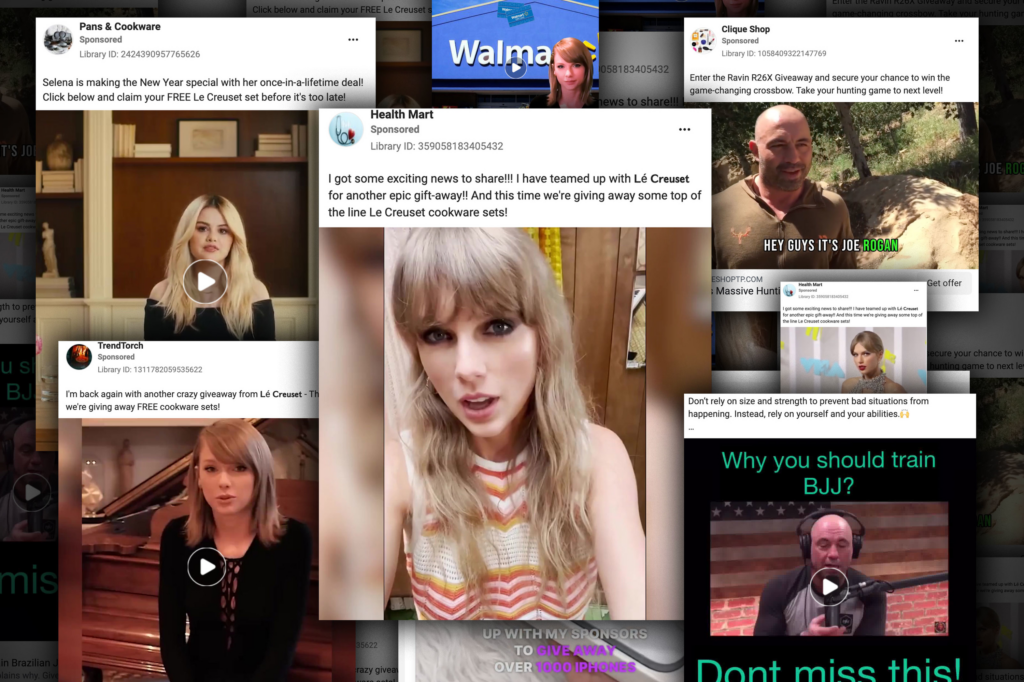
Trademark law fills that gap. It does not require proof of exact copying. It requires proof that the use creates confusion about source or endorsement. An AI-generated voice that sounds like Taylor Swift promoting a product, or a fake image of Swift in her signature stage outfit, could constitute trademark infringement even if no original recording or photograph was copied. That is a much stronger enforcement position — and it is why Gerben described the filings as potentially the most significant new IP strategy in the AI era. “Locking up phrases like ‘Hey, it’s Taylor Swift’ and ‘Hey, it’s Taylor’ isn’t just about those phrases,” Gerben wrote. “It’s about the voice itself.”
The AI Fakes That Made This Necessary
Swift did not file the trademarks in a vacuum. Her likeness has been misappropriated repeatedly and publicly over the past three years. In late 2023 and early 2024, AI-generated pornographic deepfake images of Swift spread across social media platforms — on X in particular — reaching millions of views before being removed. The incident prompted calls for legislation in the US Congress and accelerated reviews of platform content moderation.
In the run-up to the 2024 presidential election, AI-generated images of Swift falsely suggesting she had endorsed Donald Trump’s presidential campaign circulated widely. Swift herself addressed this directly on Instagram. “Recently I was made aware that AI of ‘me’ falsely endorsing Donald Trump’s presidential run was posted to his site,” she wrote. “It really conjured up my fears around AI, and the dangers of spreading misinformation.” Additionally, Meta‘s AI chatbots were reported to have generated content mimicking Swift’s voice without her permission — adding a specific commercial AI platform to the list of misuse vectors. That history makes the trademark strategy more than precautionary. It is a direct response to documented harm.
Matthew McConaughey’s Blueprint — and What Comes After
Swift’s filings follow a path opened by actor Matthew McConaughey, who filed eight trademark applications with the USPTO in 2025. Those trademarks cover a seven-second clip of McConaughey standing on a porch, a three-second clip of him sitting in front of a Christmas tree, and audio of him saying his signature phrase from Dazed and Confused. In January 2026, the USPTO granted all eight.
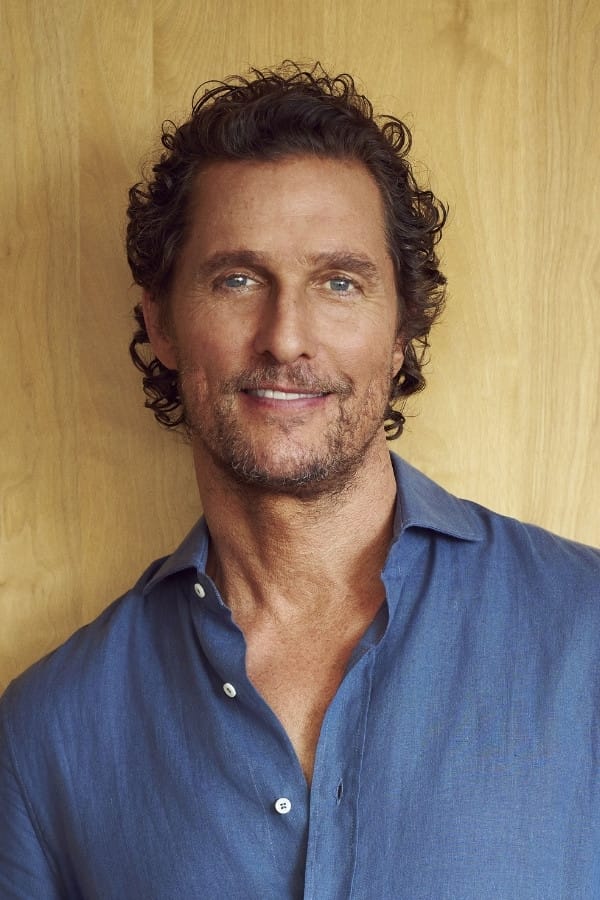
McConaughey described his reasoning to the Wall Street Journal with precision. “My team and I want to know that when my voice or likeness is ever used, it’s because I approved and signed off on it. We want to create a clear perimeter around ownership with consent and attribution the norm in an AI world.” That setting — consent and attribution as the standard — is the same principle Swift’s filings embody. The difference is scale. McConaughey is a respected Hollywood actor. Swift is arguably the most commercially valuable individual artist on the planet. Her filing will receive a different level of legal scrutiny, media attention, and potential challenge.
Gerben identified the practical mechanism by which the strategy would operate in enforcement. A trademark owner can issue takedown notices to AI platforms — similar to how studios use copyright claims. In December 2025, Disney sent a cease-and-desist letter to Google after discovering that Gemini was generating copies of trademarked Disney characters. Google removed the offending content within 24 hours. The same mechanism would apply to AI platforms generating Swift-like voices or performance images once her trademarks are granted.
The Legal Territory That Has Never Been Tested
The critical caveat — which everyone reporting on the story acknowledges — is that this strategy has not been tested in court specifically against AI. Trademark law was designed to protect brand identifiers, not individual identities in full. Courts have historically been reluctant to grant trademark protection that functions as a blanket shield over a person’s general appearance, voice, or persona — because that would interfere with journalism, commentary, parody, and free expression.
The narrow scope of Swift’s filings is likely strategic. She is not trying to trademark herself. She is protecting two specific spoken phrases and one specific visual composition. That narrowness gives her filings the best chance of surviving USPTO examination and potential legal challenge. Gerben noted that the approach is “testing new theories on how trademark law will work in the AI age” — a deliberate, incremental legal build rather than an overreaching power grab. Whether courts ultimately uphold this framework is the open question. The answer will shape how celebrities, brands, and potentially regular individuals protect their identities in an AI-saturated world for years to come.
Beyond Taylor Swift
The implications of Swift’s filing stretch far beyond one artist. The entertainment industry has been watching the AI voice cloning problem intensify for three years. Existing legal tools — copyright and the Right of Publicity — have proven too slow, too jurisdiction-specific, and too narrowly defined to address AI-scale misappropriation. The trademark approach offers a faster enforcement mechanism, a legal standard, and — crucially — a federal layer of protection that applies across all US states. That makes it structurally more powerful for commercial enforcement.
Swift already commands one of the largest and most financially active fan ecosystems in music. Her team aggressively enforces her existing trademarks. That combination — legal standing, proven willingness to litigate, and commercial scale — makes her one of the few artists positioned actually to test this strategy in court if challenged. The outcome of any such case will create a precedent for every artist, content creator, broadcaster, and public figure who wants to assert control over their AI-generated likeness. The case law does not yet exist. Swift may end up writing it.
TF Summary: What’s Next
The three trademark applications are currently pending at the USPTO. Examination typically takes several months. The USPTO will assess whether the sound marks are sufficiently distinctive to qualify for trademark protection — a higher bar for sound marks than for traditional word or logo marks. If granted, all three trademarks would cover use in entertainment services. Swift’s legal team at Venable LLP will likely receive questions from the USPTO and may need to submit additional evidence of the phrases’ distinctiveness and association with Swift specifically.
The industry implication is immediate and ongoing. Swift’s filing is already prompting other artists, agents, and entertainment lawyers to evaluate similar strategies. The legal framework for protecting celebrity identity in the AI era is being rebuilt in real time — trademark application by trademark application. The entertainment industry’s lobbying effort for federal legislation on AI voice cloning and deepfakes, which has stalled in Congress, may accelerate if trademark law proves to be the more effective enforcement route. Either way, the era of celebrities passively hoping AI platforms behave responsibly is over. Swift’s filings signal that the most commercially powerful artists are done waiting for platforms to act — and have started building legal infrastructure to act themselves.