



A Special Forces master sergeant knew about Operation Absolute Resolve before it happened. He bet $33,000 on it. He made $410,000. Now he’s been arrested — and prediction markets have a problem.
On 23 April 2026, the US Department of Justice unsealed an indictment that converges at the intersection of classified military operations, crypto, and prediction markets. Master Sergeant Gannon Ken Van Dyke, 38, a US Army Special Forces soldier based at Fort Bragg, North Carolina, was arrested and charged with using classified information to place profitable bets on Polymarket, the world’s largest prediction market platform.
Van Dyke had direct knowledge of Operation Absolute Resolve — the covert US military mission that captured Venezuelan President Nicolás Maduro and his wife Cilia Flores in early January 2026. He was involved in both its planning and its execution. Before the operation launched, he opened a Polymarket account and wagered $33,034 across 13 bets on Maduro being removed from power. Those bets paid out $409,000 (€377,000). That return is more than 12 times the amount staked. The Commodity Futures Trading Commission (CFTC) has separately filed civil charges against Van Dyke in addition to the criminal indictment. This is the first time the DOJ has prosecuted suspected insider trading on a prediction market in the United States.
What’s Happening & Why It Matters
Operation Absolute Resolve: What Van Dyke Knew

On 3 January 2026, US military forces launched a covert operation in Caracas. They extracted Maduro and Flores from the presidential palace overnight, under heavy fire, and transported them to New York. Maduro arrived at a Manhattan helipad in handcuffs on 5 January 2026 and was taken directly to a federal courthouse to face drug trafficking charges. He has pleaded not guilty.
The operation was classified. Van Dyke knew about it before it happened. He had signed nondisclosure agreements committing never to “divulge, publish, or reveal by writing, words, conduct, or otherwise any classified or sensitive information” related to military operations — according to the DOJ‘s statement. He chose to use that information to bet on its outcome instead.
FBI Assistant Director James Barnacle described the core of the offence in a statement. “Van Dyke profited more than $400,000 by trading various outcomes related to Venezuela after learning of the operation because of his role as a US Army soldier,” he said.
The Bets: Timing, Amounts, and Escalation

Van Dyke’s trading on Polymarket began on 27 December 2025 and continued through 2 January 2026 — the eve of the Caracas raid. He placed 13 separate bets in total, all taking a “Yes” position on contracts asking whether specific events would occur before 31 January 2026. Those contracts included whether US forces would be in Venezuela, whether Maduro would be out of office, whether the US would invade Venezuela, and whether President Trump would invoke the War Powers Act against the country.
Initially, Van Dyke’s individual bets were relatively small — less than $100 each. His spending then escalated sharply. On 5 January 2026 alone — the day Maduro arrived in New York — Van Dyke placed more than $26,000 in single-day wagers. The pattern itself told a story. That sharp acceleration in bet size, timed to the exact day of Maduro’s public capture, drew immediate attention from online traders and journalists tracking the markets.
The Cover-Up: Deleting Accounts and Changing Emails
When news outlets reported unusual trading in Maduro-related contracts on Polymarket, the amounts matched those in Van Dyke’s account. At that point, he tried to eliminate the trail.
On approximately 6 January 2026, Van Dyke contacted Polymarket and asked the company to delete his account. He falsely claimed he had lost access to the email address tied to the account. The same day, he changed the email address registered to a cryptocurrency exchange account associated with the trades. He moved most of the winnings — approximately $409,000 — to a foreign cryptocurrency vault, and later deposited those proceeds into a newly created online brokerage account.
“Van Dyke then took steps to conceal his identity as the trader in the Maduro- and Venezuela-related markets,” the DOJ stated in the indictment. The attempt at concealment did not succeed. Polymarket identified suspicious trading, referred the matter to the DOJ, and cooperated throughout the investigation.
Polymarket’s Response and New Rules

Polymarket moved quickly to distance itself from the incident — and to claim credit for the outcome. “When we identified a user trading on classified government information, we referred the matter to the DOJ and cooperated with their investigation,” the company posted on X. “Insider trading has no place on Polymarket. Today’s arrest is proof the system works.”
Neal Kumar, Polymarket‘s Chief Legal Officer, was more direct in his warning to future users. “It’s not anonymous — you will be found just like this guy,” he posted on X. The message was aimed at anyone who believes prediction market anonymity provides real protection from law enforcement.
The company had already rolled out new market integrity rules in March 2026, responding to a string of high-profile suspicious trades. Those rules ban trading based on information users are legally required to keep confidential. They ban trades by people in a “position of authority or influence” to affect the outcome of an event. The Van Dyke case is the clearest test of those rules to date — and it occurred before the March update was published.
The Legal Framework: The “Eddie Murphy Rule”

The CFTC‘s civil charges against Van Dyke are the first application of what prosecutors call the “Eddie Murphy Rule” to a prediction market case. The rule — formally part of the Commodity Exchange Act — prohibits trading in commodity markets based on misappropriated government information. The name refers to the 1983 film Trading Places, in which a character obtains a classified government crop report and trades on it.
US Attorney Jay Clayton of the Southern District of New York defined the principle at stake in a statement. “Prediction markets are not a haven for using misappropriated confidential or classified information for personal gain,” he said. “Those entrusted to safeguard our nation’s secrets have a duty to protect them and our armed service members — not to use that information for personal financial gain.”
The criminal charges include commodities fraud and making false statements. Van Dyke has been on active duty in the US Army since 2008. His defense lawyer had not been publicly identified at the time the indictment was unsealed.
The Prediction Market Problem

The Van Dyke arrest highlights a tension that has been building in the prediction market industry for months. Some academics and market advocates argue that insider trading on prediction markets actually serves a social function by allowing private information to flow into public prices more efficiently. Polymarket‘s CEO told Axios in November 2025 that it was “super cool” that his platform “creates this financial incentive for people to go and divulge the information to the market,” including insiders.
These conditions collide directly with national security law and military nondisclosure obligations. The case against Van Dyke is not isolated. A separate Polymarket user made roughly $550,000 from bets on US military operations — and that case is under investigation. In February 2026, Israeli authorities arrested several people and charged two with using classified information about military operations in Iran to place Polymarket bets. The pattern is international.
President Trump was asked about insider trading on prediction markets during an Oval Office event. He said he does not like the concept of betting. “The whole world, unfortunately, has become somewhat of a casino,” he added. His administration had, however, recently given Polymarket a warmer regulatory reception than the Biden administration — dropping a criminal investigation and allowing the platform to open a separate US exchange overseen by regulators. Trump’s son, Donald Trump Jr., is listed as an advisor to both Polymarket and its domestic competitor, Kalshi.
Van Dyke’s Arrest in Context
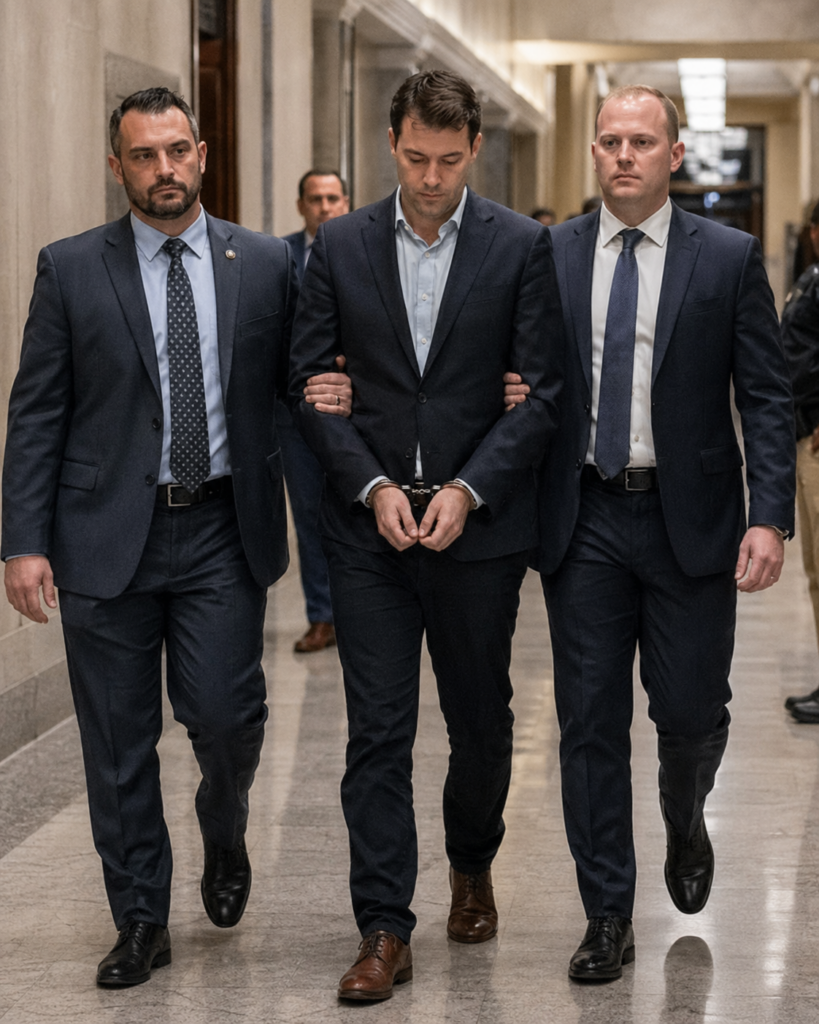
The DOJ and CFTC both view the case as a precedent-setter. It is the first time US prosecutors have brought criminal charges for suspected insider trading on a prediction market. The fact that the underlying information was classified military intelligence — rather than corporate earnings or merger plans — makes the case especially significant. Van Dyke did not trade on leaked financial data. He traded on a classified covert military operation that his fellow soldiers were executing under fire.
The indictment underscores how prediction markets’ blockchain-based architecture — which creates pseudonymous but traceable records — works against bad actors in practice. Van Dyke signed up with his personal email address. His escalating bet sizes matched his operational timeline. His cover-up attempts created additional charges. Digital trails in crypto and prediction markets are harder to erase than traditional financial records, not easier.
TF Summary: What’s Next
Van Dyke’s case will be heard in the US District Court for the Southern District of New York. A defense lawyer had not been publicly identified at the time of writing. The criminal charges — commodities fraud and making false statements — carry significant potential sentences. The CFTC‘s civil case proceeds on a separate track. Both proceedings will generate extensive legal scrutiny of how prediction markets handle classified information, what obligations platforms have to monitor for insider trading, and whether existing commodity law is adequate for this new category of financial market.
MY FORECAST: For Polymarket and the prediction market industry, the case presents both risks and opportunities. The arrest validates Polymarket‘s claim that it cooperates with law enforcement. It also confirms that the platform’s pseudonymous structure is not a legal shield. As Kalshi and Polymarket continue expanding in the US market under the Trump administration’s more permissive regulatory stance, the Van Dyke case sets the early legal boundaries for what the platforms can — and cannot — tolerate. The prediction market industry is growing fast. The rules governing who can trade in it, and on what basis, are only beginning to be tested in court.