


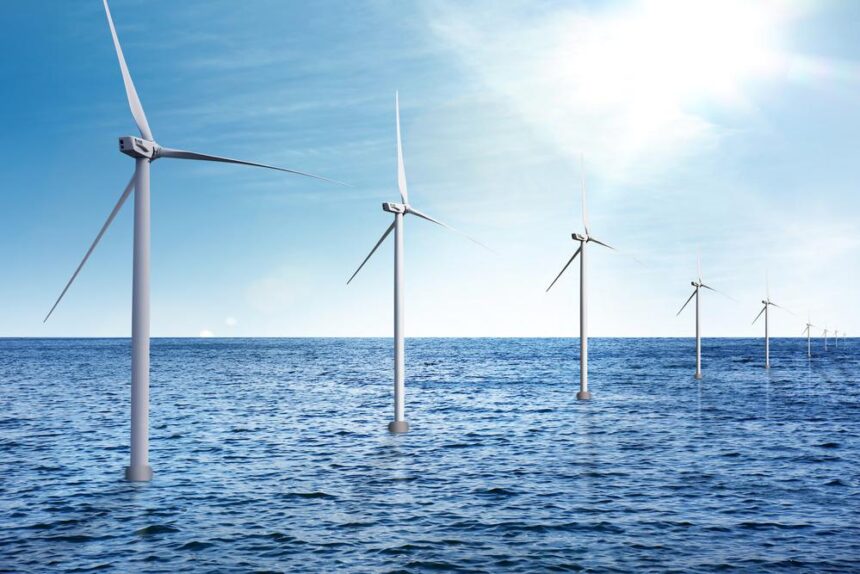
Tokyo announced plans for a 1 gigawatt floating offshore wind farm — 10x bigger than anything currently operating worldwide. Japan’s floating wind era has started and will rewrite the record books.
Japan is making one of the boldest moves in its renewable energy history. The Tokyo Metropolitan Government has announced plans to build the world’s largest floating offshore wind farm off the Izu island chain, roughly 100 miles (160 kilometres) south of Tokyo Bay. The project targets a capacity of at least 1 gigawatt (GW) — enough to supply both the Izu Islands and mainland Tokyo via undersea transmission cables. The target completion date is 2035.
That ambition comes at a significant moment. In January 2026, Japan’s first-ever commercial floating offshore wind farm — the Goto Floating Wind Farm — began generating electricity off the coast of Nagasaki Prefecture. At 16.8 megawatts (MW), it is a pilot-scale installation. Tokyo’s Izu Islands project is 60 times larger. Together, these two projects frame where Japan’s floating wind story currently sits: one foot on the ground, one foot pointed at a world record.
What’s Happening & Why It Matters
The Tokyo Izu Islands Plan: Scale and Ambition
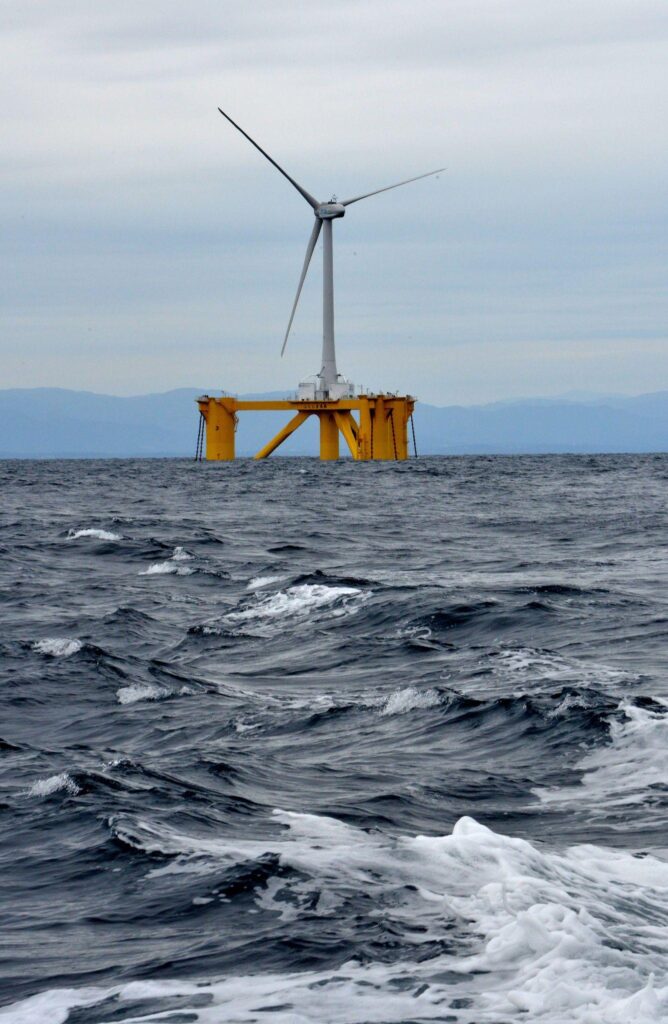
Tokyo Governor Yuriko Koike first announced the Izu Islands project at the COP29 climate conference in Azerbaijan in late 2024. The project has gained momentum throughout early 2026. The Tokyo Metropolitan Government tripled its fiscal 2026 budget for wind development to 2.7 billion yen ($17 million / €15.7 million), specifically targeting seabed surveys, wind studies, and cable routing analysis. The central government is simultaneously preparing to open construction and operations bidding for the site.
For context, the world’s currently largest operational floating offshore wind farm is the Hywind Tampen project in Norway. It generates 94.6 MW. Tokyo’s Izu Islands target is more than ten times that capacity. If the project reaches its 1 GW target, the output would roughly match a single nuclear reactor. Wind capacity factors are lower than nuclear — approximately 40% for offshore wind versus 80–90% for nuclear — so actual delivered energy would be somewhat less. That said, the combination of floating turbine technology and the Izu region’s naturally high wind speeds makes the project technically credible, even if commercially challenging.
The Izu Islands project aims to deliver electricity both to the islands themselves and to mainland Tokyo via undersea cables. That dual-supply role is important. The islands are currently dependent on diesel-fired power generation — an expensive, polluting, and logistically complex option. The wind farm would replace that dependence. On the mainland side, Tokyo is the most electricity-hungry metropolitan area in Japan, and demand is growing as data centres, AI infrastructure, and electrification accelerate.
Why Floating, Not Fixed? Japan’s Unique Geography
Japan’s coastal geography has been the primary obstacle to offshore wind development for decades. Unlike the North Sea — where shallow waters allowed Europe to build fixed-bottom turbines at a massive scale from the 1990s onward — most of Japan’s coastline drops steeply to deep water within a short distance from shore. Fixed-bottom offshore wind turbines, which are drilled or piled into the seabed, require depths of no more than approximately 50 metres (164 feet). Much of Japan’s exclusive economic zone sits far deeper than that.
Floating offshore wind solves this problem. Floating turbines sit on buoyant platforms secured to the seabed by mooring lines and anchors rather than by rigid structural foundations. They can be deployed in water depths of 100 metres (328 feet) or more — unlocking vast areas of Japan’s offshore territory that fixed-bottom technology cannot reach. Floating foundations also have a reduced impact on the seabed during installation, a consideration that impacts environmental permitting in Japan’s coastal ecosystems.
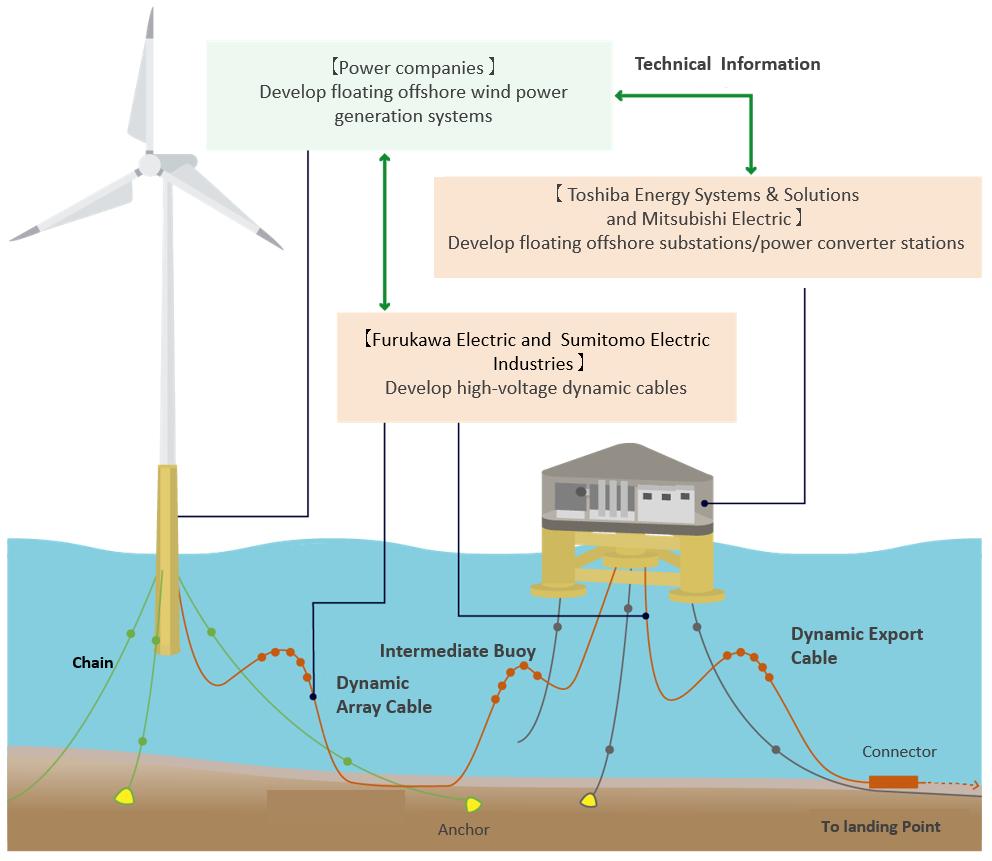
That structural advantage is central to the selection of the Izu Islands site. The region’s deep waters and consistent wind resource make it well-suited to floating technology. The Tokyo Metropolitan Government intends to use a combination of floating and tethered turbine designs, with undersea transmission cables routing power approximately 160 kilometres (100 miles) north to the mainland.
Japan’s First: The Goto Floating Wind Farm Goes Commercial
Before the Izu Islands plan can be understood, the Goto Floating Wind Farm deserves recognition in its own right. On 5 January 2026, Japan’s first commercial floating offshore wind farm began generating electricity off the coast of Goto City in Nagasaki Prefecture. The project has been nearly a decade in development — Toda Corporation first began floating wind demonstration work at this site in 2016.
The Goto wind farm comprises eight 2.1 MW Hitachi turbines, giving a total installed capacity of 16.8 MW. The turbines are mounted on a hybrid spar-type floating foundation — a steel upper section combined with a concrete lower section designed and built by Toda Corporation. This hybrid spar design is a world first for commercial application. The Goto Floating Wind Farm LLC consortium, which built it, includes Toda Corporation, ENEOS Renewable Energy, Osaka Gas, INPEX, Kansai Electric Power, and Chubu Electric Power.
The project was selected through Japan’s first offshore wind auction under the Marine Renewable Energy Sea-Area Utilization Act, which came into force in April 2019. It is the first project in Japan certified under that framework by both the Minister of Economy, Trade and Industry and the Minister of Land, Infrastructure, Transport and Tourism. The electricity generated goes preferentially to local retailers — aligning with the government’s “local production for local consumption” energy policy. Local companies were involved in construction and will participate in ongoing operations and maintenance.
Japan’s Target is 45 GW. Floating Is Non-Negotiable
Japan’s national government has set two binding offshore wind targets. The first is 10 GW of installed capacity by 2030. The second is 45 GW by 2040. Achieving either number without floating technology is essentially impossible given Japan’s coastal geography. The Japan Renewable Energy Institute has identified floating offshore wind as a critical component of the 45 GW pathway, with a target of at least 15 GW from floating projects alone.
The national government’s 2050 net-zero goal adds urgency. Japan has historically been heavily dependent on fossil fuels and, before Fukushima, on nuclear power. The post-Fukushima energy transition has been slow and contested. Offshore wind offers a domestically produced, non-carbon source of baseload-adjacent power — a combination that Japan urgently needs. The Ministry of Economy, Trade and Industry (METI) has pushed offshore wind as a pillar of Japan’s energy security strategy alongside restarted nuclear reactors and a growing hydrogen programme.
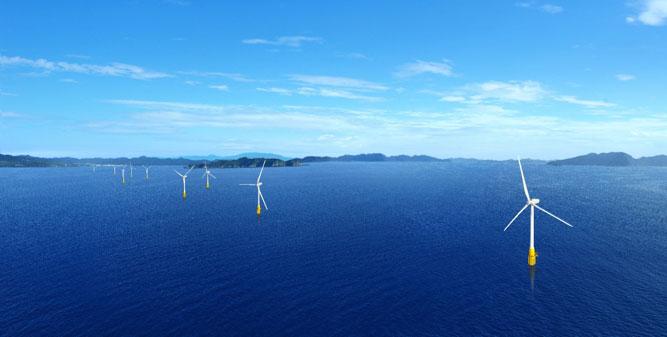
In March 2026, Japan’s largest fixed-bottom offshore wind farm — the 220 MW Kitakyushu Hibikinada wind farm — began commercial operation in Fukuoka Prefecture, comprising 25 Vestas V174-9.6 MW turbines. That project adds further evidence that Japan’s offshore wind sector is moving from planning documents into operating assets.
Private Sector Doubt and Geopolitical Headwinds
Progress is real, but obstacles are significant. A pattern of project withdrawals has undermined private-sector confidence in Japan’s offshore wind market. In 2025, Mitsubishi Corporation pulled out of major wind projects in northern Japan — citing soaring material costs and a weakened yen. Other developers have raised concerns about long-term profitability and the high costs of offshore operations in Japan’s complex maritime environment.
The Izu Islands project is still classified as a “preparation zone” — the earliest formal stage of Japan’s offshore wind development framework. No construction contract has been awarded. The central government’s bidding process has not yet opened. Critics note that offshore projects of this scale typically take more than a decade from designation to first power — meaning a 2035 delivery target leaves very little margin for the permitting, engineering, procurement, and construction sequence that a 1 GW floating project demands.
At the same time, the Trump administration’s policy in the United States — blocking offshore wind projects and rolling back renewable energy regulations — has created a global tailwind for Japan and Europe to accelerate their own programmes. Capital and talent that might otherwise flow to US offshore development are looking for alternative markets. Japan’s combination of regulatory framework, national targets, and strong engineering consortium capability makes it an increasingly attractive destination.
TF Summary: What’s Next
The Tokyo Metropolitan Government will use its tripled 2026 budget to complete seabed surveys, wind resource analysis, and cable routing studies for the Izu Islands site. The central government’s bidding process for construction and operations is expected to open in 2026 or 2027. The 2035 completion target is ambitious by any measure. Most floating wind projects at this scale have never been attempted, and Japan’s contracting market is under strain. That said, the policy commitment is serious, and the funding is moving.
MY FORECAST: For the Goto Floating Wind Farm, attention turns to operational performance data — specifically whether the hybrid spar design performs as modelled in commercial conditions. That data will directly inform the next generation of floating foundation decisions across Japan’s pipeline. At the national level, Japan’s ability to hit its 10 GW by 2030 and 45 GW by 2040 targets depends heavily on whether floating technology can scale quickly enough to complement the limited shallow-water fixed-bottom sites available. The Goto project provides the first real-world answer. The Izu Islands project sets the destination. The distance between them represents the most important engineering and commercial challenge in Japan’s energy transition.