


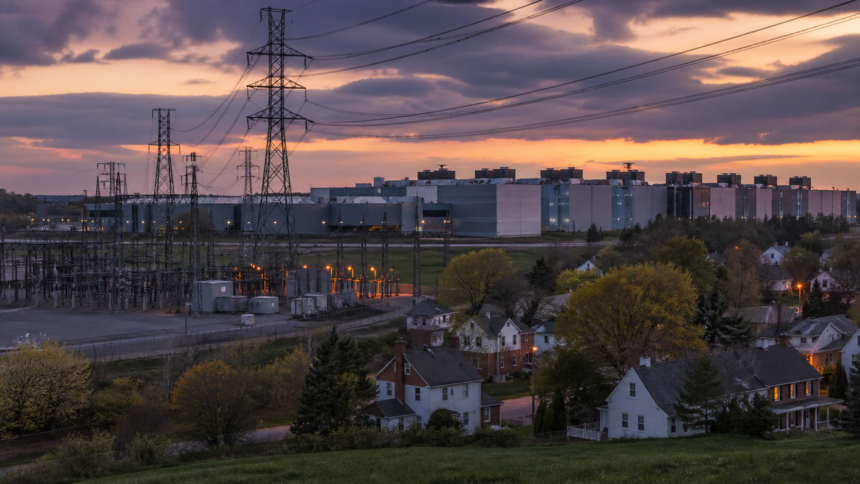
A US governor vetoed her state’s own moratorium. The UK government quietly revised its data centre emissions estimates by a factor of 100, while its departments are fighting each other over the same AI buildout.
The global data center (DC) boom is generating serious political turbulence on both sides of the Atlantic. Furthermore, three stories from 24–26 April 2026 expose how badly governments are struggling to manage the collision between AI infrastructure ambitions and public interest. In Maine, Governor Janet Mills vetoed the first proposed statewide DC moratorium in US history. Furthermore, in the UK, officials quietly revised their DC carbon emissions estimates upward — by more than a factor of 100. Additionally, The Guardian revealed that UK government departments are openly at odds over how to manage the energy demands of AI infrastructure. Consequently, the question of who controls the AI buildout — and who pays for it — has arrived at the centre of democratic politics.
What’s Happening & Why It Matters
Maine: The First Statewide Moratorium That Wasn’t
On 24 April 2026, Maine Governor Janet Mills vetoed L.D. 307 — a bill that would have imposed the first statewide moratorium on large new DC construction in the United States. Furthermore, the bill had passed the Maine Legislature with near-unanimous Democratic support earlier in April. It would have frozen permits for data centers (DCs) requiring more than 20 megawatts of power until 1 November 2027. Additionally, the bill called for the creation of a 13-member council to study DCs’ impacts on the state’s grid, energy bills, air quality, and water supply.
Mills, a Democrat currently running for the US Senate, did not veto the bill because she opposes moratoriums. Furthermore, she was explicit about this. “A moratorium is appropriate given the impacts of massive DCs in other states on the environment and on electricity rates,” she wrote in her veto letter. Her specific objection was narrower. The final version of the bill excluded a $550 million (€506 million) DC project planned for the former Androscoggin Mill in the town of Jay, Maine. That mill closed in 2023 after a boiler explosion, eliminating hundreds of jobs and reducing Jay’s tax base by approximately 22%. Furthermore, the redevelopment project is expected to create more than 800 construction jobs and at least 100 permanent, high-paying positions. Mills said she would have signed the bill if the Jay project had been exempted.
The Veto’s Political Consequences

The Legislature defeated an amendment that would have included the Jay exemption before passing the bill. Consequently, Mills was left with a binary choice — sign a moratorium that would block a project her own constituents support, or veto a bill that a majority of her legislature and, according to polls, a majority of Maine’s public wanted. She chose the veto.
The reaction from bill advocates was sharp. State Representative Melanie Sachs, the bill’s sponsor, said Mills’ decision “runs counter to the advice of a state task force on artificial intelligence and is simply wrong.” Furthermore, Maine Conservation Voters accused the governor of “siding with AI DC developers over the bipartisan will of the Maine Legislature.” Additionally, Sachs noted that Mills’ own Maine Artificial Intelligence Task Force had explicitly recommended that the state develop a response plan for new DC development. Despite the veto, Mills signed a companion bill — L.D. 713 — that bars DC projects from accessing Maine’s business development tax incentive programmes.
Furthermore, she announced she will establish a review commission by executive order. Consequently, the regulatory work the moratorium would have enabled is not entirely abandoned. However, the moratorium itself is dead — at least in its current form. The number of legislative backers falls well short of the two-thirds threshold required to override.
The US Context: A Pattern Under Pressure
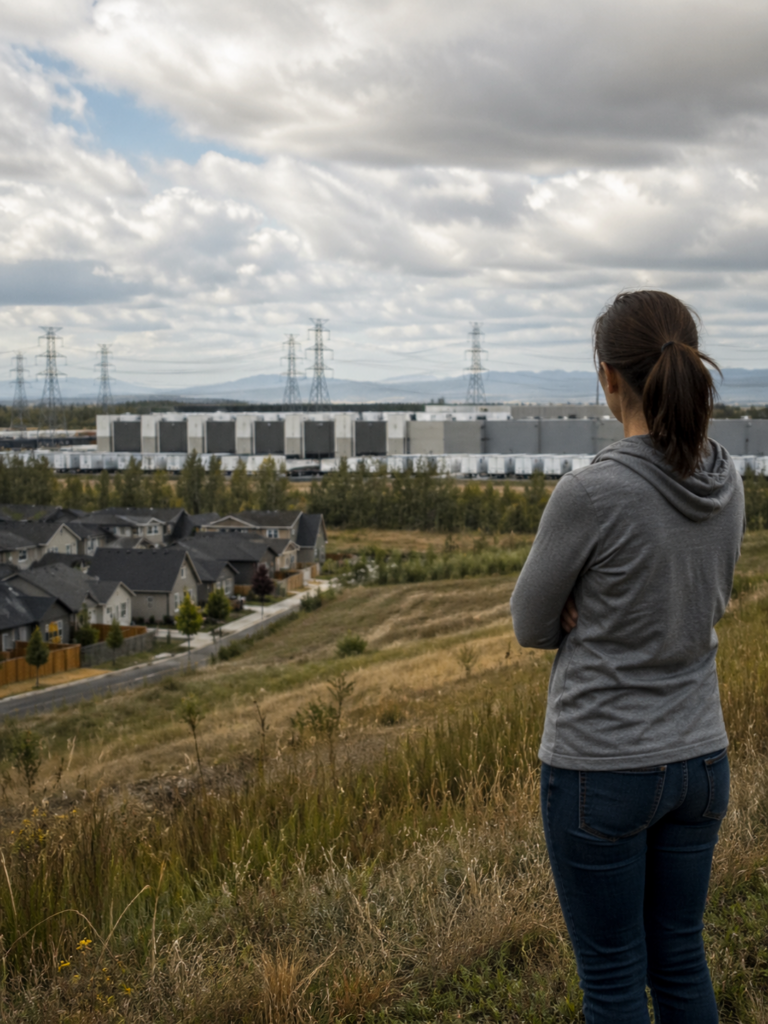
Maine is not alone. Furthermore, New York lawmakers proposed a similar three-year moratorium on new DC construction in February 2026. Additionally, community opposition to data centres is rising across Virginia — where facilities already consume 26% of the state’s electricity — and in Ireland, where Dublin DCs consume 79% of the capital’s electricity. Consequently, the political resistance to unchecked DC development is real, growing, and geographically diverse. Furthermore, the Maine veto reflects a dilemma that every jurisdiction facing a large DC investment must now navigate: economic development versus public utility, grid stability, and environmental integrity.
The UK’s 100-Fold Emissions Miscalculation
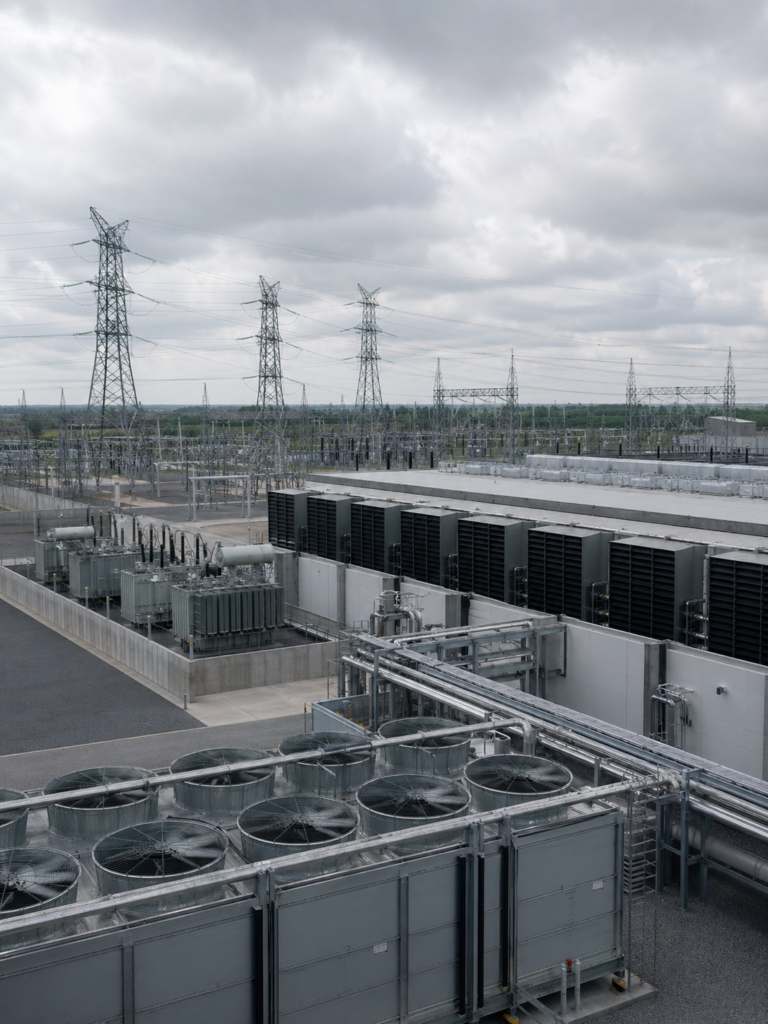
Simultaneously, in the UK, the Department for Science, Innovation and Technology (DSIT) quietly revised its estimate of carbon emissions from AI DCs — by a factor of more than 100. Furthermore, the original estimate — which DSIT has since deleted — projected that UK AI DCs would emit a maximum of 0.142 million tonnes of CO₂ in a single year. The revised estimate, published this week, projects emissions ranging from 34 million to 123 million tonnes of CO₂ over the next decade. At the upper end, that is roughly the annual emissions of 2.7 million people.
Furthermore, DSIT‘s revised range — 0.9% to 3.4% of the UK’s total projected emissions between 2025 and 2035 — is no longer negligible by any reasonable measure. The revision followed an investigation by Foxglove, an independent tech accountability organisation, and by Carbon Brief, a news outlet. Both identified the original figures as implausible. Foxglove Head of Strategy Tim Squirrell did not soften his response. “The government has a legally binding commitment to reach net zero by 2050. This already sat awkwardly alongside its hell-for-leather embrace of a hyperscale AI DC buildout, which, unchecked, could double the electricity consumption of the entire country.”
How the Original Estimate Was So Wrong

The original DSIT figure implied that each kilowatt-hour of electricity supplied to UK AI DCs would produce less than 2 grams of CO₂. Furthermore, that implied a near-total decarbonisation of the electricity supply. However, the UK’s own target for grid emissions intensity is 50 grams of CO₂ per kilowatt-hour by 2030. Consequently, the original estimate was premised on a grid that does not yet exist and may not exist by the time the DCs in the planning pipeline are operational.
Furthermore, Ofgem data shows that 71 planned DC projects have already achieved financial commitment, requiring approximately 20 gigawatts (GW) of electricity. For context, the UK’s current average electricity demand stands at approximately 37 GW. Additionally, a further 140 proposed DC schemes are seeking connections that would collectively require 50 GW — more than the entire UK’s current peak demand. Consequently, the scale of the proposed buildout is not a rounding error. It is a structural transformation of the national energy system — one that the government has been modelling as if it were inconsequential.
Whitehall at War: DSIT vs. Everyone Else
Furthermore, The Guardian’s 26 April reporting reveals that this is not simply an external accountability failure. UK government departments are openly at odds over how to manage DCs’ energy demands. DSIT — which champions the AI infrastructure buildout and has established AI Growth Zones in Oxfordshire, South Wales, and the North East — is in direct tension with the Department for Energy Security and Net Zero (DESNZ). Furthermore, tensions extend to the Ministry of Housing, Communities and Local Government (MHCLG), which is concerned about planning pressure and local community impacts.

Additionally, Energy UK‘s formal submission to the government’s DC sustainability inquiry called for “joined-up delivery of low-carbon power, networks, and data-center capacity.” The submission explicitly states that these must be “planned together — not sequentially.” Furthermore, Energy UK warned that prioritising DC grid connections could divert resources away from the grid reinforcement needed to connect renewable energy generators. Consequently, the AI buildout is not just competing with households for electricity — it is potentially slowing the renewables expansion that decarbonisation depends on.
Patrick Galey, Head of Investigations for the Global Witness climate campaign, offered the sharpest assessment of the stakes. “We have a handful of years until our carbon budget is exhausted. To waste what little bandwidth we have left — when 750 million people worldwide lack access to electricity — assisting some of the richest men ever to hone their plagiarism bots would be a historic idiocy that future generations are unlikely to forgive today’s leaders for.”
The Economic Case That Keeps Winning

Despite the mounting opposition, the economic case for DCs continues to win individual decisions. Furthermore, this is consistent across jurisdictions. In Maine, there were 800 construction jobs and a devastated local economy. In the UK, there are tens of billions in declared investment commitments, along with the promise of an AI-driven growth strategy. Consequently, local economic need and national industrial ambition continue to override systemic environmental and infrastructure concerns — even when governments acknowledge that those concerns are legitimate.
DSIT has responded to the emissions revision not with a policy reversal but with a note that the original figure “was intended to inform policy development rather than represent a final cross-government view.” Furthermore, the department says it is now working on a more accurate assessment. Consequently, the most charitable interpretation is that the government is catching up to reality. The less charitable interpretation is that the AI industrial strategy was locked in before the environmental accounting was complete.
TF Summary: What’s Next
In Maine, Governor Mills’ executive order will establish a DC review commission. Furthermore, the Legislature will need to decide whether to reintroduce L.D. 307 with the Jay exemption included — or whether the political momentum behind the moratorium dissipates after the veto. Additionally, New York’s proposed three-year moratorium remains active. Consequently, the Maine decision will inform legislative strategy in every state currently considering similar measures.
MY FORECAST: In the UK, DSIT must now publish a revised, credible assessment of DC emissions within its national compute roadmap. Furthermore, the Environmental Audit Committee inquiry into DC sustainability is ongoing. Additionally, the Science, Innovation and Technology Committee has opened an inquiry into whether low-energy computing architectures can reduce the sector’s power trajectory. Consequently, Parliament is actively working on the problem that Whitehall departments cannot agree on. The broader lesson from both stories is the same. Governments that design AI industrial strategy without simultaneously building the regulatory, environmental, and infrastructure frameworks to contain its externalities will find themselves correcting in public, under pressure, and behind the pace of the very buildout they are trying to manage.