



Meta signed a multibillion-dollar deal for tens of millions of Amazon Graviton5 CPU cores. It’s about agents — and it signals the next phase of the AI chip war.
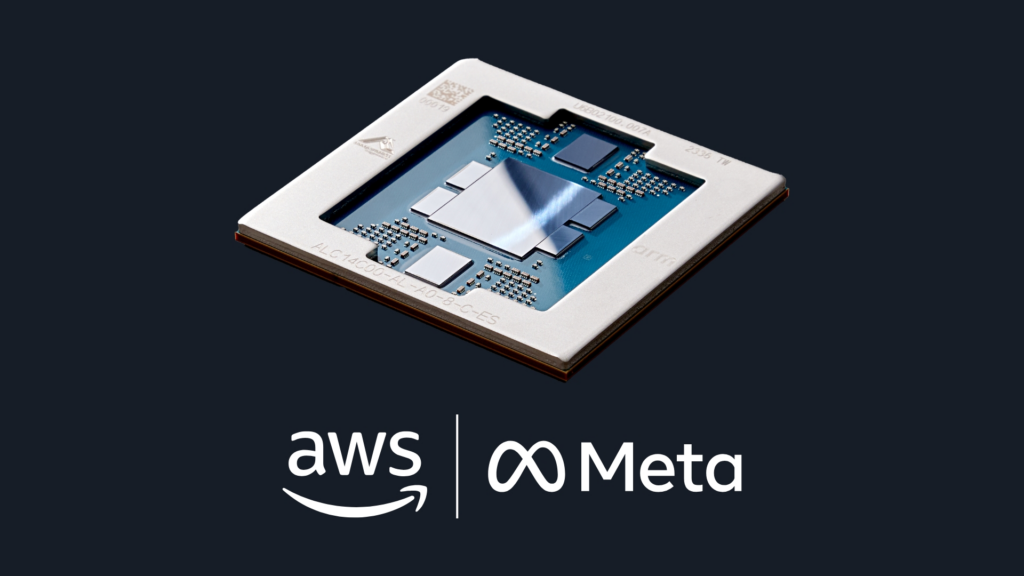
On 24 April 2026, Meta and Amazon Web Services (AWS) announced a multibillion-dollar, multi-year agreement. Meta will deploy tens of millions of AWS Graviton5 processor cores to power its growing agentic AI workloads. The deal runs for at least three years, with the flexibility to expand as Meta‘s AI capabilities grow. It makes Meta one of the largest Graviton customers in the world — and it tells a very specific story about where AI infrastructure is heading next.
The deal is not about training Meta‘s large language models. GPUs handle that. This is about what happens after training — the real-time reasoning, code generation, search, and multi-step task orchestration that AI agents perform billions of times per day. That work is CPU-intensive, not GPU-intensive. Graviton5 is purpose-built for exactly this class of workload. As a result, the announcement reframes a question that the AI industry has largely ignored: when agents go mainstream, who actually powers them?
What’s Happening & Why It Matters
The Deal: Scale, Structure, and Speed
Meta‘s Head of Infrastructure Santosh Janardhan described the strategic logic directly in Meta‘s official statement. “As we scale the infrastructure behind Meta’s AI ambitions, diversifying our compute sources is a strategic imperative. AWS has been a trusted cloud partner for years, and expanding to Graviton allows us to run the CPU-intensive workloads behind agentic AI with the performance and efficiency we need at our scale.”
The first deployment starts with tens of millions of Graviton cores, with the majority running in US data centres. Bloomberg estimates the deal is worth billions of dollars. In terms of scope, Meta was already using Graviton chips on a small scale before this agreement. That small-scale usage is now being replaced by one of the largest external deployments in Graviton‘s commercial history. AWS Vice President and Distinguished Engineer Nafea Bshara confirmed Meta will rank among the top five Graviton customers globally. He also revealed that Amazon CEO Andy Jassy had previously told shareholders that two large customers had asked to buy all of Amazon’s available Graviton capacity for 2026. One of those customers is Meta.
Why Graviton? The CPU vs. GPU Distinction

Most public coverage of the AI chip war focuses on GPUs — specifically Nvidia‘s H100 and Blackwell series, AMD‘s Instinct line, and custom accelerators from Google and Amazon. GPUs excel at one specific task: the massively parallel matrix multiplication required to train large language models. For that task, nothing else comes close.
Agentic AI is different. An AI agent does not run a single massive computation. It runs thousands of smaller, sequential tasks — searching the web, writing code, querying databases, drafting emails, routing decisions to other agents, checking outputs, and looping back. Each of these tasks requires fast, general-purpose CPU performance. The workload is unpredictable, latency-sensitive, and spread across many simultaneous threads. That is exactly what Arm-based CPUs like Graviton5 are designed to handle efficiently. Amazon CEO Andy Jassy made this point directly on LinkedIn, saying that agentic AI “is becoming almost as big a CPU story as a GPU story.” That statement is no longer speculative. Meta‘s Graviton deal is evidence.
Graviton5: The Chip Behind the Deal

AWS launched Graviton5 in December 2025. The chip runs on a three-nanometer manufacturing process and features 192 cores per processor. It delivers a 25% performance improvement over its predecessor — Graviton4 — with 33% lower inter-core latency despite doubling the core count. A larger cache reduces memory access delays across high-density workloads. In practical terms, Graviton5 handles the kind of continuous, multi-threaded compute that agentic AI demands — tasks that would be inefficient and expensive to run on GPU infrastructure.
AWS claims Graviton delivers the best performance per dollar of any computing option available through its EC2 cloud computing service, while consuming 60% less energy than comparable x86-based server chips. For Meta, which is building AI infrastructure at a scale that few companies can match, that efficiency gap has direct financial implications. Running hundreds of millions of agent interactions per day on infrastructure that uses 60% less energy than alternatives is not a marginal improvement. It is a structural cost advantage.
Graviton5 is currently available through EC2 M9g instances in preview form, with C9g and R9g variants scheduled for later in 2026. Meta‘s deployment timeline aligns with that rollout, making the company one of the earliest large-scale commercial users of the chip generation.
Meta’s Chip Strategy: No Single Architecture
The Graviton deal does not exist in isolation. Meta is executing one of the most aggressive and diversified AI chip procurement strategies in the industry. The company spent $72.2 billion (€66.5 billion) on capital expenditure in 2025, and plans to spend between $115 billion and $135 billion (€106 billion–€124.5 billion) in 2026 — nearly all of it on AI infrastructure.
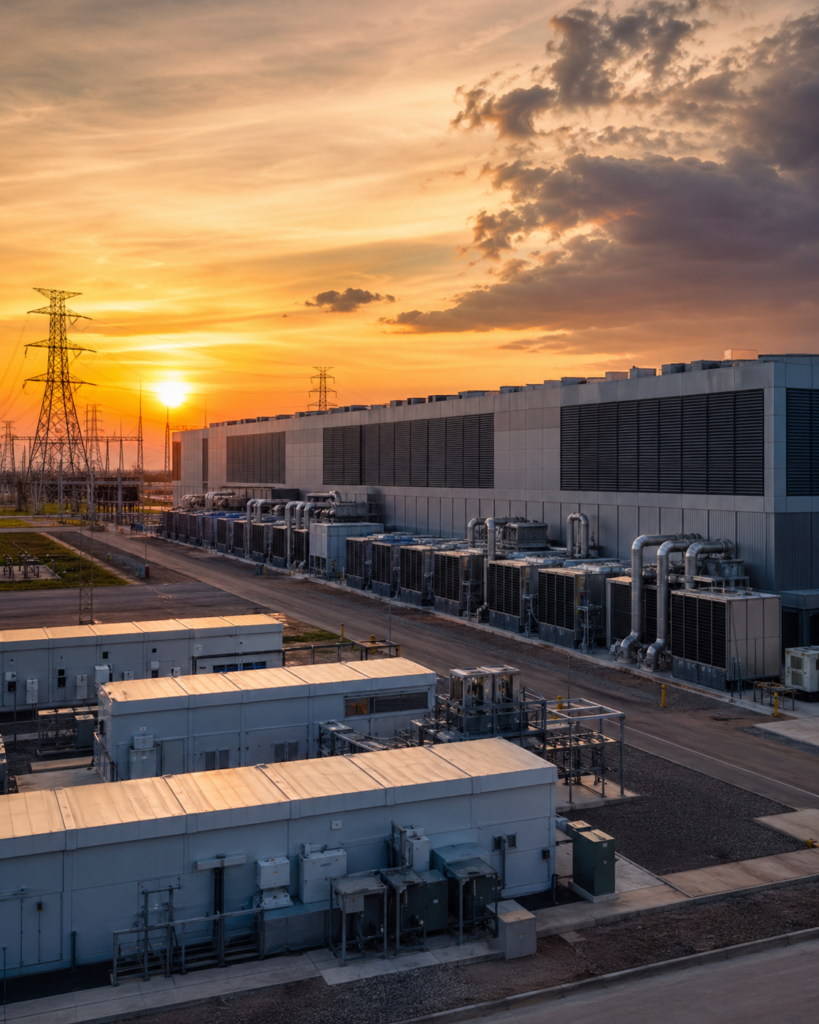
Meta‘s chip portfolio now spans multiple vendors and architectures simultaneously. In February 2026, the company committed approximately $50 billion (€46.1 billion) to Nvidia for millions of Blackwell and Rubin GPUs, Grace and Vera CPUs, and Spectrum-X networking equipment. In the same month, Meta signed an approximately $60 billion (€55.3 billion) deal with AMD for six gigawatts of custom Instinct MI450 GPUs built on the CDNA 5 architecture — a deal that includes performance warrants convertible into roughly 10% of AMD’s equity. Meta also committed $35 billion (€32.3 billion) to CoreWeave for dedicated GPU capacity through December 2032, and a further $27 billion (€24.9 billion) to Nebius for additional AI infrastructure.
Additionally, Meta has an ongoing extended deal with Broadcom through 2029 covering multiple generations of its custom Meta Training and Inference Accelerator (MTIA) chips. In March 2026, Meta launched four new MTIA chips — the MTIA 300, 400, 450, and 500 — all built on a RISC-V architecture and manufactured by TSMC in partnership with Broadcom. Meta can now release new custom chip designs every six months or less. The MTIA 400 is the first chip Meta describes as purpose-built for agentic AI orchestration.
The Graviton deal adds a critical CPU layer on top of all this GPU and accelerator investment. “Adding AWS Graviton cores to our workload helps us ensure we have the right compute for the right workload,” Meta‘s official statement read. The principle is deliberate: no single chip architecture serves every AI workload efficiently. Meta is building a tiered compute stack — GPU clusters for training, custom accelerators for inference, and now Graviton CPUs for agent orchestration.
What This Means for Amazon — and for Nvidia

The deal gives AWS one of its most commercially significant external validations of its custom silicon programme. Before now, Graviton was primarily used by smaller web-scale customers and enterprise cloud users optimising general compute costs. Having Meta deploy it at this scale for AI agent workloads repositions the chip from “cheap cloud plumbing” to “the CPU layer behind frontier AI.” That is a fundamentally different market story for Amazon. AWS AI revenue had already reached a $15 billion annual run rate by April 2026, according to CEO Andy Jassy. The internal chip business was running above $20 billion. The Graviton deal with Meta adds both scale and brand credibility to that trajectory.
For Nvidia, the deal is a signal rather than a direct competitive threat — at least for now. Nvidia dominates GPU-based AI training and remains the market leader for inference accelerators. But as agentic AI shifts more workloads toward CPU-intensive tasks, the total addressable market for non-GPU compute expands. Nvidia is pushing its own Grace and Vera CPUs into this space. Intel is arguing renewed demand for Xeon. AMD is defending its server silicon position. Arm has separately launched its own Arm AGI CPU designed for agentic data centres, with Meta listed as a lead partner and co-developer. The CPU layer of the AI infrastructure stack is becoming contested in a way it has not been for years.
TF Summary: What’s Next
Meta‘s first Graviton5 deployments are expected to come online in 2026, with the majority running in US data centres. The deal’s flexible structure allows Meta to expand its Graviton footprint as agent workloads scale. The company’s internal MTIA programme will continue in parallel, meaning Meta is simultaneously building custom silicon, renting GPU capacity from multiple cloud providers, and now deploying third-party CPUs from Amazon for agent orchestration. That is a compute portfolio of extraordinary breadth — and it reflects the reality that no single chip type dominates every phase of modern AI.
The broader industry implication is clear. As AI agents become the primary interface between AI models and the real world, the CPU layer of the stack matters more than anyone anticipated even 12 months ago. Amazon‘s bet on purpose-built custom silicon — validated here by one of the world’s most demanding AI infrastructure customers — positions AWS as a genuine player in the next phase of the AI chip market. The next AI bottleneck may not be a missing GPU. It may be an AI agent waiting on a CPU core.