


Beijing just told Meta to give back a $2 billion AI startup it had already integrated into its systems. The reason is three words: technology transfer risk.
On 27 April 2026, China’s government blocked Meta‘s acquisition of Manus — a Chinese-founded AI agent startup that Meta had already purchased for approximately $2 billion (€1.84 billion) in December 2025. China’s top economic planning agency, the National Development and Reform Commission (NDRC), issued a one-line statement on Monday ordering both parties to unwind the transaction entirely. The commission offered no detailed explanation. It cited compliance with laws and regulations. The decision was immediate and unconditional.
The announcement carries significant weight. By the time Beijing issued its ruling, Meta had already integrated Manus into its internal systems. Senior Manus executives had joined Meta as employees. The company’s own website displayed the message: “Manus is now part of Meta.” Unwinding that integration will be far more complex than reversing a pre-close transaction. Beijing blocked a deal that was, in practical terms, already done.
What’s Happening & Why It Matters
What Manus Is — and Why Meta Wanted It
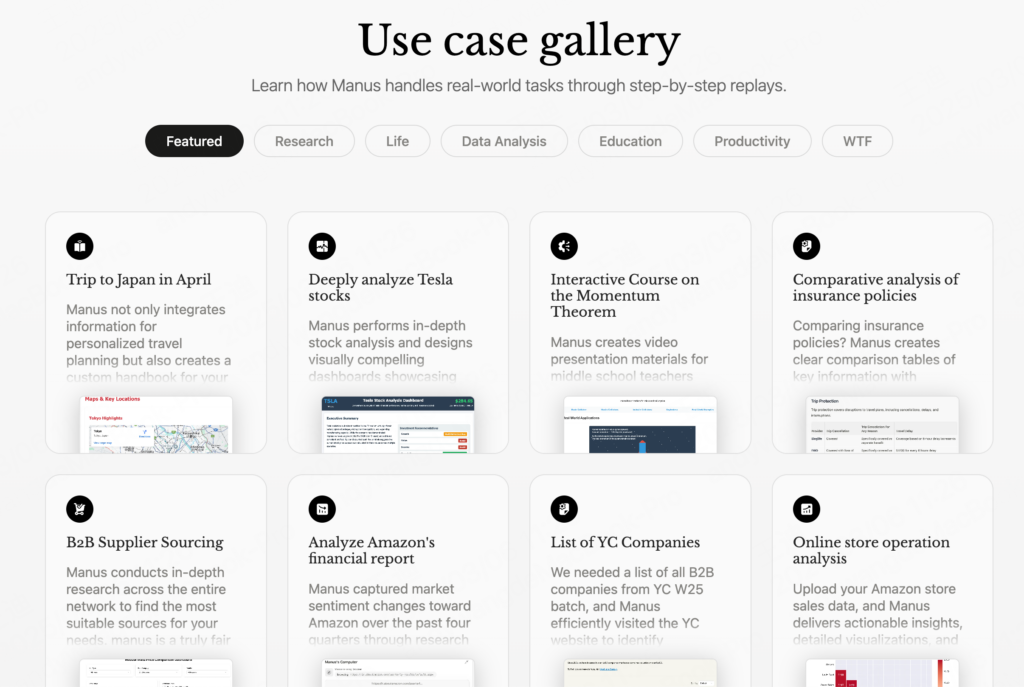
Manus is an agentic AI startup. It builds AI agents — systems capable of autonomously completing complex, multi-step tasks on a computer without human direction. Manus agents can conduct research, write and execute code, manage files, browse the web, and complete office workflows without step-by-step instruction from a user. When Manus publicly launched its product in early 2025, it generated substantial global attention. The system’s ability to operate autonomously across real computer environments placed it among the most capable agent platforms publicly demonstrated at the time.
Chinese engineers founded Manus. Its CEO is Xiao Hong. Its chief scientist is Ji Yichao. The company relocated its headquarters to Singapore before Meta announced the acquisition in December 2025. Most of its employees were also based in Singapore by the time the deal closed. Meta framed the acquisition as a direct acceleration of its own agentic AI roadmap — with plans to fold Manus’s technology directly into Meta AI, its consumer-facing AI assistant. The deal signalled how seriously Meta was taking the race against OpenAI and Anthropic in the AI agent space.
Beijing’s Investigation: Four Months of Pressure
China did not act without warning. In January 2026, China’s commerce ministry publicly stated it was investigating whether the Manus acquisition was consistent with Chinese laws and regulations. The ministry made clear at the time that outward investment, technology exports, data transfers, and cross-border acquisitions all fall under Chinese legal jurisdiction — regardless of where the company is formally incorporated. The Singapore relocation did not remove Manus from Beijing’s regulatory reach. The company’s Chinese origins, Chinese founders, and Chinese engineering talent kept the deal in scope.
In March 2026, the situation escalated further. The Financial Times reported that Manus CEO Xiao Hong and chief scientist Ji Yichao had been told they could not leave China while regulators reviewed the acquisition. That travel restriction — a standard tool in China’s cross-border investment review process — signalled the investigation was serious. It also placed Meta in an uncomfortable position. The company had formally closed the acquisition months earlier and integrated its new employees. Those employees were now subject to Chinese government travel constraints.
The NDRC’s Decision: One Line, No Explanation
Monday’s ruling from the NDRC was characteristically brief. The commission stated it had “made a decision to prohibit foreign investment in the Manus project in accordance with laws and regulations, and has required the parties involved to withdraw the acquisition transaction.” No case law was cited, and no specific violations were named. No appeal mechanism was identified.
The bluntness reflects Beijing’s confidence in the legal framework it is applying. China’s national security review regime for cross-border tech deals was significantly expanded in recent years. The review covers not just formal Chinese companies but any entity in which Chinese technology, talent, or data plays a significant role — regardless of the entity’s formal incorporation address. A Singapore-registered company founded by Chinese nationals, employing Chinese engineers, with code and models developed in China, falls squarely within that framework.
Meta responded in a statement that the Manus transaction “complied fully with applicable law” and that the company anticipates “an appropriate resolution to the inquiry.” The response is deliberately measured. Meta is not contesting the ruling publicly. It is managing the diplomatic and operational complexity of unwinding a deal it considered closed.
What the Block Actually Means for Meta
The practical consequences for Meta are more significant than the financial cost alone. The $2 billion deal value is manageable for a company projecting capital expenditure of $115 billion to $135 billion (€106 billion–€124.5 billion) for 2026. The real cost is strategic.
Meta was counting on Manus to accelerate its position in agentic AI — the fastest-growing segment of the AI market right now. AI agents that can autonomously complete computer tasks are a direct competitive threat to OpenAI‘s operator tools, Anthropic‘s Claude Cowork, and Google‘s Gemini-powered agent platforms. Manus brought exactly the proven, real-world agent capability that Meta did not yet have at comparable maturity. Losing it — and having to unwind the integration already in progress — sets Meta‘s agent strategy back by months at minimum.
The timing is also pointed. Meta announced 8,000 layoffs in late April as part of its restructuring toward AI-focused operations. The company is simultaneously cutting labour costs and accelerating its AI capabilities. Losing Manus makes the capability side of that equation harder. The company still holds contracts with CoreWeave, Nebius, and AWS for infrastructure. It has committed more than $200 billion (€184.4 billion) in AI infrastructure deals across multiple providers. But infrastructure without differentiated AI products is a building without tenants.
The Chilling Effect on China’s AI Startup Scene
The decision carries consequences beyond Meta and Manus. Beijing’s move is expected to have a chilling effect on China’s AI startup ecosystem. Chinese AI founders now face a clearer signal: relocating to Singapore or another jurisdiction does not necessarily allow foreign acquisition if Beijing considers the underlying technology strategically sensitive. That signal will reshape how AI startups in China think about exit strategies, international funding rounds, and product development decisions.
For talent specifically, the Manus ruling creates real uncertainty. Chinese engineers and researchers at AI startups across Southeast Asia now face the possibility that any deal with a US acquirer could be blocked — and that their own mobility might be restricted during a review period. That risk makes international investments or cross-border exits significantly more complicated. Several Chinese AI founders who relocated companies to Singapore explicitly to facilitate US investment or acquisition are reportedly reassessing their positions in the wake of Monday’s ruling.
The Geopolitical Context: Timing Is Everything
The block lands at a delicate moment in US-China relations. President Trump is expected to travel to Beijing for a much-anticipated summit with Chinese President Xi Jinping in the coming weeks. Trade negotiations over tariffs — including the tech sector tariffs that have reshaped semiconductor supply chains globally — are a central agenda item. Beijing’s Manus decision, just weeks before that summit, reads as a deliberate signal about the limits of technology transfer that China will accept — regardless of diplomatic momentum.
The decision also reinforces what analysts describe as the growing bifurcation of global technology development. AI talent, IP, and capital are increasingly being sorted into US-aligned and China-aligned ecosystems. Deals that bridge that divide face rising regulatory resistance on both sides. The NDRC ruling is a concrete expression of Beijing’s determination to keep advanced AI capabilities within its own national system — at least when those capabilities were developed by Chinese nationals on Chinese infrastructure.
The Moltbook Parallel

Meta announced a separate AI acquisition in recent weeks — Moltbook, another AI startup — that has not faced similar regulatory resistance. Moltbook lacks Manus’s Chinese founding team and Chinese development history. The contrast is instructive. China’s review regime is not a blanket block on Meta acquisitions. It is a targeted response to deals in which Chinese-origin AI technology is perceived as being transferred to US control. That specificity makes the regime more powerful, not less — because it creates uncertainty about which deals will face scrutiny without providing a clear bright line that companies can plan around.
TF Summary: What’s Next
Meta now faces the operational challenge of unwinding a deal it had already closed and integrated. The company must determine what unwinding actually means in practice — which employees return to independence, which codebases are separated from Meta systems, and what compensation or legal arrangements govern the reversal. No timeline for unwinding has been disclosed. The NDRC statement did not specify one.
MY FORECAST: On the strategic side, Meta will need to pursue alternative routes to agentic AI capability — through internal development, its existing partnership with Arm on the Arm AGI CPU, and its ongoing restructuring of Applied AI and Meta AI builders. The loss of Manus is a setback, not a fatal blow. Meta has the capital, the infrastructure contracts, and the engineering talent to build agent capability internally. The question is whether it can do so quickly enough to stay competitive with rivals who are already shipping agents at scale. For China’s AI startup scene, Monday’s ruling will reverberate for months — reshaping how founders, investors, and international acquirers think about Chinese-origin AI technology and the regulatory exposure that comes with it.