


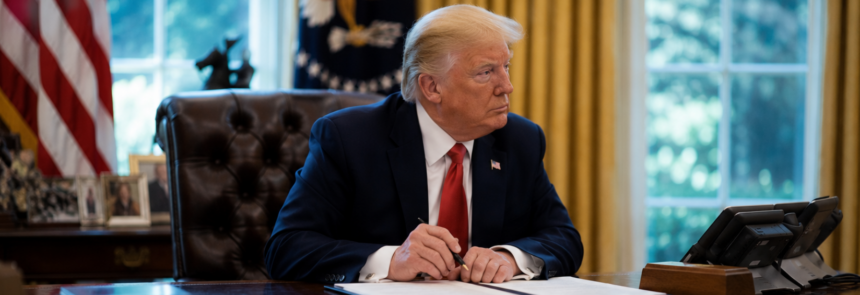
Trump’s AI executive order delay on 21 May 2026 is one of the most revealing moments in US technology policy history. The White House had planned a ceremony. Invitations had gone out. OpenAI and Anthropic had been negotiating the order’s text for weeks.
The Office of the National Cyber Director had been tasked with drafting the language. The signing was expected on Thursday afternoon in the Oval Office. Then, President Trump cancelled it. He told reporters he “didn’t like certain aspects of it.” He said he worried the order could interfere with America’s AI lead. “We’re leading China, we’re leading everybody,” he said. “And I don’t want to do anything that’s going to get in the way of that lead.”
Behind the scenes, however, a more specific story was unfolding. Between Wednesday night and Thursday morning, Mark Zuckerberg, Elon Musk, and White House AI czar David Sacks had all spoken directly with Trump. All of them told him to kill it.
What’s Happening & Why It Matters
What the Order Was Supposed to Do
The now-delayed executive order was a significant piece of AI governance — the most substantive the Trump administration had attempted on domestic AI security. At its core, it would have established a voluntary review process for AI companies. Under the framework, firms developing powerful new AI models would share those models with the federal government before public release. Federal agencies would have up to 90 days to evaluate each model for security risks — including cybersecurity vulnerabilities, national security implications, and potential for misuse.

The Office of the National Cyber Director and other agencies would have jointly led the evaluation process. The Department of Commerce‘s National Institute of Standards and Technology (NIST) had already announced agreements with Google DeepMind, Microsoft, and xAI this month — building the technical infrastructure that the executive order would have formalised. The framework was explicitly voluntary. No company would have been legally required to participate. Yet that voluntary structure was apparently sufficient to trigger alarm in industry circles about the precedent it set.
Why Mythos Made Action Necessary
The order did not emerge from nowhere. Its immediate catalyst was the emergence of Anthropic‘s Claude Mythos Preview — the AI model that, as TF covered in its Mythos security article, identified zero-day vulnerabilities across every major operating system and helped crack Apple’s M5 security architecture in five days. OpenAI‘s GPT-5.5 Cyber similarly demonstrated the ability to identify and exploit security vulnerabilities at unprecedented speed. Both models are restricted — Anthropic through Project Glasswing, OpenAI through its Trusted Access for Cyber programme. But the pattern was clear. Frontier AI models have offensive cybersecurity capabilities that no government can predict or evaluate in advance of public deployment.
The Financial Stability Board recognised the same risk from a financial-sector angle, requesting a specific briefing from Anthropic on the banking-system vulnerabilities Mythos had identified. The proposed executive order was Washington’s attempt to build a national-level response framework for exactly this class of risk. By contrast, the order was not designed to restrict AI development. It is designed to give the government visibility into what is released before it became widely available.
The Phone Calls That Killed It

The official explanation — that Trump “didn’t like certain aspects” — obscures the specific mechanism by which the signing was cancelled. Axios reported the behind-the-scenes detail first. Between Wednesday night and Thursday morning, Meta CEO Mark Zuckerberg, xAI and SpaceX CEO Elon Musk, and White House AI czar David Sacks all spoke directly with Trump. All three opposed the order. Sacks reportedly described it as “something doomers wanted.” The source characterised the order as “the whole thing was unnecessary.” A separate source told Axios that Trump “just hates regulation” as a baseline operating principle.
By contrast, Sacks’s position is notable. He is not simply a private citizen calling to lobby. He is the White House’s own appointed AI adviser — the person whose office contributed to drafting the order’s framework. When the administration’s own AI czar tells the president to kill his AI security order, the delay becomes more than a political decision. It becomes a structural statement about which voices actually shape US AI policy.
The Unofficial Reason: Not Enough Tech CEOs on Short Notice
TechCrunch reported a secondary reason for the delay that is simultaneously mundane and revealing. The signing was called off in part because not enough technology company CEOs could travel to Washington on short notice. The White House had planned a photo opportunity — the president surrounded by AI industry leaders as he signed a historic order. Without sufficient CEOs in the room, the visual would have been incomplete. The implication is direct. The administration’s interest in the AI security order was partly performative. When the performance could not be staged, the substance delayed along with it.
At the same time, the official and unofficial reasons are not mutually exclusive. The industry opposition was genuine. Musk and Zuckerberg’s calls were real. The order’s language had attracted legitimate concern about precedent-setting. The absent CEOs provided a practical exit. All of those factors operated simultaneously.
What the Order Would Have Changed — and Who Opposed It
The proposed order had three primary elements. First, the voluntary pre-release review — companies share models with federal agencies before deployment. The agencies evaluate for security risks within 90 days. Second, cybersecurity infrastructure investment — directing federal agencies to use AI tools to identify and patch vulnerabilities in critical national infrastructure. Third, a federal AI security research programme — specifically modelled on the existing NIST partnerships with Google DeepMind, Microsoft, and xAI announced earlier in the month.
The industry opposition centred on the voluntary review mechanism. Tech executives expressed concern that the 90-day window could slow model releases. They worried that pre-release access to models would give the government proprietary technical insight. They argued that what is voluntary today will be mandatory tomorrow once the infrastructure is in place. Those concerns are not frivolous. At the same time, they are concerned about competitive position and IP protection, not concerns about whether frontier AI models pose cybersecurity risks that the government should understand. The evidence from Mythos and GPT-5.5 Cyber suggests the answer to that second question is yes.
An Administration in Conflict With Itself
The delay reveals a genuine tension within the Trump administration’s AI policy. On one side stands the deregulatory instinct — the view that any oversight framework creates friction, sets precedents, and ultimately slows the commercial AI development that has driven US market leadership over China. Trump articulated the position. “I don’t want to do anything that’s going to get in the way of that lead.”
On the other side stands a growing body of evidence that frontier AI models have capabilities that no government can evaluate retrospectively. The Anthropic Pentagon designation — calling the company a supply chain risk for refusing to remove safety guardrails — represents the administration’s punitive response to the safety-first philosophy. The executive order delay represents the administration’s punitive response to its own governance instincts when industry pushes back. Both positions produce outcomes. Taken together, they describe a US AI policy with no stable centre.
Big Tech’s M.O.: Lobbying by Phone Call
The mechanism of the delay deserves close attention. No formal lobbying campaign mounted, nor a coalition letter published. No Congressional testimony delivered. Instead, three phone calls between Wednesday night and Thursday morning were sufficient to cancel a signing ceremony that the White House had already announced publicly. That speed of influence reflects a specific and significant structural reality. The individuals most capable of influencing the president’s AI decisions are the same individuals whose companies stand to benefit most from lighter AI oversight. The interests of AI safety policy and the interests of AI commercial leadership are not always aligned. In the administration, the latter consistently prevails over the former when the two come into direct conflict.
TF Summary: What’s Next
The White House has not confirmed a new signing date. Trump indicated the order would return in revised form. Any revision will need to address the specific objections Sacks, Musk, and Zuckerberg raised during their calls. In practice, that likely means weakening the pre-release review mechanism — reducing the evaluation window, narrowing the scope of participating agencies, or moving to an opt-in rather than a sector-wide voluntary framework. Meanwhile, the NIST pre-release evaluation agreements with Google DeepMind, Microsoft, and xAI remain in force — representing a de facto implementation of the order’s intent through a parallel administrative track.
MY FORECAST: Trump’s AI executive order delay will produce a weakened final order — one that retains the optics of AI governance without the substance that made the original version meaningful. The pre-release review window will be reduced from 90 days to about 30 days. The scope will narrow to cover only the highest-capability frontier models rather than any AI system the government deems significant. The voluntary language will be preserved and emphasised. The result will be an executive order that OpenAI, Meta, and xAI can publicly support — and that provides no meaningful structural constraint on AI deployment timelines. The phone calls from Wednesday night achieved their intended outcome. They will achieve it again when the revised order is circulated for comment.