


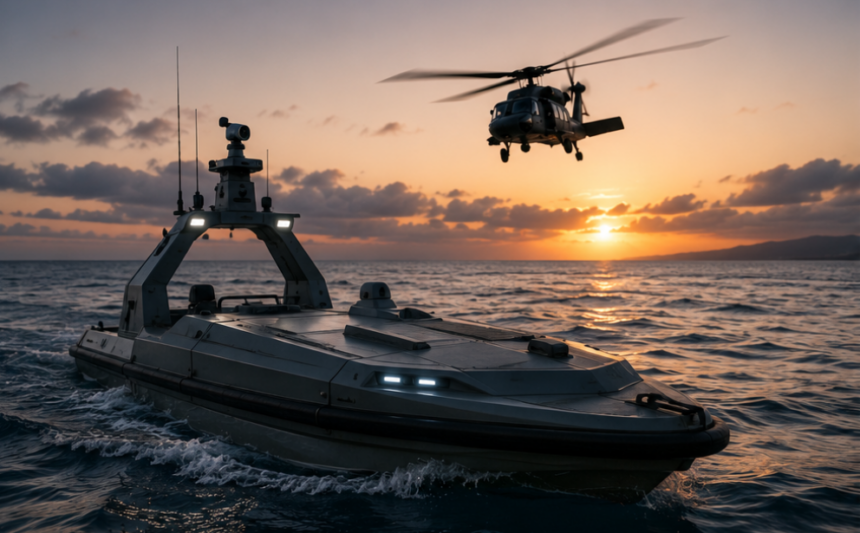
On the evening of 8 June, two US Army AH-64 Apache pilots went down near the Strait of Hormuz. Two hours later, a 24-foot autonomous boat from Task Force 59 reached them, recovered them, and brought them to safety. No sailor was in harm’s way. The future of combat rescue is here.
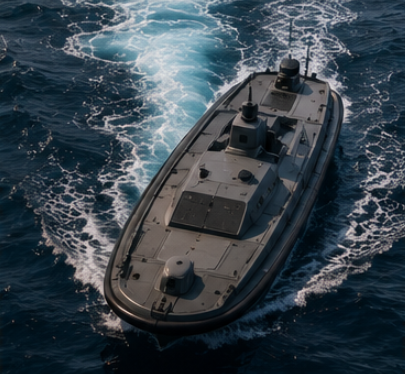
The Saronic Corsair autonomous rescue mission represents the first confirmed use of an unmanned surface vessel in a combat search and rescue operation. Two US Army crew members survived after their AH-64 Apache attack helicopter went down at approximately 7:30 p.m. EDT near the coast of Oman — while patrolling international waters close to the Strait of Hormuz. US Central Command (CENTCOM) confirmed that Task Force 59 — the US 5th Fleet’s dedicated autonomous and AI integration unit — dispatched a Saronic Corsair unmanned surface vessel (USV). The Corsair arrived on scene in under two hours, recovered both crew members, and transferred them to another vessel for helicopter extraction. Both pilots are in stable condition. Additionally, President Trump confirmed in a social media post that Iranian forces downed the helicopter. He pledged retaliation. CENTCOM has not independently confirmed the cause.
What’s Happening & Why It Matters
The Corsair: A 24-Foot Robot Boat That Just Made History
The Saronic Corsair autonomous rescue mission succeeded because of a specific combination of speed, autonomy, and sensor capability. The Corsair is a 24-foot (7.3-metre) autonomous surface vessel built by Saronic Technologies — a Texas-based defence technology company. It carries 360-degree passive sensing capability covering day and night operations. That sensor array allowed the Corsair to locate two crew members in open ocean after dark, navigate to their position, and recover them — without human crew aboard the vessel. The boat supports 1,000-pound (454-kg) payloads and can operate at ranges exceeding 1,000 nautical miles (1,852 km).
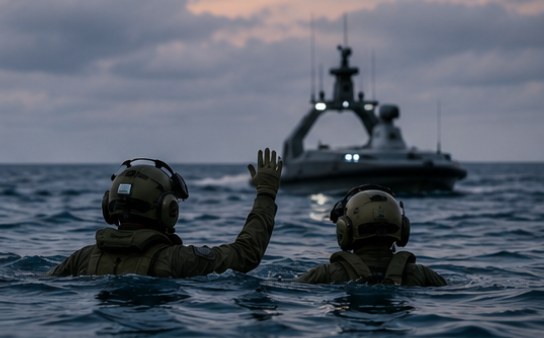
Task Force 59 began deploying Corsair vessels in the Middle East theatre in late March 2026 — just weeks before the US-Iran war began. Furthermore, CENTCOM spokesperson Captain Tim Hawkins confirmed the rescue to Defense One. “Task Force 59 began fielding the drones in theater in late March.” The Corsair picked up both crew members and transported them to another vessel on the water. A helicopter then retrieved the pilots from that rendezvous point.
Task Force 59: The Unit That Made It Possible
Task Force 59 is the US Navy’s first dedicated unmanned and artificial intelligence task force — established in 2021 and operating out of the 5th Fleet area of responsibility in the Middle East. By contrast with traditional naval units, Task Force 59 exists specifically to integrate autonomous maritime and aerial systems into operational naval power. It has deployed multiple drone vessel types over the past two years — including Corsair boats from Saronic and GARC vessels from BlackSea Technologies. The unit has conducted maritime domain awareness patrols, investigated vessels of interest, and assisted combat operations throughout the US-Iran war.
Barry Hinckley, president of Blue Ops — the maritime division of drone and robotics company Red Cat Holdings — recalled the moment directly to The Washington Times. “These boats are so affordable and they can have such a massive impact. I feel like we’re at the dawn of a new era here with the potential of these small USVs.” That assessment is accurate — and understated. The Corsair completed this rescue on its first real-world combat deployment after being fielded fewer than three months earlier.
The Apache Incident — and a Possible Transmission Problem
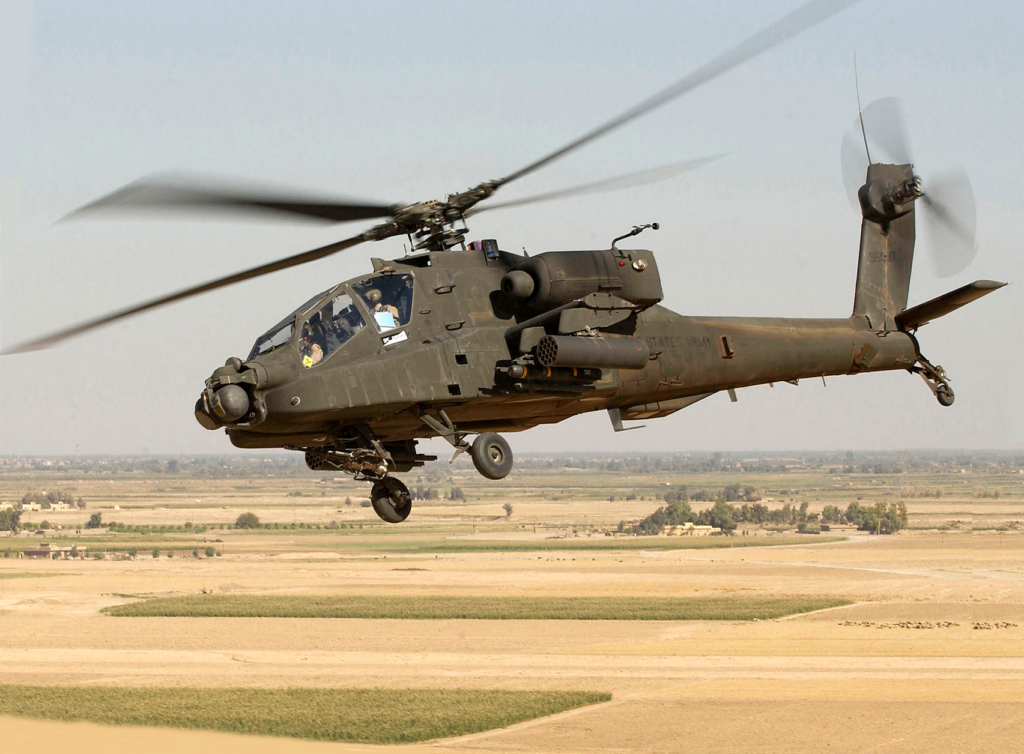
The Apache that went down was an AH-64E model — the current production variant of Boeing’s attack helicopter. CENTCOM stated it was on routine patrol of international waters near the Strait of Hormuz. The cause of the downing is under investigation. Trump’s post attributed it to Iranian forces. At the same time, a separate mechanical concern adds complexity. In late April 2026, Defense One obtained an internal Army memo warning that some AH-64E models could experience an internal failure resulting in loss of accessory gearbox drive — which can cause loss of tail rotor thrust, electrical power, and hydraulics. The Army had reported at least three stateside Apache mishaps and one overseas sudden landing since March. CENTCOM spokesperson Hawkins confirmed the cause of this specific incident is under investigation.
Why Autonomous Rescue Flips the Script
The Saronic Corsair autonomous rescue mission is more significant than the individual rescue. Combat search and rescue is one of the most operationally costly and personnel-intensive missions in military aviation. Traditionally, recovering downed pilots requires manned aircraft to fly into the same contested environment that downed the original vehicle. Crews face direct threat. The US military has accepted those risks under the principle of leaving no one behind — a principle with genuine operational and human cost. By contrast, an autonomous surface vessel can navigate to the rescue location without risking additional personnel. It does not require a carrier-launched helicopter. The craft does not need air superiority over the recovery zone. It requires only clear water and sensor contact. The Corsair costs a fraction of the aircraft it replaced in this mission profile.
Additionally, the rescue demonstrates manned-unmanned teaming in a live operation. DefenseScoop noted that officials involved in the rescue described a significant portion of the effort as developing tactics, techniques, and procedures for manned-unmanned teaming. In other words, the rescue was simultaneously an operational success and a live validation of doctrine. That dual value is exactly what the Pentagon needs as it accelerates unmanned system integration.
US-Iran War Context: Drone Dominance in a Contested Waterway
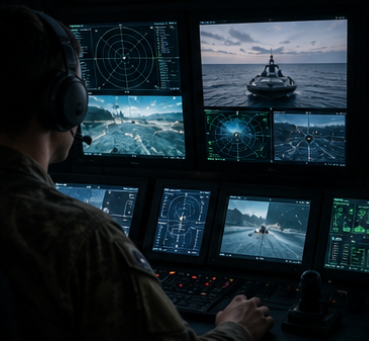
The Strait of Hormuz is the world’s most strategically dense waterway — and the active theatre of the US-Iran conflict that began in March 2026. As TF covered in its Iran undersea cable article, Iran attempted to leverage its physical presence in the strait for economic coercion following the ceasefire. Military operations continue under the ceasefire terms, with both sides maintaining patrols. Task Force 59 has been a central component of US Naval Forces Central Command‘s maritime domain awareness in that environment since the conflict began. The Corsair USVs provide persistent surveillance at a fraction of the cost and risk of manned patrols. In that context, this rescue was not a coincidence. Task Force 59 was already operating in the area because autonomous boats had become a standard patrol tool — making rapid rescue response possible.
TF Summary: What’s Next
CENTCOM confirmed both pilots are in stable condition. The investigation into the Apache’s cause of downing continues. Saronic confirmed the Corsair’s operational use in a statement to The Washington Times. Task Force 59 continues operations in the 5th Fleet area. President Trump’s pledge of retaliation against Iran for downing the helicopter has not produced a confirmed follow-up action as of the time of writing.
MY FORECAST: The Saronic Corsair autonomous rescue mission will accelerate the US military’s autonomous surface vessel investment programme significantly. Before 9 June 2026, unmanned maritime vessels proved their value in patrol and surveillance operations. They have proved it in a combat rescue — the highest-value, most human-stakes mission a naval vessel can perform. The Pentagon will immediately expand its Corsair fleet procurement and its Task Force 59 operational footprint. By the end of 2026, CENTCOM will have at least twice the number of autonomous surface vessels in-theatre as it deployed in March. The doctrine of manned-unmanned teaming for combat rescue is no longer theoretical. One 24-foot robot boat and two Army pilots just made it real.