


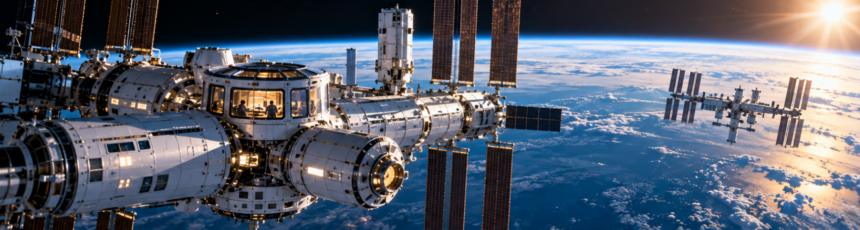
The agency wants at least two commercial stations ready to replace the ISS around 2030
NASA issued its final call for private space stations on 9 October. The solicitation opens a race to replace the International Space Station, which NASA plans to retire around 2030. Here is the TF breakdown of the rules, the money and the bidders.
What’s Happening & Why It Matters
The Call
NASA released solicitation 80JSC027R0004, titled the Commercial Low Earth Orbit Destination Contract. Proposals are due on 8 December 2026 at 1 p.m. Central Time. NASA expects to announce awards on 15 April 2027. The agency plans to select at least two companies for the first phase.
The deal is a multiple-award, indefinite-delivery, indefinite-quantity contract with firm-fixed-price task orders. The base ordering period is eight years. NASA can extend the contract by four years and then by three more, for a maximum of 15 years. The solicitation awards no contracts and authorises no paid work.
What Changed From the Draft
First, NASA removed the crewed demonstration as a separate item. Activation and checkout fall under the service missions line. I read the change as a schedule concession to bidders.
Next, the payment milestones changed. Entrance and success criteria for certification and mission-service milestones carry revised terms. These milestones trigger performance-based payments. In addition, “most-favoured” pricing gave way to fair-market pricing, with equal treatment against other customers.
Transportation is flexible. Bidders can offer a full transport service or request government-furnished transport. Pricing tables must cover crews of two, three and four. Rolling Out reports NASA offered to provide transport for the first four service missions.
Finally, NASA wants proof of private money. Bidders must show contracts, deposits, purchase commitments or letters of intent from customers.
The Money
NASA’s inspector general puts ISS operations at about $3 billion (about €2.6 billion) a year. Rolling Out, citing Ars Technica, reports about $2.1 billion (€1.8 billion) planned for the commercial program over five years. The figure equals about 70% of one year’s ISS cost.

Estimates put a four-person crew flight in 2030 at about $325 million (€280 million). A cargo mission costs about $300 million (€260 million). For comparison, the program holds about $272.3 million (€234 million) for the current period.
The Bidders
Axiom Space, Vast and Blue Origin pursue stations. Voyager Technologies holds a majority interest in the Starlab joint venture. Northrop Grumman joined the Starlab team after dropping a separate station concept. Boeing connects through its Starliner certification program.
Vast targets a 2027 launch for its Haven-1 station, according to Aviation Week. Earlier plans pointed to 2025. Meanwhile, NASA weighed a government-built core module starting in 2026. Industry objected, and by July NASA reaffirmed open competition for commercial services.
Time is the constraint. Crews have lived aboard the ISS since November 2000. A late station would end 30 years of continuous US human presence in orbit.
TF Summary: What’s Next
Bidders have until 8 December 2026 to file proposals. NASA will review them and plans to announce awards in spring 2027. The chosen companies must design, build, test and operate stations, and arrange crew and cargo transport. The ISS retirement date keeps every schedule under pressure.
MY FORECAST: NASA will pick two or three winners by April 2027. Axiom Space, Vast and the Starlab team will lead the field. At least one bidder will ask for more government-furnished transport. The agency will adjust the ISS retirement plan if no station is ready by 2030.
Related Stories
- Denmark Bill Would Ban Deepfakes of Faces and Voices
- Samsung Posts Record $80 Billion AI Profit
- Jaguar Unveils Type 01 Electric GT
- Torcal Is Bentley’s First EV
- TSMC and Sony Plan Image Sensor Plant in Japan