


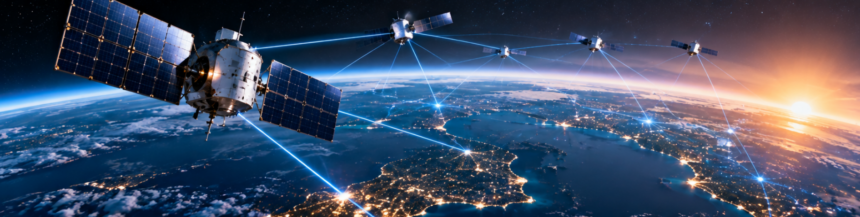
The Grain Management deal gives Starlink a low-band layer to run as a full US carrier.
The SpaceX spectrum purchase, announced late on 8 October, gives Starlink Mobile a nationwide low-band footprint. SpaceX agreed to buy Grain Management’s 800 MHz portfolio. Neither side disclosed a price, but the Wall Street Journal reported a $8 billion (€7.1 billion) cash deal. Here is the TF breakdown of the deal, the market reaction and the hurdles.
What’s Happening & Why It Matters
The Deal
Grain confirmed SpaceX will acquire 100% of its nationwide 800 MHz portfolio. Teslarati reports the holdings cover up to 14 MHz of paired spectrum, in the 817–824 MHz and 862–869 MHz bands. The FCC must approve the sale.
Teslarati adds Grain bought the portfolio from T-Mobile in a deal closing in August. Grain paid cash plus 600 MHz spectrum. AST SpaceMobile had been testing satellites on the same bands before SpaceX stepped in.
Why Low-Band Spectrum Matters
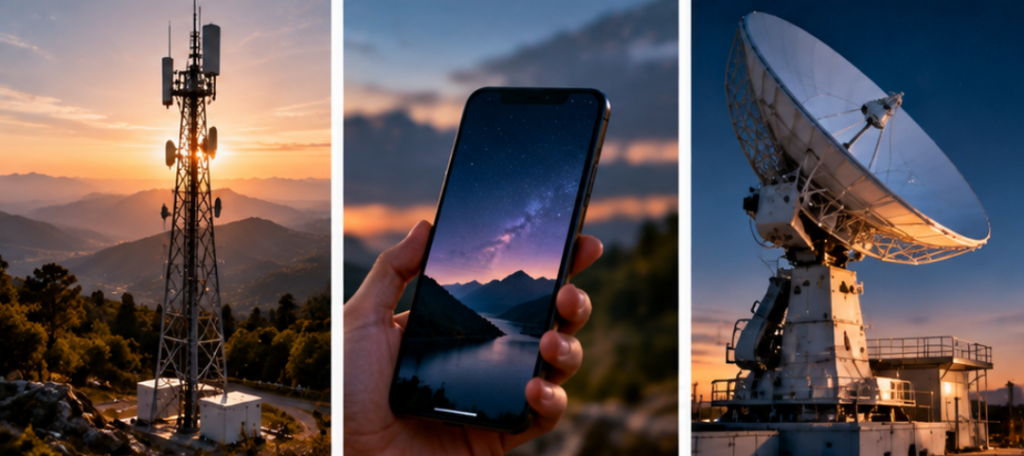
Low-band signals travel far and penetrate buildings. SpaceX calls indoor reach “one of the key remaining technical gaps” in its cellular plan. The 800 MHz layer fills the gap. The 2 GHz spectrum SpaceX bought from EchoStar last year for $17 billion (€15.1 billion) supplies capacity.
SpaceX says most existing phones support the 800 MHz band. Customers would need no new hardware. Recent iPhones support the band, but their fit with Starlink Mobile is unconfirmed.
Satellites and Timing
Earlier in the week, the FCC approved SpaceX’s plan for 15,000 second-generation Starlink Mobile satellites. SpaceX says the satellites will carry up to 100 times the data density of the current system. The company targets deployment in 2027, with upgraded service by the end of 2027.
The FCC’s review of the Grain deal will set the terrestrial network’s launch date. SpaceX has not announced rollout timing, device support or pricing. Meanwhile, Starlink Mobile partners abroad include SoftBank, NTT Docomo and Spark NZ. T-Mobile is the US launch partner.
Carriers React

In premarket trading on 9 October 2026, Forbes reports AT&T fell 6.6% to $23 (€20.5). Verizon fell 7.23% to $43 (€38.3), and T-Mobile fell 6.79% to $159.70 (€142.1). SpaceX shares rose 3.6% to $166.40 (€148.1), after a 4.19% drop on Thursday.
Executives voiced doubt. AT&T CEO John Stankey has said direct-to-cell satellite solves the last 2% of coverage and cannot replace decades of tower infrastructure. Verizon CEO Dan Schulman argued physics will keep satellites from competing in urban and suburban areas.
SpaceX disagrees. In August, Gwynne Shotwell said the company expects to win customers from the major carriers. She cited dead zones and resilience during disasters. I read the Grain deal as a bid to operate as a carrier, with satellites as one layer of the network.
TF Summary: What’s Next
The FCC review of the Grain purchase comes first. SpaceX then needs to announce pricing, devices and a launch date. The 2027 satellite deployment will test the 100-times data claim. Carriers will weigh price cuts and wholesale deals as the threat grows.
MY FORECAST: The FCC will approve the Grain sale with conditions by mid-2027. SpaceX will reveal pricing before the upgraded satellites launch. T-Mobile will renegotiate its Starlink Mobile partnership. AT&T and Verizon will respond with coverage and price promotions.
Related Stories
- Samsung Posts Record $80 Billion Profit on AI Memory Boom
- Skydance-Warner Merger Could Raise Streaming Prices
- Sour Sentiment Triggers AI, Chip Stocks Sell Off
- AI Chip Rally Lifts Wall Street as Chinese Labs Eye IPOs
- Chinese Memory Chipmaker CXMT Surges on Stock Market Debut