


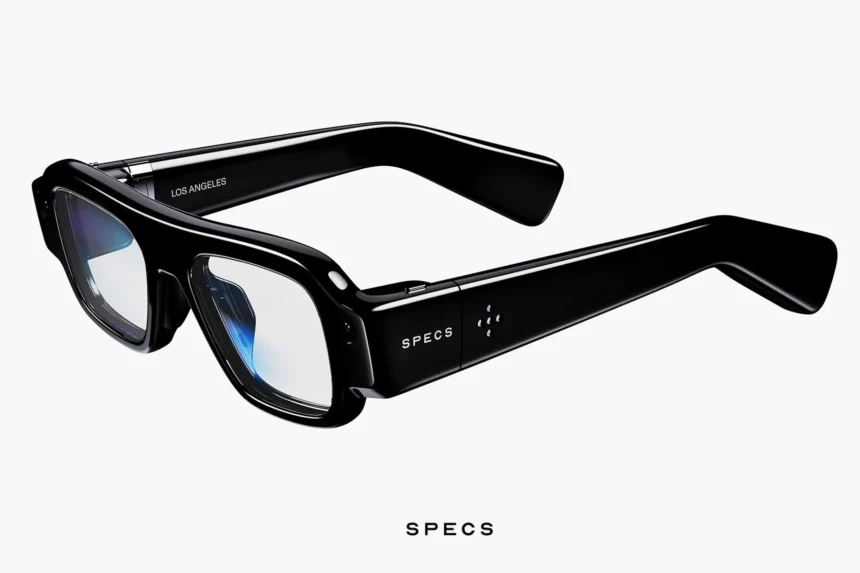
Ten years after Snap’s first wearable flopped at $130, the company launched true AR glasses for $2,195. They are the first standalone consumer AR glasses with a full display. Battery life is four hours. Preorders opened Tuesday. Shipping is this fall.
Snap’s Specs AR glasses launched at the Augmented World Expo (AWE) 2026 — and the $2,195 (€2,020) price tag is the first thing everyone is discussing. By contrast, it is the second, third, and ONLY thing. At $2,195 with a $200 refundable deposit, Specs are more than 15 times the price of Snap’s $130 camera-only Spectacles that debuted in 2016. Those glasses never became a blockbuster. Snap CEO Evan Spiegel opened preorders immediately after the announcement. The device ships this fall in the US, UK, and France. Snap is positioning this as a consumer-ready pair designed to blend standalone spatial computing with daily life. Specs are the first true standalone AR glasses built for general consumers. They beat Meta, Apple, and Google to market in this specific category. That alone makes this launch significant. Whether consumers follow at $2,195 is the question none of those competitors have answered either.
What’s Happening & Why It Matters
What Makes Specs Different From Meta Ray-Ban and Vision Pro
Snap’s Specs AR glasses occupy a specific and genuinely new category. This is a major capability jump compared to HUD glasses like Meta Ray-Ban Display, which just add a small fixed display to your view. It is also a vastly different proposition to displayless smart glasses that focus on cameras and audio. The distinction is real. Meta Ray-Ban smart glasses are camera-first devices with a small audio-focused AI layer. Apple Vision Pro is a full mixed reality headset at $3,499 that no one wears outside the home. Specs are between them. They are lightweight enough to wear in public and capable enough to display virtual content over the real world. Furthermore, they are priced below Vision Pro.
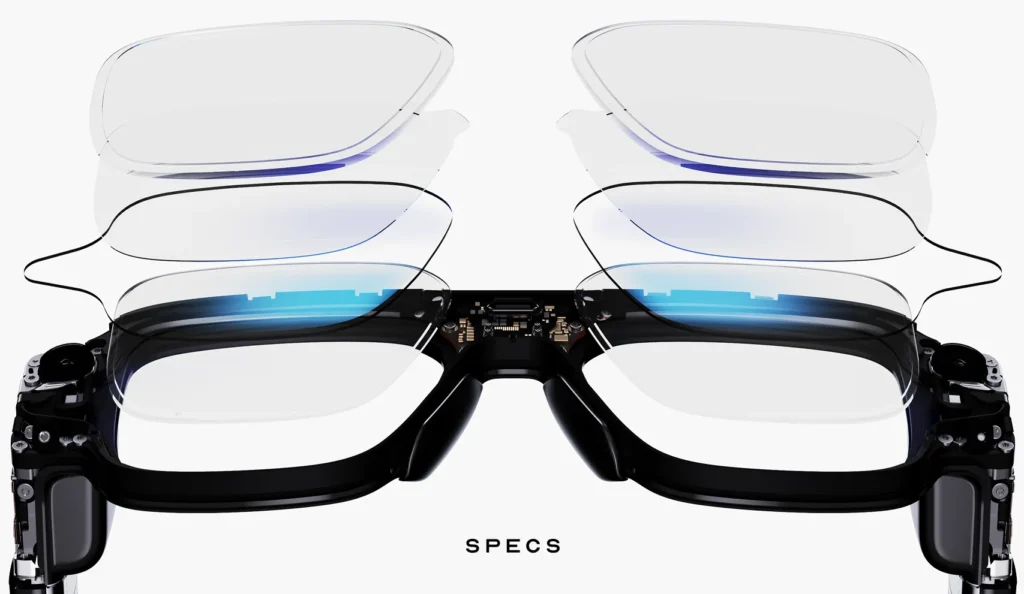
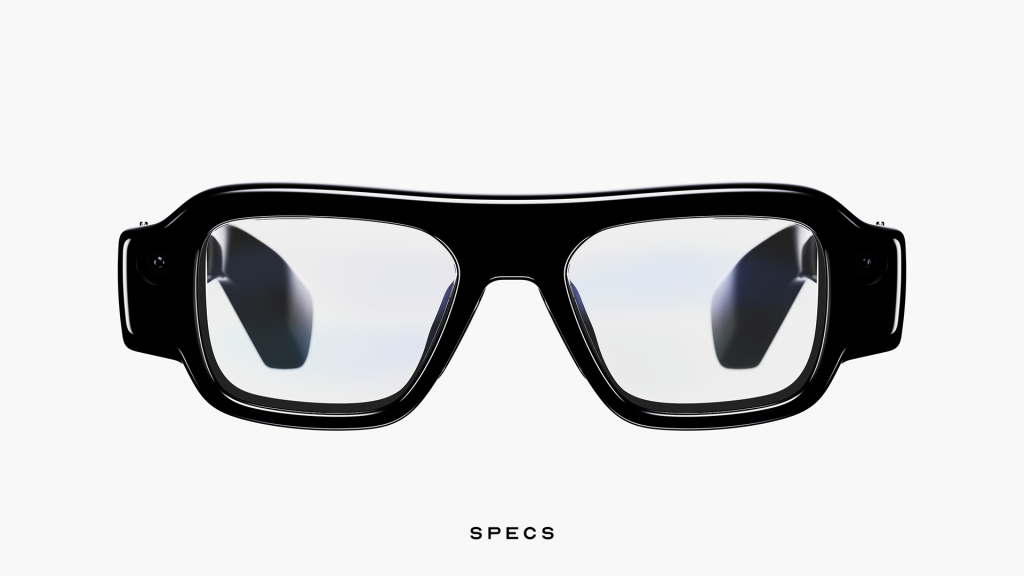
The new Specs include hand tracking and gesture control. They are powered by two Qualcomm Snapdragon processors — one dedicated to computer vision and another for running AR experiences, called Lenses. The display delivers a 51-degree field of view — equivalent to a 24-inch desktop monitor at arm’s length or a 115-inch TV from 10 feet away. Additionally, the consumer Specs weigh 132 grams for the 47mm frame size and 136 grams for the 51mm. This places them firmly in the glasses form factor, not the headset category.
The Use Cases Snap Is Demonstrating
Demos shown by Snap include Specs displaying and assisting with maps and directions, real-time language translation, gesture control, contextual help with car repair, timers when cooking, and furniture measurements. Those use cases are practical and credible. They do not require the user to suspend disbelief or adopt a new behaviour category. Furthermore, Specs integrates with AI coding tools. Developers can create AI agent-like experiences for the device using a preview feature that integrates with Anthropic’s Claude Code, OpenAI’s Codex, and Cursor’s coding tools. That developer access is significant. The app ecosystem — which Snap calls Lenses — is the same platform it has been building with developers since 2021. By contrast, the consumer device adds a new urgency to that development pipeline. A strong Lenses library at launch is the difference between a product that sells and a technology demonstration that doesn’t.
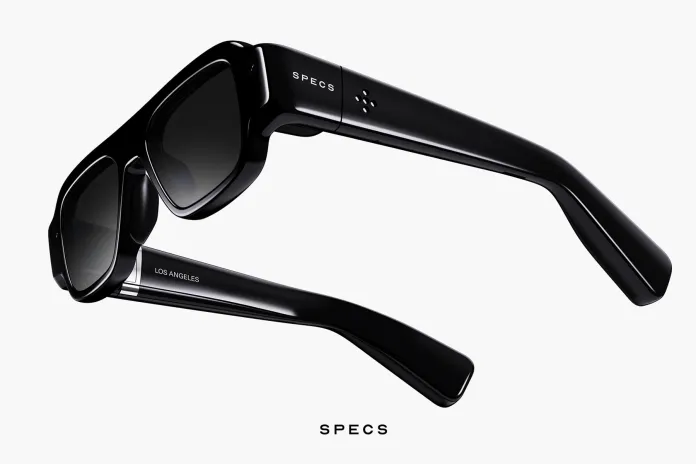
The Price Argument —$2,195?!
Spiegel made a specific and surprising argument about Specs’ pricing on CNBC. “It’s always about improving the value of the device. For us, the bar is something that’s 10 times better than the next best experience — which is the smartphone,” Spiegel said. He did not apologise for the price. He called it a function of value, not cost. Additionally, Spiegel said the company plans to release parenting “tools to make it easier to share the Specs with your teenager with a more limited set of Lenses,” as well as OS-level features for managing what children can access.
The post-smartphone thesis deserves attention on its own. “Almost 20 years since the launch of the iPhone, people are ready to think about computing differently,” Spiegel told CNBC. He is betting that a meaningful subset of consumers — early adopters, creators, professionals — will pay $2,195 to remove the glass rectangle from their face and put computing into their field of vision instead. That bet is not irrational. By contrast, it is an early-adopter play, not a mass-market launch. Snap has invested over $3 billion in AR research across a decade. Specs is that investment reaching a product.
TF Summary: What’s Next
Snap Specs ship this fall in the US, UK, and France. The $200 refundable deposit activates preorders now. The Lens Studio developer programme is open on Windows and macOS. Snap has not confirmed pricing for other markets. Meta‘s own AR display glasses launch later in 2026 — Samsung’s Android XR glasses are also expected in fall 2026.
MY FORECAST: Snap’s Specs AR glasses will sell out their initial production run entirely to early adopters — and that is not a bullish statement. First-generation true AR glasses at $2,195 have a limited addressable market. The developers, creators, and AR-curious professionals who buy Specs this fall will define the use cases that make or break the platform. A single genuinely useful daily application — navigation, translation, or professional field reference — that proves seamlessly better than a smartphone creates the product narrative Snap needs for a second generation at a lower price. By contrast, without that application, Specs is another premium AR device that enthusiasts try and return. The iPhone comparison Spiegel keeps making is structurally apt in one specific way. The first iPhone succeeded not because of its price but because of one killer use case. Specs needs to find its equivalent.