


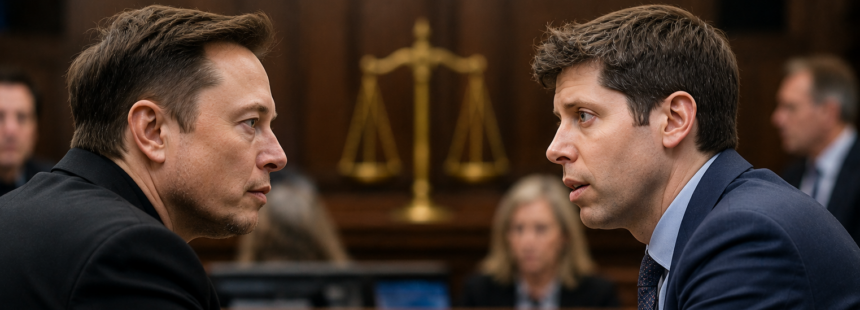
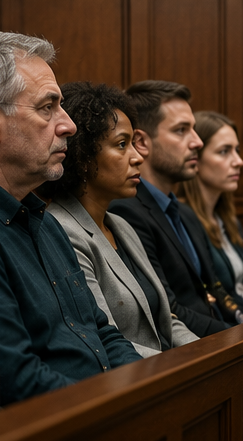
The Musk v. Altman trial verdict arrived on 18 May 2026. It took the nine-person jury less than 90 minutes to reach a unanimous decision. Elon Musk lost. The jury found that Musk had waited too long to bring his lawsuit. His claims — breach of charitable trust and unjust enrichment — were barred by the statute of limitations. As a result, OpenAI, Sam Altman, Greg Brockman, and Microsoft face no liability. US District Judge Yvonne Gonzalez Rogers accepted the jury’s advisory finding and confirmed it as her own ruling from the bench. “I think that there’s a substantial amount of evidence to support the jury’s finding, which is why I was prepared to dismiss on the spot,” she said. The three-week trial that generated more than a hundred hours of testimony ended without reaching the merits of Musk’s core allegation. He never got to find out if a jury believed OpenAI stole a charity. They decided he had asked too late.
What’s Happening & Why It Matters
The Verdict: 90 Minutes, Unanimous, Case Dismissed
The jury began deliberations at 9:00 a.m. Pacific Time on Monday morning. By 10:30 a.m., they had a verdict. That speed surprised almost everyone observing the trial. After three weeks of complex testimony — the founding of OpenAI, a decade of corporate evolution, billions in disputed damages — the jury resolved the case on a procedural question. Did Musk file within the legal window? Their answer was no. Unanimously.
The statute of limitations defence had been OpenAI‘s most consistent argument throughout the trial. Under California law, claims for breach of charitable trust and unjust enrichment have specific filing deadlines. OpenAI‘s lawyers argued Musk had known about the company’s structural evolution for years. By contrast, Musk’s lawyers argued that the clock should run from the time the harm became clear. The jury sided with OpenAI. Judge Gonzalez Rogers had flagged this possibility in a prior filing. She had written that if the jury found the suit untimely, she would “accept that finding and direct a verdict to the defendants.” She did exactly that — within minutes of the verdict being read.
What OpenAI’s Lawyers Said Immediately
OpenAI lead attorney William Savitt spoke outside the Ronald V. Dellums Federal Building within minutes of the verdict. He did not hold back. “The finding of the jury confirms that what this lawsuit was — was a hypocritical attempt to sabotage a competitor,” Savitt said. “The fact is that OpenAI is a not-for-profit, mission-driven organisation that has been and will continue to be faithful to that mission.” That statement frames the verdict as more than a procedural win. Savitt is telling the world that the case was never about charity. It was about competition. The jury, he implied, saw through it in 90 minutes.
Microsoft‘s spokesperson also responded quickly. “The facts and the timeline in this case have long been clear, and we welcome the jury’s decision to dismiss these claims as untimely,” the statement read. “We remain committed to our work with OpenAI to advance and scale AI for people and organisations around the world.” That statement is brief and deliberate. Microsoft draws a clean line under the case and moves on.
What Musk’s Lawyers Said — and What Comes Next
Musk was not in Oakland when the verdict landed. He had been in Beijing with President Trump for the bilateral tech summit. His lead attorney, Marc Toberoff, spoke at a press conference outside the courthouse. “This at its core is a travesty,” Toberoff said. “But for Musk, they get away with it, and they shouldn’t.” He confirmed the team plans to appeal.
That appeal faces a specific challenge. The statute-of-limitations finding is not a merits ruling. An appeal must argue that the jury applied the wrong legal standard — or that Judge Gonzalez Rogers misdirected them — rather than that the underlying allegations were correct. That is a narrower legal lane than a full merits appeal. Meanwhile, another of Musk’s lawyers said the case “is about preserving charities from this kind of exploitation.” By contrast, OpenAI‘s team argued throughout the trial that Musk only cared about the nonprofit structure when he failed to gain control of the for-profit entity — and that he filed suit only after launching his own competing AI company.
What the Trial Actually Proved
Three weeks of testimony produced no verdict on the central question. Did OpenAI abandon its charitable mission? Did Altman and Brockman enrich themselves improperly? Did Microsoft aid and abet a breach of trust? None of those questions received a jury answer. The case ended on timing. As a result, OpenAI walks away without a liability finding — but also without a definitive legal vindication on the merits.
That distinction matters for OpenAI‘s IPO. The company had listed the litigation as a risk factor in early IPO documents. A merits verdict — even a win — would have generated definitive language about the company’s governance history. Instead, the case ends on procedure. The IPO prospectus will note the dismissal. It will not include a court finding that OpenAI honoured its charitable mission. Both things are simultaneously true.
The Speed of the Verdict Is Its Own Statement
Legal analysts noted the 90-minute deliberation immediately. That speed signals something important. The jury did not spend hours weighing the charitable trust evidence. They did not debate the founding documents, the 2017 for-profit discussions, or Brockman’s diary. They found the statute-of-limitations question determinative — and they answered it quickly and unanimously. That unanimity is notable. All nine jurors agreed Musk filed too late. Not eight out of nine. Not seven. All nine. Within an hour and a half of starting.
In that context, the speed arguably reflects the jury’s view of the case’s merit even though they never formally ruled on it. A jury that spent two hours debating timing before settling on dismissal might have been signalling genuine uncertainty about the merits. A jury that resolved the case in 90 minutes was not conflicted. They found a clear answer and applied it.
What This Means for the AI Industry
The Musk v. Altman trial verdict carries industry implications beyond the two principals. At its most basic level, the case tested whether a founding donor to a nonprofit AI lab could sue that lab’s leadership for abandoning the original mission. The answer — at least procedurally — is that he can try. But he must file within the legal window. That window is now better understood by every lawyer in the AI ecosystem. Future disputes over nonprofit-to-for-profit conversions will be measured against this timeline.
At the same time, the trial generated an extraordinary public record of OpenAI‘s founding. Brockman’s diary. Altman’s cross-examination. Sutskever’s testimony. Murati’s concerns. Nadella’s perspective. Zilis’s complicated role. None of that testimony disappears because the case was dismissed on timing. It is now public, documented, and available to researchers, journalists, regulators, and future litigants. The case ended on a technicality. The evidence it produced will be cited for years.
IPO Implications: OpenAI Cleared of the Most Immediate Risk
The verdict arrives at a critical commercial moment. OpenAI targets a potential $1 trillion valuation IPO in Q4 2026. SpaceX is expected to disclose its IPO prospectus within days — and that prospectus must now reflect the verdict. For OpenAI, the litigation risk listed in its early IPO documents has resolved. The company is not subject to a court order to remove Altman and Brockman. It does not face a court order to unwind its 2025 restructuring. It does not face a $134 billion disgorgement order. All three outcomes were on the table on 27 April when the jury was seated. By 10:30 a.m. on 18 May, none of them applies.
By contrast, Musk‘s SpaceX IPO roadshow will carry the verdict as context. The world’s richest man filed a $134 billion lawsuit against a competitor — spent three weeks in federal court — and lost in 90 minutes on a procedural question. That fact will appear in every financial media analysis of the SpaceX IPO.
TF Summary: What’s Next
Musk’s legal team has confirmed it will appeal. That appeal proceeds through the Ninth Circuit Court of Appeals. The timeline for an appeal decision is typically 12 to 24 months. Meanwhile, OpenAI‘s IPO preparation continues without the litigation overhang that had dominated its governance narrative since 2024. Altman and Brockman retain their roles. The 2025 restructuring stands. Microsoft‘s investment relationship with OpenAI is untouched. The California Attorney General’s separate oversight of OpenAI‘s nonprofit remains active — that process is independent of the Musk case and addresses some of the same governance questions through a different legal track.
MY FORECAST: The Ninth Circuit appeal will not succeed. Statute-of-limitations rulings affirmed by a unanimous jury and accepted by a federal district judge face a very high bar on appeal. Toberoff‘s team would need to demonstrate that Judge Gonzalez Rogers misapplied the law — not merely that the jury reached the wrong conclusion. That is a difficult standard to meet when the judge herself said there was “a substantial amount of evidence” supporting the jury’s finding. Musk will file the appeal. It will take two years. It will fail. In the meantime, OpenAI goes public, Altman stays CEO, and the most expensive AI lawsuit in history is a footnote about the importance of filing on time. The real legacy of the trial is not the verdict. It is the three weeks of sworn testimony about how the AI industry was built — and who should be trusted to lead it.