


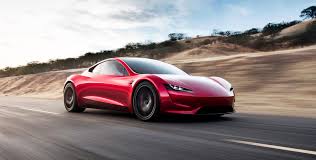
The Roadster was first shown in November 2017. That is nine years ago. April came and went. May came and went. June is one-third complete. The target is August — in Texas — where Tesla will attempt to demonstrate a car with SpaceX cold-gas rocket thrusters.
Tesla Roadster’s August 2026 delay is the eighth delay in this vehicle’s extraordinary nine-year history. The Information reported on 8 June that Tesla internally shifted its long-promised Roadster demonstration to August 2026 — or later. The event is expected in Texas, where Tesla will attempt a public demonstration of the SpaceX A71 option pack — a system of approximately 10 cold-gas rocket thrusters developed with SpaceX engineers. CEO Elon Musk promised an April 1 reveal. April passed. Musk then promised May. May passed. He suggested June. June will pass too. Meanwhile, Tesla chief designer Franz von Holzhausen offered a contradictory message at the Tesla Takeover Europe event in Austria. He told attendees the unveiling was coming “in a few weeks.” The two statements — August from The Information, “a few weeks” from von Holzhausen — cannot both be accurate.
What’s Happening & Why It Matters
The Delay Timeline: 2017 to 2026
The Tesla Roadster’s August 2026 delay has context that requires the full chronological record. Tesla first revealed the next-generation Roadster prototype in November 2017 and promised production by 2020. In July 2020, Musk said deliveries would arrive “in the next 12 to 18 months.” In January 2021, the target became 2022. By September 2021, it was 2023. In May 2023, it moved to 2024. In February 2024, Musk promised a production version reveal by year-end, with deliveries starting in early 2025. By October 2024, on the Q3 earnings call, he admitted production was delayed to 2025–2026. In November 2025, at a shareholder meeting, Musk said production would not begin until 2027 or 2028 — and set April 1, 2026 as a demo date. 1 April passed. May passed. June is passing. August is now the target. That is delay number eight.
The SpaceX A71 System: Why the Demo Is Hard
The engineering reason for the latest delay is specific. Tesla and SpaceX engineers are working on the A71 SpaceX option pack — the feature that replaces the Roadster’s rear seats with approximately 10 cold-gas thrusters. Those thrusters would give the Roadster the ability to briefly leave the ground and achieve sub-second acceleration metrics that no conventional EV can match. In April, Tesla employees and SpaceX engineers reportedly showed Musk an early private demonstration of the A71 technology. By contrast, public demonstrations require a different level of validation. Musk acknowledged this directly on the Q1 earnings call. “It requires a lot of testing and validation before we can actually have a demo and not have something go wrong with the demo.” That is — for the Roadster — a new excuse. For comparison, Tesla demonstrated the original Cybertruck on stage and famously cracked its supposedly indestructible window in front of a live audience. The A71 demo carries considerably higher stakes.
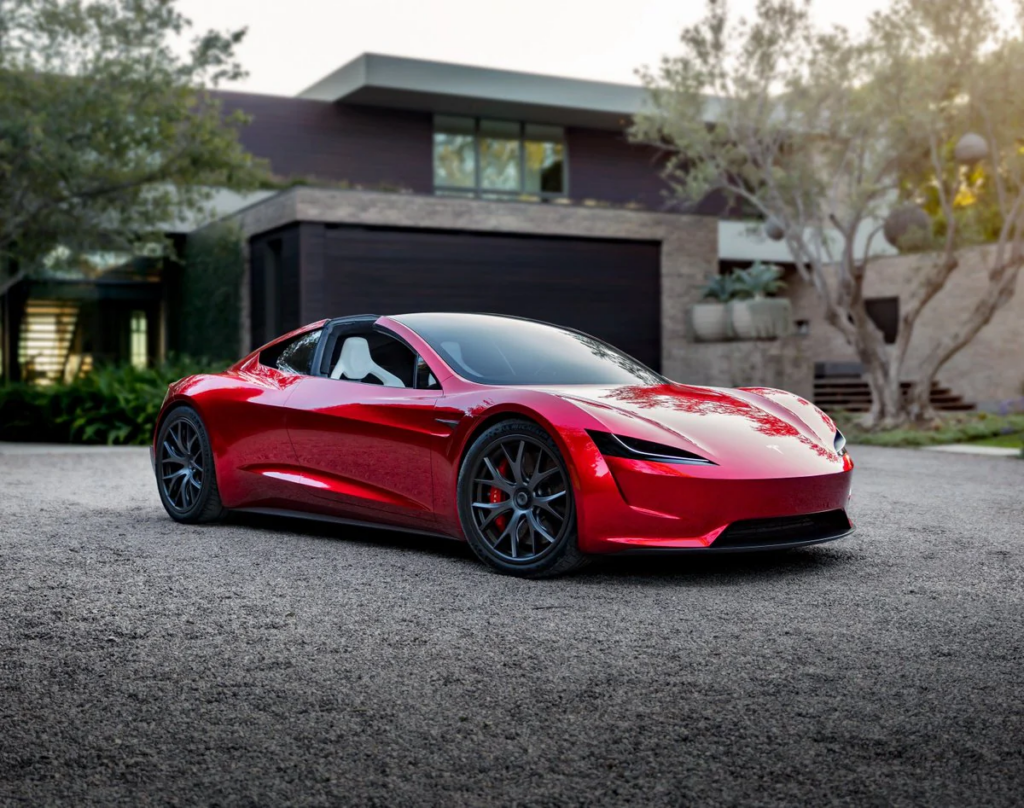
Von Holzhausen’s “A Few Weeks” — What to Make of I
Chief designer Franz von Holzhausen‘s comment at Tesla Takeover Europe creates a direct conflict with The Information‘s sourced reporting. Von Holzhausen told attendees the unveiling was coming “in a few weeks” — which, as of 8 June, would place it before the end of June or in early July. That timeline contradicts the August internal shift. At the same time, von Holzhausen’s history of optimistic Roadster comments provides relevant context. Additionally, PCMag noted von Holzhausen may have been referring to a digital teaser or social media preview — a lower-stakes content release rather than the full Texas demo. A teaser and a full public demonstration are different deliverables. Tesla has not clarified which von Holzhausen meant.
The Competitive Context: Nine Years of Lost Time
The Tesla Roadster’s August 2026 delay carries a competitive cost that goes beyond consumer patience. In 2017, the Roadster’s claimed specifications — 0–60 mph in 1.1 seconds (0–97 km/h), top speed above 250 mph (402 km/h), 620-mile (998 km) range — had no competition anywhere in the EV market. By 2026, that gap has narrowed substantially. Rimac delivered the Nevera with a 1.97-second 0–60 mph time. Xiaomi and Yangwang both ship high-performance EVs that compete in the same category. Meanwhile, Tesla‘s own focus has shifted. The Cybercab and mass-market vehicles now dominate the company’s production and engineering bandwidth. The Roadster was a halo car in 2017. By 2026, it is a credibility test.
TF Summary: What’s Next
Tesla targets a Texas demo in August 2026 — or later, as The Information reported. Von Holzhausen’s “a few weeks” comment may produce a teaser or social media preview before then. Production remains scheduled for 2027 or 2028 — at the earliest. No preorder timeline has been announced. A limited-edition SpaceX version is reportedly planned alongside a less extreme standard variant.
MY FORECAST: The Tesla Roadster’s August 2026 delay will resolve as a demo — not a launch. August Texas is achievable for a controlled cold-gas thruster demonstration under Tesla‘s own conditions. By contrast, the production timeline is the figure that matters commercially. A 2027 or 2028 production date places the Roadster in a competitive landscape where Rimac, Xiaomi, and potentially Porsche will have delivered comparable performance at lower price points. The A71 thruster system remains Tesla‘s only genuine differentiator — no competitor is putting SpaceX cold-gas thrusters in a road car. If that system works publicly and credibly in August, the Roadster becomes relevant again. If August becomes September, and September becomes “later,” the nine-year narrative completes its arc. Even Tesla‘s most loyal fans run out of patience eventually.