


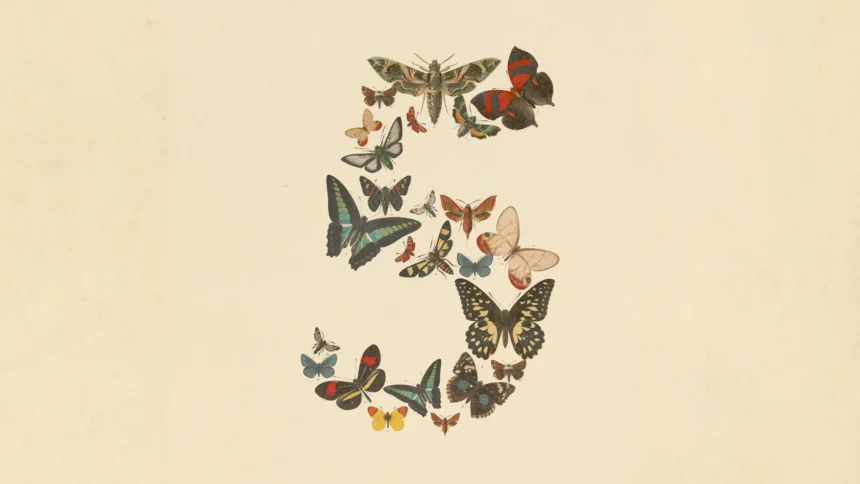
In April, Anthropic said Mythos was too dangerous to release. On 9 June, it released a public version anyway. Claude Fable 5 is Mythos-class power with new safety guardrails. Ask it how to make ricin and it hands you back to Opus 4.8. That is the deal.
Anthropic’s Claude Fable 5 release marks a pivotal shift in the company’s most consequential AI deployment decision of 2026. Anthropic launched Claude Fable 5 on 9 June — describing it as “a Mythos-class model made safe for general use.” The company simultaneously released Claude Mythos 5 — the same underlying model, with some safeguards lifted, for existing Project Glasswing partners. In April 2026, Anthropic said Mythos was too powerful and too dangerous for any public release. That was ten weeks ago. What changed is not the model. What changed is the safety architecture around it.
What’s Happening & Why It Matters
Claude Fable 5: Mythos Power, New Guardrails
Claude Fable 5 is state-of-the-art across nearly every tested benchmark. It surpasses every model Anthropic has previously made publicly available. Software engineering, vision, scientific research, knowledge work, legal analysis, and tool use all show exceptional performance. By contrast, the model’s most dangerous capabilities are blocked at the classifier layer. High-risk requests in cybersecurity and biology trigger a specific fallback behaviour. The model steps down to Claude Opus 4.8 and delivers a safer response instead.
Dianne Penn, Anthropic‘s head of product management for research, described the philosophy on CNBC. “For us, it’s really around what we call ‘race to the top’ — providing this technology in a valuable fashion, and at the same time providing the right safety guardrails so that it can do asymmetrically more benefits than harm.” That framing is precise. Fable 5 is not a nerfed Mythos. It is Mythos with its most dangerous capabilities gated — not removed.
The Ricin Test: How the Fallback Works
The fallback mechanism illustrates the design philosophy concretely. If a user asks Claude Fable 5 how to synthesise ricin — a toxin with no legitimate general-use case — the model recognises the request as high-risk. It blocks its own response. It then hands the conversation to Claude Opus 4.8, which delivers a safe, refusal-based answer. The user never sees Fable 5’s full reasoning on the sensitive topic. In contrast, legitimate cybersecurity professionals using sanctioned tools in an approved context receive Fable 5’s full capability.
That gating architecture required new classifier types and safety guardrails built specifically for this launch. Anthropic notes that longer and more complex tasks are where Fable 5’s advantage over earlier models is most pronounced. Additionally, the company confirmed Fable 5 as state-of-the-art on nearly all tested AI capability benchmarks — a stronger claim than any previous Anthropic public model has carried.

Claude Mythos 5: The Same Model, Fewer Limits
Anthropic released a second product alongside Fable 5. Claude Mythos 5 shares the same underlying model architecture as Fable 5. By contrast, some safeguards are lifted for this version. Access is limited to Project Glasswing partners — the 150-plus organisations across 15 countries that Anthropic selected specifically for critical infrastructure security work. As TF covered in its Glasswing expansion article, those partners include power, water, healthcare, communications, and hardware organisations. The logic is direct. Those organisations need Mythos’s full capability to find vulnerabilities that restricted models cannot reach.
Ten Weeks from “Too Dangerous” to “Safe for General Use”
The speed of this transition deserves attention. Anthropic announced in April that Mythos Preview was too dangerous to release publicly. Ten weeks later, the company released a public version. That acceleration reflects two simultaneous pressures. The first is commercial. Anthropic is filing for an IPO and building toward a public listing. As TF covered in its Anthropic IPO article, investors need to see the most capable models entering the market — not sitting behind restricted access programmes. The second is competitive. Within 6 to 12 months, OpenAI, Google, and others will have Mythos-class models. Releasing Fable 5 now means Anthropic establishes the safety-first frontier model template before competitors arrive.
Access Model: Free Window, Then Credits

Claude Fable 5 is available now to enterprise customers and paid Claude.ai subscribers. Free users receive access within a limited window. On 23 June 2026, Anthropic will remove Fable 5 from standard subscription plans. After that date, accessing Fable 5 requires usage credits. Anthropic stated it aims to restore Fable 5 as part of standard plans when capacity allows. That capacity caveat reflects a genuine infrastructure constraint. Running Mythos-class models at scale requires significantly more compute than previous model generations. The credit-based access model is a commercial mechanism — but it is also a capacity management tool.
TF Summary: What’s Next
Claude Fable 5 is live for enterprise and paid subscribers immediately. It enters a credit-based access model on 23 June 2026. Claude Mythos 5 deploys to existing Project Glasswing partners. Anthropic will publish benchmark performance data and safety evaluation reports in the days following launch.
MY FORECAST: Anthropic’s Claude Fable 5 release will prove commercially transformative — and it will do so faster than the April “too dangerous” framing suggested was possible. The safety fallback architecture is the correct approach: gate the most dangerous capabilities rather than restrict the entire model. Competitors will adopt the same pattern when their Mythos-class models arrive. By contrast, the credit-based access model after 23 June is the detail that will generate the most user friction. Developers and researchers who began building on Fable 5’s capabilities during the free window will face a sharp commercial decision two weeks after launch. Anthropic needs Fable 5 to be the default choice for enterprise AI buyers before OpenAI‘s Aria superapp and Google‘s Gemini Omni reach full commercial deployment. The 23 June credit gate accelerates that enterprise sales cycle — intentionally.