



Social media accountability news came from three continents. In Oakland, Meta settled the landmark Breathitt County School District addiction lawsuit — the last of four defendants to do so. From Melbourne, Australia’s Federal Court imposed a fine on X after the company admitted to breaking the Online Safety Act. In London, a parliamentary committee endorsed incoming Ofcom chair Sir Ian Cheshire, who told MPs he intended to hold the “tech bros” to account. And separately, a Tech Transparency Project investigation revealed that Meta had deployed hundreds of paid “momfluencers” and family influencers to promote Instagram Teen Accounts as safe, including to parents of toddlers, while jury verdicts against the company were still landing.
What’s Happening & Why It Matters
Meta Settles the Bellwether: All Four Defendants Now Gone
The Breathitt County School District case was always the pivotal test. Selected as a bellwether from more than 1,200 pending school district lawsuits, it was scheduled for trial on 15 June 2026 in federal court in Oakland. As TF covered in its earlier report on social media settlements, Snap, YouTube, and TikTok all settled ahead of the trial date. On Thursday, 21 May, Meta followed. All four defendants have now settled. The trial will not happen.
Financial terms are undisclosed for all four settlements. The Breathitt County lawsuit sought more than $60 million to cover the costs of counteracting social media’s impact on students, plus a 15-year mental health programme and court orders requiring platform design changes. Whether the settlements approach that figure is unknown. What is clear is that Meta‘s decision to settle — made days before a jury was due to hear evidence — is the pattern established in March. In that month’s Los Angeles personal injury trial, a jury found Meta and YouTube liable for addictive platform design and awarded $6 million in damages.
What the Settlement Does — and Does Not — Mean
Meta spoke carefully after Thursday’s settlement. “We’ve resolved this case amicably and are focused on our longstanding work to build protections like Teen Accounts that help teens stay safe online, while giving parents simple controls to support their families,” a spokesperson stated. The language is precise. Meta does not admit liability. It does not acknowledge that its platforms caused harm. It describes the resolution as amicable and pivots to safety features.
By contrast, the plaintiff’s case advanced a more specific claim. Breathitt County School District is a small, rural Appalachian district — not a wealthy suburban system with resources to absorb the costs of a mental health crisis. The lawsuit described Meta and its co-defendants designing platforms to keep young users engaged, driving anxiety, depression and self-harm, and leaving schools to deal with the consequences from already stretched budgets. The settlement resolves the legal case. It does not resolve those educational consequences.
Meta’s Momfluencer Campaign: PR While Lawsuits Progress

The settlement news arrived on the same day as a separate and deeply awkward revelation. The Tech Transparency Project (TTP), an American tech watchdog, published an investigation documenting how Meta deployed a network of hundreds of paid Instagram influencers to promote its Instagram Teen Accounts safety features — simultaneously with the period when juries were finding the company liable for harming minors.
The campaign targeted “momfluencers” — parenting and family influencers with large Instagram followings. Sadie Robertson Huff, known from the reality TV show Duck Dynasty, posted to her 5 million followers in October 2024. “Even as the parent of a 3-year-old, I already worry about the future of social media,” she wrote. “The fact that Instagram is thinking about this for teens and trying to help parents have a peace of mind is amazing.”
The Campaign’s Most Troubling Detail
The TTP investigation identified a specific and significant disclosure failure. Many posts lacked proper paid partnership disclosures. One medical influencer who spoke to TTP on background — having signed a non-disclosure agreement — said they felt “manipulated” after learning about the child safety lawsuits against Meta. More pointedly, they said Meta had edited their script to remove any language acknowledging social media’s negative effects on children. The company then algorithmically boosted the post to millions of views. Beyond influencers, TTP identified 11 doctors, psychologists, and therapists who promoted Teen Accounts. Five additional medical professionals appeared as paid speakers at Meta‘s Screen Smart events.
Meta told CNN that it “proudly works with parents and creators to spread the word about its tools.” The Senate Judiciary Committee is expected to call Meta CEO Mark Zuckerberg and other social media executives to testify on youth safety at a hearing next month amid a renewed drive to pass the Kids Online Safety Act (KOSA).
X Admits Breaking Australian Child Safety Law: A$650,000 Fine
On the same day in Melbourne, Australia’s Federal Court imposed a fine of A$650,000 ($437,000 / €403,000) on X after the company admitted breaching the Online Safety Act. The breach stemmed from a legal notice issued in February 2023 by Australia’s eSafety Commissioner to what was then Twitter. The notice demanded detailed information on how the platform was combating child sexual exploitation material. X provided inadequate and in some cases blank responses to 25 specific questions. The eSafety Commissioner fined X in October 2023. X challenged the fine in court. The challenge failed. On 21 May 2026 — almost three years after the original notice — X‘s lawyer told the court plainly: “The respondent admits that it contravened the Act.”
The Near-Maximum Penalty
X was also ordered to pay A$100,000 ($67,000 / €61,800) toward the Commissioner’s legal costs. The A$650,000 fine is close to the maximum available penalty of A$687,500 for the specific breaches. Justice Michael Wheelahan explicitly chose a near-maximum sanction. In his written reasons, he warned that a lower figure risked becoming “simply a cost of doing business” rather than a genuine deterrent. The context is significant. A company the size of X — part of a corporate group that filed an IPO targeting a $1.75 trillion (€1.61 trillion) valuation this week — would not seem an inadequate fine. The judge chose a near-maximum precisely to make the penalty legible at X‘s scale.
eSafety Commissioner Julie Inman Grant welcomed the judgment. “Meaningful transparency is critical to holding technology companies to account,” she said. The case also drew attention to Musk’s personal behaviour toward the regulator. Throughout the case, Musk labelled Inman Grant an “unelected bureaucrat” and the “eSafety Commissar.” That rhetoric resulted in Inman Grant receiving death threats and the doxxing of her children. None of that behaviour reduced X‘s legal obligation to answer the regulator’s questions.
Ofcom’s New Chair: “Not Afraid to Take On the Tech Bros”
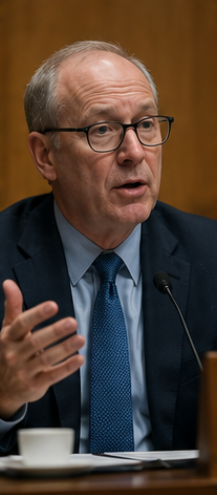
On 20 May 2026, the House of Commons Science, Innovation and Technology Committee held a pre-appointment hearing for incoming Ofcom chair Sir Ian Cheshire. The committee endorsed his appointment. Cheshire assumed the role on 30 April 2026, succeeding Lord Michael Grade. During the hearing, Cheshire set out his approach to the major challenges facing the regulator. He told MPs he was “not afraid to take on the tech bros.”
Cheshire brings a specific professional background to the role. He is the former Chief Executive of Kingfisher plc, former Chair of Channel 4, and former Chair of Barclays UK. He has no direct executive experience in technology or telecoms regulation. At the same time, Committee Chair Dame Chi Onwurah MP offered clear expectations. “Ofcom’s primary duty is to the British public. To be an effective regulator, and to tackle complex, urgent and fast-changing issues like online safety, it needs strong, capable and proactive leadership.”
What Cheshire Inherits at Ofcom
The workload Cheshire inherits is substantial. Ofcom is actively enforcing the Online Safety Act — simultaneously managing the terrorism and hate speech commitments from X, the ongoing Grok investigation, child safety enforcement against major platforms, and the suicide forum fine from last week. As TF covered in its Ofcom legal challenge article, Meta is simultaneously suing Ofcom in the High Court over how fines are calculated under the Act. The October 2026 hearing on that case will be among Cheshire‘s first major institutional tests.
The committee asked Cheshire to identify metrics for evaluating his performance within his first six months in post. The request is Parliament’s intent to hold Ofcom‘s leadership directly accountable. For a regulator that has sometimes moved slowly against fast-moving platforms, the expectation of measurable outcomes within six months represents a meaningful shift in oversight culture.
TF Summary: What’s Next

Meta‘s settlement with Breathitt County does not resolve the litigation. More than 1,200 school district lawsuits are in the coordinated federal proceedings. The state attorneys general trial begins 5 August. The personal injury cases — including the ongoing KGM appeal — continue separately. X has 45 days to pay the A$650,000 fine. Ofcom will receive Cheshire‘s performance metrics within six months of his appointment.
MY FORECAST: The stories converge into a single dynamic. Meta‘s pattern — settle everything rather than let juries hear evidence — will continue through 2026. The momfluencer campaign is the most damaging story of the week for Meta‘s long-term credibility. Congress will use the TTP report directly in Zuckerberg’s Senate hearing next month. X‘s Australian admission sets a precedent — the “period of transition” defence for non-compliance with regulatory notices has been comprehensively rejected by a federal court. Every other jurisdiction where X has claimed similar transition-period exemptions from regulatory obligations will use this ruling as precedent. And Cheshire‘s “tech bros” declaration in Parliament carries more weight than it might initially appear. Ofcom is entering its most consequential enforcement period under a chair who has publicly announced his intent to use it. That signal is as important as the words themselves.