



Five AI stories dropped this week. Each one changes something. Here’s the full breakdown.
AI is having a busy week. OpenAI launched not one but two new specialised models — one for cybersecurity, one for life sciences. Mozilla released an open-source AI client built for enterprise privacy. Google connected its image generator to your personal photo library. Meanwhile, Microsoft and Stellantis signed a five-year deal to bring AI inside cars. These five announcements paint a clear picture. AI is moving fast, moving deep, and moving into places people will actually notice.
What’s Happening & Why It Matters
OpenAI Releases a Cybersecurity Model — With Controlled Access
On 14 April 2026, OpenAI launched GPT-5.4-Cyber, a fine-tuned variant of its GPT-5.4 model. The model is built for defensive cybersecurity work. It is available to vetted participants through OpenAI’s Trusted Access for Cyber (TAC) programme. That programme launched in February 2026 alongside a $10 million (€9.2 million) cybersecurity grant initiative.

GPT-5.4-Cyber is described as “cyber-permissive.” It has a lower refusal boundary on security-related queries. Standard GPT models would often block dual-use security questions outright. This one does not. New features include binary reverse engineering — the ability to analyse compiled software for malware and vulnerabilities without access to the underlying source code. That capability was previously reserved for specialist researchers.
OpenAI cyber researcher Fouad Matin described the model’s purpose directly: “This is a team sport. We need to make sure every single team is empowered to secure their systems.”
The launch followed Anthropic‘s release of Mythos, a separate cybersecurity-capable model, one week earlier. Mythos operates differently. It works more autonomously — identifying vulnerabilities without continuous human input. GPT-5.4-Cyber, by contrast, assists vetted human defenders rather than acting independently. Both models represent a new approach to cyber AI risk. Instead of restricting what models can do, the companies are focusing on verifying who gets access.
SiliconAngle noted that OpenAI’s Codex Security product has already contributed to fixes for more than 3,000 critical and high-severity vulnerabilities since its launch. Capture-the-flag benchmark performance across OpenAI’s models jumped from 27% on GPT-5 in August 2025 to 76% on GPT-5.1-Codex-Max in November 2025. Those numbers show how fast capability is advancing — and why careful access controls matter.
OpenAI Names a Science Model After Rosalind Franklin
On 16 April 2026, OpenAI introduced GPT-Rosalind — its first life sciences AI model. The name honours British chemist Rosalind Franklin, whose research helped reveal the structure of DNA. The model targets biochemistry, genomics, drug discovery, and translational medicine.

GPT-Rosalind connects to over 50 scientific tools and data sources via a Life Sciences research plugin for Codex. It can query databases, read recent scientific papers, plan experiments, and generate hypotheses. On BixBench, a bioinformatics benchmark, the model achieved a pass rate of 0.751. On LABBench2, which tests research tasks like literature retrieval and protocol design, it outperformed GPT-5.4 on 6 out of 11 tasks.
Initial access is restricted to qualified enterprise customers through a trusted access programme. Launch partners include Amgen, Moderna, the Allen Institute, and Thermo Fisher Scientific.
OpenAI’s life sciences research lead, Joy Jiao, stated that the model is designed to “help researchers accelerate the early stages of discovery.” Currently, it takes 10 to 15 years to move from target discovery to drug approval in the United States. Only 1 in 10 drugs entering clinical trials eventually gains approval. Over 300 million people globally live with rare diseases, waiting for better treatments. GPT-Rosalind is designed to compress the early analytical stages of that pipeline. OpenAI is clear: the model does not replace scientists. It assists them.
Mozilla Launches Thunderbolt — AI You Control
On 16 April 2026, MZLA Technologies — the for-profit subsidiary of Mozilla that maintains Thunderbird email — launched Thunderbolt. It is an open-source AI client designed for organisations that want to run AI on their own infrastructure. The code is publicly available on GitHub.

Thunderbolt lets organisations choose their own AI models. Those choices include commercial providers, open-source models, and fully local models. The client integrates with Deepset’s Haystack platform, Model Context Protocol (MCP) servers, and agents using the Agent Client Protocol (ACP). Native applications are available for Windows, macOS, Linux, iOS, and Android.
MZLA CEO Ryan Sipes stated the product’s purpose directly: “AI is too important to outsource. With Thunderbolt, we’re giving organisations a sovereign AI client that allows them to decide how AI fits into their workflows — on their infrastructure, with their data, and on their terms.”
Thunderbolt targets a specific enterprise problem. Regulated industries — finance, healthcare, legal — want AI tools. They do not want sensitive data leaving their infrastructure. Cloud-based AI assistants from Microsoft and Google often require exactly that. Thunderbolt offers an alternative. The code is open-source and free to self-host. MZLA plans to generate revenue through managed enterprise deployments for organisations that want capability without the infrastructure overhead.
Gemini Digs Into Your Google Photos Library
On 16 April 2026, Google announced an expansion of its Personal Intelligence feature. Nano Banana — Google’s image generation model — can draw on a user’s Google Photos library to create personalised images.
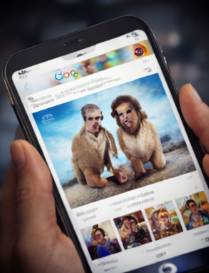
The feature works through the labels users have applied to their photos. Gemini identifies people, places, and objects from those tagged images. It uses that context automatically during image generation. A user can ask Gemini to “create a claymation image of me and my family enjoying our favourite activity.” That request would have required manually uploading a reference photo. Now it does not.
The rollout is available to paid subscribers on Google AI Plus, Pro, or Ultra plans. Google has stated that the Gemini app does not directly train its models on private Photos libraries. The company acknowledges using “limited info” from specific prompts and model responses to improve functionality. The words “direct” and “limited” in that assurance have attracted scrutiny. Personal Intelligence initially launched for US users in March 2026. It has since expanded to India and Japan. It will eventually be available in Gemini for Chrome and other platforms.
Microsoft and Stellantis Partner on 100+ AI Projects for Cars

On 16 April 2026, Microsoft and Stellantis — the automaker behind Jeep, Peugeot, Citroën, Fiat, and others — announced a five-year strategic collaboration. Joint teams will co-develop more than 100 AI initiatives across customer care, sales, product development, and operations.
Specific use cases include predictive maintenance, AI-assisted product testing and validation, faster rollout of digital features, and personalised in-vehicle services. For example, Peugeot drivers may receive real-time recommendations to drive more energy-efficiently in cities. Jeep drivers will benefit from protected data access in remote terrain. Stellantis is using the partnership to build a global AI-driven cyber defence centre. That centre covers IT systems, connected vehicles, manufacturing sites, and digital products.
Stellantis Chief Engineering and Technology Officer Ned Curic stated: “Through our collaboration with Microsoft, we are accelerating our AI momentum across the enterprise.” Microsoft Commercial Business CEO Judson Althoff added: “By combining Stellantis’ global scale and engineering expertise with Microsoft’s trusted cloud, AI and security platforms, we are delivering real value for millions of drivers worldwide.”
The deal also includes a major infrastructure shift. Stellantis will modernise its infrastructure on Microsoft Azure. The company targets a 60% reduction in its data centre footprint by 2029. That reduction is both cost savings and a move toward a more connected, AI-native operational model. The automotive sector is under pressure. Chinese automakers are advancing their in-vehicle software rapidly. Legacy brands need technology partnerships to keep pace.
TF Summary: What’s Next
These five announcements share a common thread. AI is no longer just general-purpose. It is becoming domain-specific, access-controlled, and infrastructure-aware. OpenAI‘s two new models — one for cybersecurity, one for biology — show how specialisation is becoming the next competitive frontier. Mozilla‘s Thunderbolt shows that the market for AI sovereignty is real and growing. Google’s Personal Intelligence expansion shows that the data boundaries of AI are still being negotiated. The Microsoft–Stellantis deal shows that AI is now a standard feature of major enterprise infrastructure, not an experiment.
MY FORECAST: Each of these developments will deepen over the coming months. GPT-Rosalind and GPT-5.4-Cyber are both in preview access. Their full rollouts will test how carefully access controls hold under demand. Thunderbolt’s enterprise traction will reveal whether privacy-first AI has a durable market. Google’s photo personalisation will face ongoing scrutiny about what “limited” data use really means. The first Stellantis vehicles fueled by the Microsoft partnership will start reaching consumers in 2027 and beyond. AI week has been busy. The weeks ahead will be busier.
— Text-to-Speech (TTS) provided by gspeech | TechFyle