


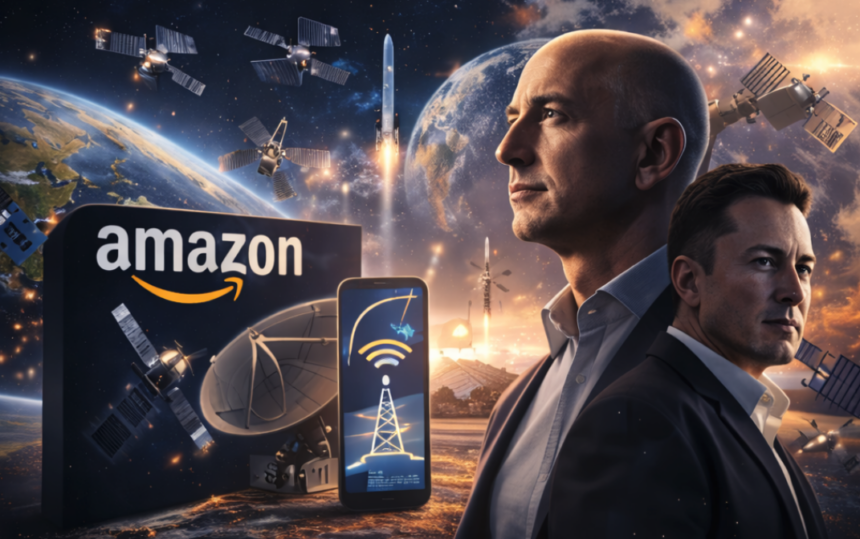
Amazon just bought its way into the satellite race. Apple keeps its iPhone features. And Elon Musk has a real rival.
The satellite internet war has a new combatant. On 14 April 2026, Amazon announced a definitive agreement to acquire Globalstar, the satellite operator best known for powering Apple‘s Emergency SOS feature on iPhone. The deal is valued at approximately $11.57 billion (€10.65 billion). Furthermore, it comes with a significant bonus: Amazon and Apple simultaneously signed a separate long-term agreement confirming that Amazon Leo — Amazon‘s satellite network — will power future iPhone and Apple Watch satellite features. Consequently, one deal reshapes two of the most important tech companies at the same time.
The acquisition is the most aggressive move yet in Amazon’s race to challenge SpaceX‘s Starlink, the dominant force in the satellite internet market. Additionally, it gives Amazon a critical asset it could not easily build from scratch: licensed spectrum. Therefore, this is not simply a satellite deal. It is an infrastructure land grab with consequences that will stretch across the global connectivity landscape for decades.
What’s Happening & Why It Matters
The Deal in Detail
The transaction values Globalstar at $90 per share — payable in cash or stock. Specifically, shareholders can elect either $90 in cash or 0.3210 shares of Amazon common stock per Globalstar share. Additionally, the deal includes a possible downward adjustment of up to $110 million (€101 million) if Globalstar misses certain operational milestones ahead of closing. The acquisition is expected to close in 2027, pending regulatory approval from the Federal Communications Commission (FCC) and international telecommunications authorities.
The $90 per share price represents a 117% premium over Globalstar’s late-October 2025 closing price, before Bloomberg first reported the company was exploring a sale. Furthermore, it reflects a 23% premium over Globalstar’s last unaffected trading price immediately before the announcement. For context, Globalstar’s pre-deal market capitalization hovered around $7.6 billion (€7.0 billion). Therefore, Amazon is paying a meaningful strategic premium to close the gap with Starlink faster than organic growth would allow.
One critical factor smoothed the deal’s path. Thermo Funding II, which controls over 57% of Globalstar’s voting power, provided written consent. Consequently, no formal shareholder vote is required. The deal, therefore, moves through the regulatory process without a protracted proxy battle.
What Amazon Actually Buys
On paper, Amazon is buying a relatively modest satellite operator. Globalstar operates approximately 24 satellites in low-Earth orbit. Amazon Leo already has over 200 satellites in orbit and plans to deploy approximately 3,200 by 2029. Starlink has more than 10,000. So the raw satellite count is not what makes this deal worth $11.57 billion. Furthermore, the deeper value lies in three specific assets.

First, Globalstar holds globally harmonized spectrum licences — including Band 53, a block from 2483.5 to 2495 MHz. According to Globalstar, Band 53 is exclusively licensed to the company and is optimized for high-performance, low-latency, interference-free connectivity. Additionally, it covers L-band, S-band, and C-band frequencies. Spectrum licences in the satellite industry are scarce, tightly regulated, and extremely difficult for newer entrants to acquire. Therefore, buying Globalstar effectively buys years of regulatory work in one transaction.
Second, Globalstar brings direct-to-device expertise. Its technology connects devices — including smartphones — directly to satellites without requiring a standalone dish or antenna. Consequently, this capability enables the consumer connectivity use case that is at the heart of Amazon’s long-term vision.
Third, Globalstar operates two global ground gateway stations that support satellite operations. These infrastructure assets take years to permit, build, and commission. Amazon, therefore, acquires them immediately rather than building them from scratch. Panos Panay, Amazon’s Senior Vice President of Devices and Services, stated the combination delivers “faster, more reliable service in more places.”
Apple’s Stake and the iPhone Connection
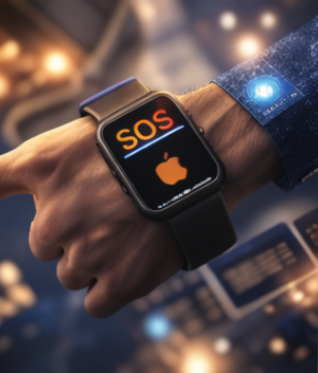
Apple has invested approximately $1.5 billion (€1.38 billion) in Globalstar, giving it roughly a 20% ownership stake. Furthermore, Apple reportedly uses approximately 85% of Globalstar’s network capacity for its satellite features. Those features include Emergency SOS via satellite, Messages via satellite, Find My location sharing, and Roadside Assistance via satellite — all available on iPhone 14 and later models in supported regions. Apple’s co-operation was therefore not optional. Had Apple blocked the deal, the acquisition could have collapsed entirely.
Instead, the three parties reached an accord. Simultaneously with the acquisition announcement, Amazon and Apple signed a long-term agreement confirming that Amazon Leo will continue powering satellite features on current iPhones and Apple Watches. Additionally, Amazon will collaborate with Apple on future satellite services running on the expanded Leo network. Apple SVP of Machine Learning and AI Strategy John Giannandrea said: “Apple and Amazon have a long and proven track record of working together through Amazon’s core infrastructure services, and we look forward to building on that collaboration.” Consequently, every iPhone user in the world will eventually rely on Amazon-powered satellites for emergency connectivity — whether they know it or not.
The Starlink Problem Amazon Is Trying to Solve
Starlink currently operates over 10,000 satellites and serves more than 9 million users across approximately 150 countries. By contrast, Amazon Leo has around 200 satellites deployed and has yet to begin consumer service. Furthermore, Amazon faces a pressing regulatory deadline. The FCC requires Amazon to have roughly 1,600 satellites — approximately half its planned constellation — in orbit by July 2026. In January 2026, Amazon requested additional time to meet this deadline. Consequently, the gap between Amazon and Starlink is simultaneously a technological, commercial, and regulatory challenge.

The Globalstar acquisition addresses the spectrum and direct-to-device dimensions of that challenge. However, the satellite count gap is enormous. SpaceX has already acquired multiple spectrum licences from EchoStar as it builds out Starlink Mobile — its own direct-to-device offering. Therefore, even with Globalstar’s assets, Amazon enters a market where Starlink has a commanding head start. FCC Chairman Brendan Carr acknowledged the competitive logic of the deal, telling CNBC the agency is “very open-minded” to the acquisition and that it is “consistent with the long-term vision” to make satellites competitive with SpaceX in direct-to-cell services.
Amazon plans to launch its own Direct-to-Device (D2D) satellite system in 2028, integrating Globalstar’s spectrum and infrastructure with Amazon Leo’s expanding constellation. Analysts project the satellite connectivity market could generate around $15 billion (€13.8 billion) in annual revenues by the end of 2026. Furthermore, Amazon already counts Delta Airlines, AT&T, Vodafone, Australia’s National Broadband Network, and NASA among Amazon Leo’s announced customers. Consequently, the commercial foundation is taking shape even before full consumer service launches.
The Spectrum Battle Nobody Is Talking About
The acquisition also carries a competitive dimension beyond user counts. Amazon and SpaceX have clashed over spectrum before regulators. Globalstar’s Band 53 spectrum is described as exclusively licensed — meaning no other company can use it for direct-to-device services without Amazon’s permission, once the deal closes. Additionally, Globalstar’s globally harmonized L-band and S-band portfolio provides coverage in regions where other operators hold fragmented or regional-only licences. Therefore, Amazon’s spectrum position post-acquisition is genuinely differentiated from what Starlink currently holds in direct-to-cell frequencies.
This spectrum dimension is arguably the most durable competitive advantage in the deal. Satellites can be launched. Ground stations can be built. However, globally harmonized spectrum at this scale cannot be replicated quickly. Consequently, the $11.57 billion price tag buys something that money alone cannot manufacture on a reasonable timeline.
TF Summary: What’s Next
The Amazon-Globalstar deal does not close the gap with Starlink overnight. However, it fundamentally changes the competitive vantage heading into the late 2020s. Amazon Leo gains spectrum, infrastructure, Apple as a flagship partner, and direct-to-device expertise — all in a single transaction. Furthermore, the Apple partnership locks in iPhone’s satellite features under Amazon’s roof for years to come. Consequently, SpaceX now faces a competitor with deeper pockets, an existing advantage in cloud infrastructure through AWS, and the world’s most valuable consumer electronics brand in its corner.
The deal is expected to close in 2027, and the Direct-to-Device system is targeted for 2028. Therefore, the next two years will determine whether Amazon can execute at the pace required to effectively challenge Starlink’s 9 million-plus user base. Regulatory scrutiny from the FCC, international approvals, and the pressure of Amazon Leo’s July 2026 satellite deployment deadline all add complexity to an already ambitious timeline. However, if Amazon delivers, the satellite internet market will no longer be a one-horse race. That competition — between Bezos and Musk, between Leo and Starlink — is only just beginning.
— Text-to-Speech (TTS) provided by gspeech | TechFyle