



For 17 years, your phone number has been your WhatsApp identity. That changes this week. Reservations opened on 29 June for over 3 billion users. No directory. No suggestions. People need your exact handle to find you. Telegram learned the hard way what happens without that rule.
WhatsApp’s username feature launch opened for reservations — marking the most significant identity change to the platform since its 2009 founding. WhatsApp is finally allowing users to reserve usernames, a privacy feature that lets them hide their phone numbers from people not in their contact list. Meta says more than 3 billion people in over 180 countries use WhatsApp‘s messaging and video-calling platform. “Starting this week, you can reserve a username to use later this year when we launch this feature,” the company announced. “With over three billion people on WhatsApp, a lot of names overlap, which is why we’re opening reservations early so everyone has the opportunity to select the username that matters to them.” WhatsApp head Alice Newton-Rex confirmed the design philosophy directly in a Jakarta presentation: “This is a new way to connect with someone without giving them your phone number.”
What’s Happening & Why It Matters
How Reservation Works

WhatsApp’s username feature launch begins with reservations, not the live feature itself. Users update to the latest version of WhatsApp and navigate to Settings > Account > Username to claim their handle. The full username system rolls out gradually over the coming months — users receive an in-app notification once the feature activates in their specific country. The early reservation window exists because of scale. With billions of users competing for the same common names, WhatsApp opened claims ahead of the actual rollout to give people a fair opportunity at the name they want.
The format rules are specific and deliberately restrictive. Usernames must contain 3 to 35 characters, include at least one letter, and may only contain lowercase letters, numbers, periods, and underscores. They cannot begin with “www.” or end with domain suffixes like “.com” or “.net” — a direct anti-phishing measure. Additionally, some usernames are reserved exclusively for governments, public figures, and businesses, and cannot be claimed by other users. Businesses can also claim their existing Instagram or Facebook handle as their WhatsApp username — maintaining brand consistency across Meta‘s platforms.
Your Number Touches Everything
WhatsApp’s username feature launch addresses a structural problem that has existed since the app’s founding. A phone number, WhatsApp noted, is personal and tied to many parts of daily life — from two-factor authentication to banking. The new username system means someone can message you for the first time without ever seeing your digits. Once usernames are enabled, people messaging a user or business for the first time will no longer automatically see their phone number.
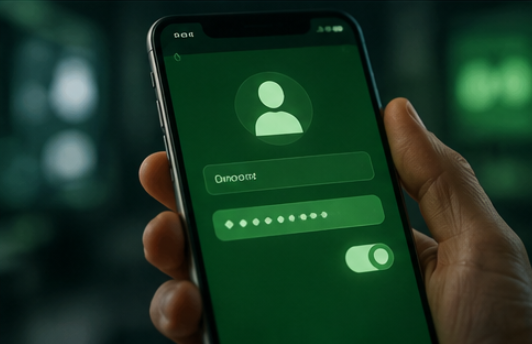
The use case WhatsApp emphasises directly addresses a familiar social friction point. “When someone new walks into your life — a classmate, a neighbour, someone you meet at an event — sharing a phone number can feel like a big step.” Furthermore, WhatsApp is adding an optional username key — a code that others need to know before messaging via the username, providing an additional layer of access control beyond the handle itself.
Avoiding Telegram’s Mistake — “No Directory, No Suggestions”
WhatsApp’s username feature launch builds in a specific design constraint that directly addresses the failure mode critics immediately raised. Unlike traditional social media platforms, WhatsApp said usernames have been designed with privacy at their core. “There’s no directory to browse and no suggestions — people will need to know your exact username to contact you for the first time,” the WhatsApp team noted. That is a deliberate and important departure from how usernames typically work on social platforms.
Indian commentator Jasveer Singh articulated the central risk publicly. “My first thought wasn’t privacy — it was scams. The biggest reason I never used Telegram was because anyone could contact you without knowing your phone number. It became a paradise for scammers. Phone numbers created accountability.” Public figure Ankur Warikoo raised a related and specific concern — fraudsters creating multiple variations of a public figure’s username (warikoo, a_warikoo, ankurwarikooo) to solicit money from followers who assume they’re messaging the genuine account. Warikoo has his own pending legal case involving AI-generated advertisements that used his likeness for fraudulent investment groups on WhatsApp. The no-directory, no-suggestions design is WhatsApp‘s direct answer to the Telegram comparison — but it does not eliminate impersonation risk for public figures whose handles can still be approximated and messaged to unsuspecting followers.
Signal Was First. WhatsApp Took Two Years Longer
WhatsApp’s username feature launch arrives after Signal had already proven the model. Signal has allowed users to choose a custom username since February 2024, following a public test phase that began in November 2023. WhatsApp‘s nearly two-year delay reflects its fundamentally different scale and risk profile. Signal serves a privacy-focused user base in the tens of millions. WhatsApp serves 3 billion people — including vulnerable populations across 180 countries where impersonation, scam, and fraud risks scale proportionally with the user base. Earlier in 2026, WABetaInfo reported that WhatsApp had extensively updated the app’s underlying code to ensure existing features remained compatible with usernames before beginning a phased rollout. That extended engineering timeline reflects the complexity of retrofitting identity infrastructure onto a platform this size without breaking existing functionality.
TF Summary: What’s Next
Username reservations are open now in WhatsApp Settings > Account > Username. The full feature rolls out gradually across Android, iOS, Windows, and web “later this year,” with country-by-country activation. Business accounts gain username access through the WhatsApp Business API on a separate but overlapping timeline. WhatsApp has not announced specific anti-impersonation enforcement mechanisms beyond the reserved-handle system for public figures.
MY FORECAST: WhatsApp’s username feature launch will succeed at its stated privacy goal — meaningfully reducing unwanted phone number exposure for the majority of users who adopt it. By contrast, the impersonation risk that Singh and Warikoo identified will materialise as a genuine problem within the first six months of the full rollout, concentrated specifically around public figures, businesses, and financial scam targeting. WhatsApp‘s no-directory design limits but does not eliminate that exposure — a scammer who already knows a target’s approximate username pattern can still message convincingly. Expect WhatsApp to introduce additional verification badges for public figures and businesses within 12 months of the full launch — likely an expansion of Meta Verified to cover username authenticity specifically. The privacy benefit for ordinary users is real and overdue. The fraud risk for prominent users is the trade-off WhatsApp is choosing to manage reactively rather than prevent entirely.
Related Stories
- Meta Is Building ‘Arena’ — a Prediction Market App to Challenge Polymarket and Kalshi
- Netflix Now Requires a Unique Email for Every Profile — Making Sharing Even Harder
- Meta Suspended Its AI Employee Monitoring Programme After an Internal Data Leak