


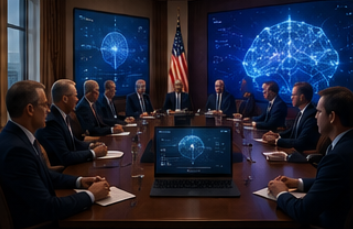
Sam Altman pitched the idea to Trump in early 2025. OpenAI formalised it in an April 2026 policy paper. Trump confirmed the talks aboard Air Force One. The government wants a piece of America’s AI future — and OpenAI wants the government to have one. Here is why both sides are saying yes.
The Trump administration’s OpenAI equity stake discussions entered the public record — when President Trump confirmed the talks aboard Air Force One. “There are concepts where pieces could be given to the American public, where the American public essentially becomes a partner,” Trump told reporters. He called the idea “very interesting.” That statement was neither a commitment nor a surprise. CNBC confirmed that negotiations between the White House and OpenAI CEO Sam Altman have been underway for more than a year. Altman first proposed the equity concept to the Trump administration in early 2025. Additionally, OpenAI published a formal policy paper in April 2026 — titled Industrial Policy for the Intelligence Age — outlining the specific mechanism: a Public Wealth Fund seeded by donated AI company equity, distributing returns directly to American citizens.
What’s Happening & Why It Matters
The Proposed Structure — a Donation Rather Than a Purchase
The Trump administration’s OpenAI equity stake discussions centre on an unusual financial mechanism. Under the framework being discussed, OpenAI would donate equity to the federal government — rather than sell it. That distinction is commercially and politically significant. A sale requires the government to spend taxpayer money at OpenAI‘s current $850 billion+ valuation. By contrast, a donation creates a government stake at no direct cost to the Treasury. The donated shares would seed the Public Wealth Fund that OpenAI proposed in its April policy paper. The fund would “invest in diversified, long-term assets” across AI companies and businesses deploying AI. Eventually, its returns would flow directly to American citizens — including those with no access to traditional investment markets.
What OpenAI Gets From the Deal
The structure benefits OpenAI in ways that go beyond public relations. At the most basic level, a government equity stake creates a powerful political ally. Any future effort to regulate, break up, or tax OpenAI becomes significantly more politically complicated when the US government holds a direct financial interest in the company’s continued growth. Moreover, OpenAI is preparing an IPO targeting a September 2026 listing. Government equity participation would signal sovereign-level confidence in the offering — a signal that no investment bank roadshow can replicate. Additionally, the supply chain risk designation applied to Anthropic — as TF covered in its Anthropic IPO filing article — demonstrates what happens to AI companies that do not maintain strong government relationships. OpenAI is making the opposite calculation.
The Bernie Sanders Wrinkle — 50% Is Not Happening
The discussions also involve a less likely but politically significant proposal. Senator Bernie Sanders separately proposed requiring OpenAI to give the US government 50% equity in exchange for access to public data, publicly funded research, and federal contracts. Altman met with Sanders for nearly an hour — a meeting Altman himself initiated. While Altman agreed on the principle of public AI equity, he could not support the 50% figure. Sanders’ spokesperson confirmed Altman “did not commit to any of those” demands.
By contrast, industry advocates support far smaller stakes — 1 to 5% contributions to a public fund, rather than Sanders’ 50% tax. Trump told reporters the US is exploring options and noted that, economically, he sees positions between the administration and Sanders that “aren’t that far apart.” That framing is politically useful. It allows Trump to claim a populist position without committing to the larger Sanders number. At the same time, the 1 to 5% range is the commercial reality that any IPO-bound company can absorb without materially affecting its cap table.
The Pattern: Government Ownership of Private Tech
The Trump administration’s OpenAI equity stake discussions are not unprecedented in the current term. Trump has already taken direct equity stakes in at least 10 private companies since returning to office. Those stakes include positions in semiconductor manufacturer Intel, IBM, and multiple quantum computing and critical mineral firms. As TF covered in its quantum computing article, the Trump administration took $2 billion equity stakes in nine quantum computing firms in May 2026. The OpenAI discussions extend the same industrial policy logic into the AI model layer.
Trump’s broader sovereign wealth fund ambitions provide the formal policy framework. In February 2026, he signed an executive order directing the Treasury and Commerce Departments to develop a national sovereign wealth fund plan. The OpenAI Public Wealth Fund proposal fits neatly into that architecture. Notably, the Trump administration’s interest may not be limited to OpenAI. PCMag reported that Trump indicated the AI equity concept could extend to “other leading AI companies” — potentially including Anthropic, xAI, and Google DeepMind.
The Anthropic Paradox
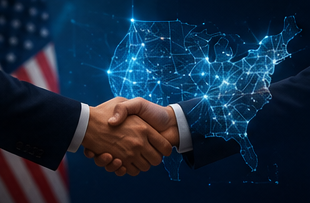
The most politically awkward dimension of this story is the comparison with Anthropic. Trump’s administration designated Anthropic a supply chain risk in February 2026 — specifically because the company refused to remove AI safety guardrails from military contracts. The same administration is now discussing equity participation in OpenAI — which did sign the Pentagon contract. That contrast is not lost on investors. As TF covered in its Anthropic IPO article, Anthropic‘s valuation of $965 billion now exceeds OpenAI‘s despite losing those government contracts. The market, in other words, has not punished Anthropic for its safety stance. Whether the administration eventually seeks an Anthropic stake — repairing the relationship through financial participation — is the question that the “other leading AI companies” phrase leaves open.
TF Summary: What’s Next
No final terms have been agreed. OpenAI pointed to its April 2026 policy paper when asked for comment. The White House has not announced a timeline for finalising the deal. Any agreement must close before OpenAI‘s September IPO filing to appear on the cap table from day one of the public offering. Trump told reporters discussions should advance “in the very near future.” The Treasury and Commerce Departments are developing the sovereign wealth fund framework that would house the donated equity. Congressional opposition — specifically from progressive Democrats who want a 50% stake — is unlikely to prevent a smaller bilateral deal.
MY FORECAST: The Trump administration’s OpenAI equity stake discussions will produce a deal before the September IPO filing date. The structure will be a donated 1 to 3% equity position from OpenAI to the federal government — sufficient to establish the Public Wealth Fund principle without triggering cap table concerns for other IPO investors. That stake will appear as a government shareholder on OpenAI‘s S-1 — a line item no other AI company’s prospectus contains. Beyond OpenAI, the administration will use the deal as a template for approaching xAI and potentially Google. It will not approach Anthropic until the supply chain risk designation is resolved. And it will not resolve that designation until Anthropic‘s safety position on military AI either softens or becomes politically irrelevant. Given that Anthropic‘s IPO will likely price above OpenAI‘s — and that its revenue trajectory is stronger — the administration may eventually decide that the supply chain risk designation costs more in foregone equity upside than it gains in policy leverage.