


One week after 12 states sued, a federal judge sided with them — and did it days before Paramount was set to close the deal. “On this combined firm market share alone, the Court is persuaded that it can presume the proposed merger is likely to violate antitrust laws.” That single sentence just cost David Ellison his closing date.
The Paramount-WBD merger injunction took effect — a decisive early setback in the legal fight TF covered when 12 states first sued a week earlier. US District Judge Araceli Martínez-Olguín granted a 14-day temporary restraining order pausing Paramount Skydance’s acquisition of Warner Bros. Discovery, just days before the deal was expected to close. Paramount had previously said it would not complete the purchase before 22 July. The judge focused her ruling on a single, narrow question — the merger’s effect on wide-release theatrical film distribution — treating it as a test case for the states’ broader antitrust claims. “Plaintiffs present compelling evidence that the combined firm resulting from the transaction will possess substantial market share in the wide-release theatrical distribution market,” she wrote. “On this combined firm market share alone, the Court is persuaded that it can presume the proposed merger is likely to violate antitrust laws.”
What’s Happening & Why It Matters
What the Judge Actually Ruled — and What Comes Next
The Paramount-WBD merger injunction is deliberately narrow in scope, not a final verdict on the deal’s legality. The 14-day TRO buys the states’ lawsuit time rather than resolving it. During that window, Martínez-Olguín will hear arguments from both sides over whether to issue a preliminary injunction that would more concretely block the merger while the underlying case proceeds. A hearing on that preliminary injunction is set for 3 August. Additionally, the judge left open the possibility of extending the TRO for up to 28 days if she needs more time before ruling on the injunction request.
By contrast, Martínez-Olguín’s language about the theatrical distribution market signals real early scepticism toward the deal’s core defence. She wrote that she did not find Paramount’s counterargument — that streaming giants like Netflix have reshaped competitive dynamics across entertainment — persuasive at this stage. That specific rejection matters because theatrical distribution is only one of three markets the states’ complaint targets; if the judge is unconvinced on the narrowest claim, the broader case looks stronger, not weaker.
What the States Allege
The Paramount-WBD merger injunction stems from a lawsuit TF covered in detail when it was filed. Twelve states, led by California, sued to block the deal, alleging the combination would “extinguish competition” in Hollywood and reduce competition across theatrical distribution, big-budget blockbuster releases specifically, and licensing of basic cable television channels. The Democratic attorneys general argue the merger would hurt filmgoers, TV and news consumers, and — notably — the people who actually create the entertainment programming and news content the public depends on.
The scale of what a combined entity would control is genuinely striking. The $111 billion deal would place under one corporate roof Paramount’s and Warner’s movie and television studios, streaming services Paramount+ and HBO Max, Paramount’s CBS — the nation’s most-watched broadcast outlet — roughly 50 cable TV channels, and both CBS News and CNN.
The Political Backdrop That Everyone’s Watching
The Paramount-WBD merger injunction carries a political dimension that TF has documented since the original DOJ approval. Paramount CEO David Ellison — son of Oracle co-founder and Republican backer Larry Ellison — bid for Warner Bros. Discovery quickly after Skydance completed its own acquisition of Paramount in 2025. That earlier deal drew scrutiny after Ellison implemented several changes widely read as designed to appease President Trump and his administration.
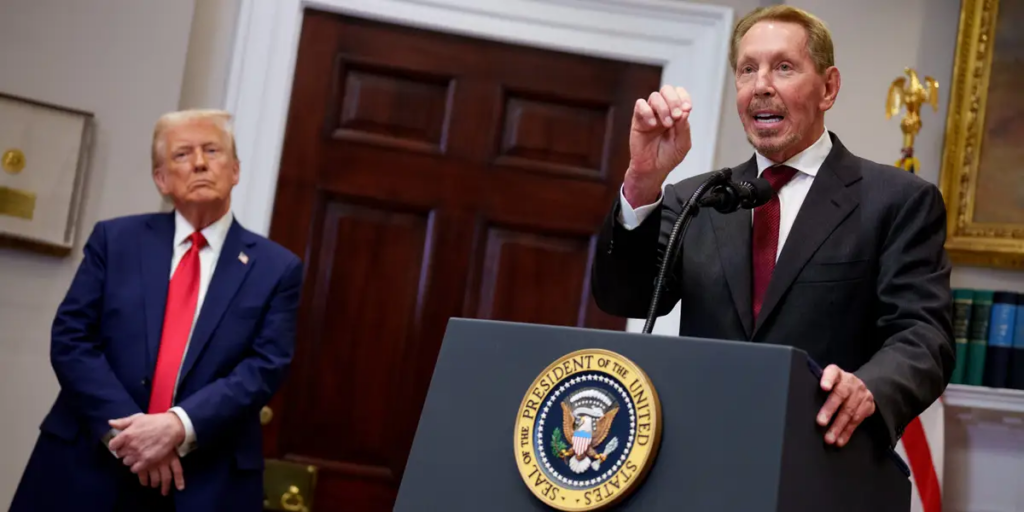
According to a Wall Street Journal report, Ellison has separately promised Trump that, should Paramount successfully acquire WBD, he would make sweeping changes to CNN — a frequent target of the president’s criticism. As TF covered previously, the DOJ approved the merger in June with zero divestitures required, an unusually clean clearance that prompted Senator Elizabeth Warren to call the approval outright corrupt. Judge Martínez-Olguín’s ruling does not address that political context directly — but it is precisely the backdrop against which nearly every observer covering the deal is reading the states’ antitrust case.
The Financial Penalties Ticking Against Paramount
The Paramount-WBD merger injunction arrives with real financial consequences already built into the deal’s own contractual terms, independent of the litigation outcome. A daily “ticking fee” of $0.25 per quarter share accrues after 30 September 2026 until the transaction closes — a cost that grows the longer this legal fight drags on. A regulatory termination fee of $7 billion is payable if the deal fails to close specifically due to regulatory matters — a category the states’ lawsuit falls squarely within.
By contrast, Paramount has already absorbed separate costs tied to winning the deal in the first place. Paramount previously agreed to pay a $2.8 billion termination fee WBD owed Netflix to exit its earlier, competing merger agreement — the same Netflix deal TF noted was originally valued at $82.7 billion before Paramount’s revised offer won out. Every additional week the injunction fight continues adds direct financial cost to a transaction whose ultimate legality a federal judge has now publicly questioned.
TF Summary: What’s Next
The 14-day TRO runs its course before the 3 August preliminary injunction hearing. Judge Martínez-Olguín may extend the pause up to 28 days total if she needs additional time to rule. Paramount and Warner Bros. Discovery continue accruing the daily ticking fee under their merger agreement regardless of the litigation’s outcome. The states’ broader case — covering cable channel licensing and blockbuster theatrical releases beyond the narrower market the judge addressed directly — proceeds toward that August hearing.
MY FORECAST: The Paramount-WBD merger injunction will very likely convert into a full preliminary injunction on 3 August — Martínez-Olguín’s language rejecting Paramount’s streaming-competition defence signals a judge already leaning toward the states’ position before formal arguments on the injunction even begin. By contrast, that outcome does not guarantee the merger ultimately dies; a preliminary injunction pauses the deal pending a full trial; it does not end it outright, and Paramount retains every incentive to fight given the $7 billion regulatory termination fee at stake if the deal collapses entirely. Expect Paramount to pursue concessions — comparable to the network divestiture talks TF covered around the EU’s separate review — specifically to preserve the domestic deal before it reaches a full trial on the merits, where the theatrical distribution finding the judge has already signalled could prove genuinely difficult to overcome.
Related Stories
- State AGs Sue to Block the Paramount-Warner Bros. Discovery Merger
- Fox Acquires Roku for $22 Billion — Streaming’s Biggest Deal in Years
- Google Loses Its Appeal Against a Record €4.1 Billion EU Fine