


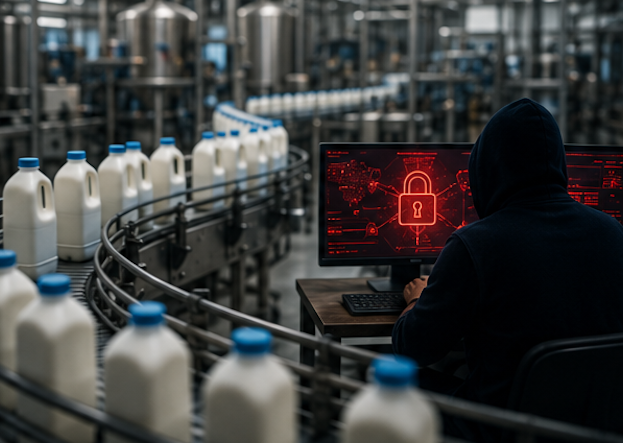
The core question nobody can yet answer: did the malware actually reach the factory floor, or did production stop as a precaution once the business systems went dark? Fairlife makes nearly $4 billion a year. Canada’s still running. The US is not.
The Fairlife ransomware attack was disclosed through a Form 8-K filing with the US Securities and Exchange Commission. Coca-Cola confirmed the dairy subsidiary had suffered a significant cybersecurity incident. Fairlife, a dairy company owned by The Coca-Cola Company, identified unauthorised access by a third party to a portion of its systems, including its production-related systems, in connection with a ransomware event. As a result, production operations at Fairlife in the United States are temporarily suspended. Fairlife’s Canada production operations are not currently impacted. “Product quality and safety have not been impacted,” Coca-Cola stated. The company activated its incident response and business continuity protocols immediately. It engaged outside cybersecurity advisors and notified law enforcement.
What’s Happening & Why It Matters
The Unanswered Question at the Centre of the Attack
The Fairlife ransomware attack raises a specific and consequential technical question that investigators have not yet resolved. Did the malware reach the plant floor itself, or did production stop as a precaution when business systems went dark? The distinction enormously impacts recovery timelines. If ransomware reached operational technology — the industrial control systems that physically run manufacturing equipment — recovery requires painstaking, verified restoration of production-critical infrastructure. If production simply paused because supporting IT systems were taken offline defensively, restoration could happen considerably faster once those business systems are cleared.
Coca-Cola‘s SEC filing sheds little light on that distinction. It confirms only that “production-related systems” were affected, without clarifying whether the intrusion reached manufacturing equipment directly. Additionally, the company has not disclosed how many Fairlife facilities were affected, whether customer or employee data was compromised, or when it expects US production to resume.
Timing That Is Particularly Costly
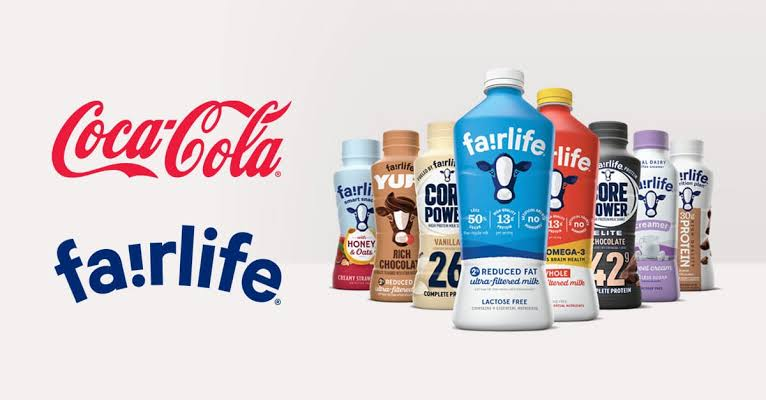
The Fairlife ransomware attack is at a specific and unusually disruptive moment in the brand’s growth trajectory. Fairlife generated approximately $4 billion in annual retail sales in 2024. This is an extraordinary expansion from just $10 million in 2014. Coca-Cola CEO James Quincey has noted publicly. Moreover, Jefferies, in a March 2026 research note, projected a 25% increase in Fairlife supply over the course of this year. This would come as new production capacity came online.
By contrast, Coca-Cola is currently mid-way through its largest manufacturing investment in the brand’s history. It is expanding capacity specifically to meet demand from the high-protein food trend that has accompanied the rise of GLP-1 drugs like Ozempic. An attack that halts production at exactly the moment the company is scaling to meet that demand curve carries a considerably higher opportunity cost. Higher than the same disruption would have imposed even a year earlier.
No Claimed Responsibility, No Extortion Confirmed
The Fairlife ransomware attack is, as of publication, unattributed. No ransomware gang has claimed responsibility for the attack. Coca-Cola has not disclosed whether any data was stolen during the intrusion, whether it received an extortion demand, or which specific ransomware operation is responsible. If data was stolen, attackers will typically attempt to extort a victim company later by threatening to publish that data unless a ransom is paid. This is a pattern common across the modern ransomware ecosystem. In the ecosystem, operational disruption and data theft are frequently pursued as parallel extortion levers.
Additionally, this is not the first time a food and beverage manufacturer has faced weeks-long production disruption from ransomware. Past incidents at Arizona Beverages in 2019 and food distributor UNFI last year both produced extended disruptions to their respective production lines. In some cases, they led to empty grocery shelves. This is a documented pattern suggesting the food and beverage sector is a persistent and comparatively under-defended ransomware target. This is especially true relative to finance or healthcare.
TF Summary: What’s Next
Fairlife‘s US production operations are temporarily suspended, with no confirmed restoration timeline disclosed. Canadian operations continue unaffected. Coca-Cola continues its investigation with outside cybersecurity advisors and has notified law enforcement. No ransomware group has publicly claimed the attack. No confirmation of data theft or an extortion demand has been disclosed.
MY FORECAST: The Fairlife ransomware attack will most likely be resolved within one to three weeks based on comparable food and beverage sector precedents. The recovery timeline hinges entirely on whether operational technology was directly compromised. This is a detail Coca-Cola has not yet confirmed publicly. By contrast, if the attackers did exfiltrate data before deploying ransomware — the standard “double extortion” approach — expect a public claim and leak-site posting within the next two to four weeks. This would meaningfully complicate Coca-Cola’s public messaging around the incident’s scope. The 25% supply expansion Jefferies projected for 2026 will almost certainly slip as a direct consequence of the disruption. This will happen regardless of how quickly production physically resumes.
Related Stories
- FortiBleed: Credential Leak Hits Oracle, Lenovo, NATO, and 74,000 Fortinet Firewalls
- GOLD EAGLE: White House Launches an AI Cybersecurity Clearinghouse
- Telstra’s National Outage Knocked Out Triple Zero Calls Across Australia