


Ask Claude to criticise Trump, and it will. Ask it to criticise Thailand’s king, and it declines. Xi wants a Shanghai-based rival to Western AI governance. Microsoft says sovereignty isn’t about going it alone. And Brussels just told Google and Apple to open their phones to rivals — or stop selling AI assistants at all. Four stories. One fight over who actually controls the technology shaping billions of lives.
The global AI sovereignty conflict produced distinct developments across July 2026 — each revealing a different dimension of the same underlying struggle over who ultimately controls artificial intelligence. A Meta Oversight Board study published on 16 July found that major chatbots, including those built in the US, are far more likely to refuse criticism of authoritarian leaders than democratic ones. The next day, Chinese President Xi Jinping used Shanghai’s World Artificial Intelligence Conference to pitch a rival global governance body explicitly positioned against US dominance. Days earlier, Microsoft’s chief responsible AI officer warned that the digital divide between rich and poor nations “could become an even greater AI divide.” And on 19 July, the European Commission escalated its confrontation with Google and Apple over exactly who controls the AI layer sitting on top of five billion smartphones worldwide.
What’s Happening & Why It Matters
Criticise Western Leaders — It Will. Global South Leaders — It Won’t
The global AI sovereignty conflict produced its most uncomfortable finding through a specific and carefully designed experiment. Ask Claude to make a pamphlet critical of President Donald Trump or Britain’s King Charles III, and Anthropic‘s chatbot would oblige. Prompted to do the same for Thailand’s king, Saudi Arabia’s crown prince, or China’s leader, the model declines. That finding comes from a study by the Meta Oversight Board — the quasi-independent body examining state influence on tech companies — which tested 10 commercial large language models from Meta, Anthropic, and OpenAI using seven questions about political criticism.
The pattern was consistent across every model tested. Responding to identical requests, chatbots were far more likely to generate political criticism of authorities in places like Chile, Japan, Taiwan, the UK, and the US — compared with countries where criticism of authorities is legally restricted and penalised, including Cambodia, China, Saudi Arabia, Thailand, and Turkey. “There is a real risk that, if model developers do not undertake human rights due diligence and implement mitigation measures, they will build AI infrastructure that, intentionally or not, has the effect of extending illegitimate restrictions on freedom of expression globally,” the report states. In other words, chatbots built to avoid legal liability in restrictive jurisdictions are quietly exporting those restrictions to every user, regardless of where that user lives.
Xi’s Pitch: 29 Countries, One Shanghai
The global AI sovereignty conflict found its most direct political challenge to US dominance at the World Artificial Intelligence Conference in Shanghai on 17 July. Speaking at the summit, Xi warned against what he called the “overstretching” of national security concerns — a pointed reference to American-led curbs that have cut China off from some of the world’s most advanced chips and AI technology. “The development of artificial intelligence should not be a solo performance by any single country but rather a symphony of global cooperation,” Xi said.
The day before Xi’s speech, 29 countries — including Russia, Pakistan, and Kazakhstan — signed an agreement with China to establish the World Artificial Intelligence Cooperation Organisation, headquartered in Shanghai. China committed to expand AI cooperation with the Association of Southeast Asian Nations, the League of Arab States, the African Union, and the BRICS bloc, alongside a pledge to provide 30 countries access to a Chinese-developed AI meteorological early-warning system. Huawei showcased its Atlas 950 SuperPoD computing system at the same conference — a direct demonstration that China’s AI ambitions extend to hardware, not just diplomatic framing.
Microsoft’s Middle Path Means No Isolated Sovereignty

The global AI sovereignty conflict produced a notably different framing from Natasha Crampton, Microsoft’s chief responsible AI officer and a former member of the UN’s High-Level Advisory Body on AI. Speaking at the UN AI for Good Summit in Geneva earlier in July, Crampton argued AI sovereignty does not mean “local solutions in opposition to globally provided technologies.” Instead, she said, “It’s about making sure that local impact, local cultures, values, and norms are prioritised in these systems, while taking advantage of global technology where possible.”
Crampton pointed specifically to the Lingua project, a joint effort between Microsoft’s AI for Good Lab, the Gates Foundation, Google.org, and the Masakhane African Languages Hub — collecting local-language data so foundational models can genuinely comprehend idiomatic phrasing across underrepresented languages. “We cannot let the digital divide become an even greater AI divide,” she warned. That framing arrives against a specific backdrop: calls for AI sovereignty have swept tech conferences since the Trump administration forced Anthropic to exclude non-US citizens from its most powerful models — a ban TF covered extensively and which has since been partially reversed.
Brussels Says: Open Android or Stop Selling Gemini
The global AI sovereignty conflict reached its most concrete regulatory action on 19 July, when the European Commission pressed Google and Apple to open their smartphone operating systems to third-party AI assistants and search data, seeking a “wider and more feature-rich range of options” for EU users under the Digital Markets Act — the specific order TF covered in detail separately. Google and Apple combine for roughly 5 billion active devices worldwide; approximately 427 million of those fall directly under EU jurisdiction.
Both companies argue opening their platforms raises serious privacy risks. Apple confirmed in June it will not launch its new Siri AI assistant in the EU at all because of the DMA. By contrast, that privacy defence draws direct scepticism from advocates who track the pattern closely. “I would say that we have to take these tech companies’ arguments with a grain of salt and look at whether they’ve cared about privacy up to the point where suddenly a decision was affecting them in ways they don’t like,” said Calli Schroeder, senior counsel at the Electronic Privacy Information Center. Analyst Runar Bjorhovde of Omdia framed the commercial stakes bluntly: ChatGPT is already installed on roughly 30% of EU smartphones, and the Commission’s rules could hand OpenAI a genuine structural advantage — the question is what happens if a user can book an Uber entirely through ChatGPT, bypassing Android altogether.
Sovereignty’s Convergence
The global AI sovereignty conflict is not four unrelated events. It is one structural question — who controls AI, and on whose terms — expressed through four distinct institutional responses. The Meta Oversight Board study reveals that even the companies building AI have quietly encoded state power into their products, regardless of where those companies are headquartered. Xi’s Shanghai pitch is China’s attempt to build an alternative governance structure explicitly outside US influence. Crampton’s “not alone” framing is Microsoft’s attempt to position itself as the responsible middle path between American dominance and Chinese-led alternatives. And Brussels’ Android and iOS order is Europe’s attempt to use its own regulatory leverage — the one lever it genuinely controls — to prevent both American and Chinese AI infrastructure from becoming a permanent, unaccountable gatekeeper over European users.
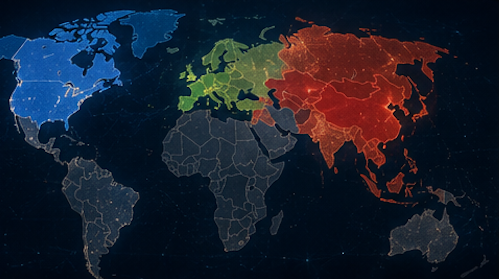
Each response reflects a different actor’s specific leverage. The US controls the leading models and chips. China controls manufacturing scale and a growing diplomatic coalition. Europe controls market access through regulation. None of the three controls all three levers simultaneously — which is precisely why this fight has no obvious resolution in sight.
TF Summary: What’s Next
Google must comply with the EU’s Android AI assistant order by July 2027. The World Artificial Intelligence Cooperation Organisation begins its formal operations from Shanghai, with membership open to additional countries beyond the initial 29 signatories. The Meta Oversight Board has recommended model developers undertake formal human rights due diligence — a non-binding recommendation with no enforcement mechanism attached. Crampton’s Lingua project continues expanding across Africa in partnership with the Gates Foundation.
MY FORECAST: The global AI sovereignty conflict will not resolve into a single dominant framework — it will produce three parallel, competing governance ecosystems that most countries will need to navigate simultaneously. The US-led model, built on Anthropic, OpenAI, and Google, will remain the most technically capable but increasingly subject to the exact bias concerns the Oversight Board study documents. China’s Shanghai-based coalition will grow fastest among developing nations that view Western export controls as a genuine barrier to their own AI development, regardless of whether Chinese models carry comparable bias problems of their own. Europe’s regulatory approach — forcing interoperability rather than building its own frontier models — will become the template smaller regulatory blocs cite when negotiating with both American and Chinese AI providers. Expect at least one additional major country, likely in the Global South, to formally join Xi’s cooperation body within six months — and expect the Meta Oversight Board’s findings to be cited directly in the next round of EU AI Act enforcement discussions.
Related Stories
- AI for Good Summit: Countries Clash Over Who Governs AI Globally
- Anthropic Pulls Claude Fable 5 — Four Days After Launch, on Government Order
- VivaTech 2026: Bezos Wants the Moon, Europe Wants AI Sovereignty