



The Oura Ring 5 launch arrived on 28 May — exactly five days after Oura filed its confidential S-1 IPO registration with the Securities and Exchange Commission. That sequencing is the story. A company does not announce the world’s smallest smart ring one week before it starts its IPO roadshow by accident. Oura is demonstrating to prospective public market investors that its hardware innovation pipeline is active, its health monitoring ambitions are expanding, and its paid membership base is heading toward 5 million subscribers. The Ring 5 is simultaneously the best Oura has ever made and one of the most commercially calculated product launches of 2026. At 6.09mm wide and 2.28mm thick, it weighs between 2 and 2.69 grams depending on size — lighter than a paper clip. It starts at $399 (€429). Pre-orders opened today. Shipping begins 4 June 2026.
What’s Happening & Why It Matters
What the Oura Ring 5 Actually Is
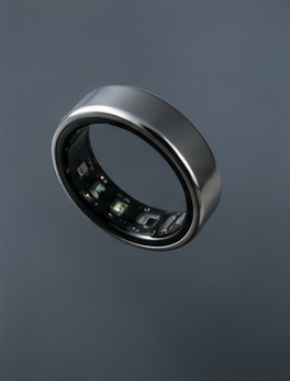
The Oura Ring 5 launch centres on one number above all others. The Ring 5 is 40% smaller than the Ring 4. Oura VP of Product Maz Brumand explained what that required. The company rebuilt five complete architectural systems from scratch — mechanical, electrical, optical, battery, and sensing. Every component was redesigned simultaneously to achieve the size reduction without sacrificing battery life or accuracy. The result is a ring that is 6.09mm wide and 2.28mm thick — compared to the Ring 4’s approximately 7.9mm width and 3.2mm depth. The titanium body carries a smoother curvature than previous generations. Oura says it is “like any other ring” — the benchmark every previous generation came close to but never quite cleared.

The optical sensor array went from 18 signal pathways on the Ring 4 to 12 on the Ring 5. That reduction sounds like a downgrade on paper. Oura argues the opposite — that more powerful LEDs, lower-profile sensor domes for better skin contact, and cleaner signal architecture produce greater accuracy across more finger types and skin tones with fewer pathways. Independent testing will determine whether that claim holds.
The Battery: Still Seven Days, in a Smaller Body
Battery life on the Ring 5 matches the Ring 4. Both deliver seven days between charges. Achieving that target in a 40% smaller form factor is not a trivial engineering outcome. The redesigned battery architecture — smaller in physical volume but maintaining the same charge density — is one of the Ring 5’s most meaningful technical achievements from a consumer experience standpoint. The seven-day figure is the number that separates Oura from every smartwatch-based competitor. A ring that lasts a week without charging, worn around the clock, produces the kind of continuous, uninterrupted data that a watch removed for charging cannot. That data continuity is the scientific foundation of Oura‘s health insights.
Health Radar: Blood Pressure Monitoring During Sleep
The Ring 5 launches alongside a new software platform called Health Radar — Oura‘s expanded proactive health monitoring system. The headline feature is blood pressure signal monitoring during sleep. Oura uses photoplethysmography — the same optical technology behind heart rate and SpO2 readings — to estimate patterns in blood pressure fluctuations overnight. The feature detects “warning signs of cardiovascular risk” from sleep-time blood pressure patterns. This is not a clinical blood pressure cuff replacement. At the same time, continuous overnight monitoring of cardiovascular patterns in a wearable that users already sleep with every night is the kind of ambient health intelligence that hospital visits cannot provide.

At launch, blood pressure signals are available in the United States, India, and UAE. Regulatory approvals in other markets are pending. Additionally, Oura launches nighttime breathing pattern monitoring — tracking disturbances and anomalies that may indicate sleep-disordered breathing or early signs of illness. Both features roll out to Ring Gen3 and later models as well — meaning existing subscribers benefit from the software launch even without upgrading hardware.
Live Activity Tracking: Real-Time Metrics From Your Phone
Beyond sleep and cardiovascular monitoring, the Ring 5 introduces live activity tracking — a feature that lets users start a workout and monitor key biometric metrics in real time from their phone. Previous Oura generations were primarily retrospective — you exercised, and then you saw your data afterwards. Live tracking closes the gap between Oura and fitness-first wearables like Garmin and Apple Watch. The feature will not replace a dedicated sports watch for serious athletes. By contrast, for the Ring 5’s target user — someone who wants comprehensive health monitoring without wearing a watch — live activity data is a meaningful addition.
Health Records: Your Doctor’s Data, on Your Wrist
The most significant expansion in the Ring 5’s software suite is Oura Health Records — a platform integration that lets members connect eligible healthcare providers and import diagnosed conditions, medications, and lab results directly into Oura‘s health dashboard. That clinical data sits alongside real-time biometric readings. The practical outcome is a longitudinal health picture that combines what a doctor knows with what the ring measures every night. That combination is what Oura CEO Tom Hale described as moving beyond tracking toward “action.” Oura Health Records launches in 43 US states at Ring 5 launch. National expansion and international rollout follow.
Pricing, Finishes, and Where to Buy

The Oura Ring 5 starts at $399 (€429) for Black and Silver finishes. The premium finish tier — Gold, Stealth, Brushed Silver, and the new Deep Rose (a warm copper-rose) — costs $499 (€529). That represents a $100 increase over the Ring 4’s entry price of $299. Oura is betting that the 40% size reduction, improved accuracy, and expanded health platform justify the price increase. The membership cost is $5.99 per month or $69.99 per year — with no change from the Ring 4 era. A new charging case is available for $99 — but it is compatible only with the Ring 5. Existing Ring 4 chargers do not work with the Ring 5.
At the same time, Oura recommends that all Ring 5 customers — including existing owners — order a Ring 5 Sizing Kit before purchasing. The 40% size reduction means finger measurements taken for Ring 4 may not translate correctly to Ring 5 sizing. The ring ships in sizes 6 through 13. Pre-orders are available through Oura‘s website and via Amazon, Best Buy, Costco, Target, and Walmart.
The Context of an IPO: Impact Beyond Hardware
Oura CEO Tom Hale told CNBC directly on launch day. “We have been on a tear. We have grown the business massively.” He cited an 80% subscription renewal rate and a fourfold revenue increase over two fiscal years. Oura is tracking toward 5 million paid members this quarter. As TF covered in its earlier article on the Oura IPO filing, the company projects $2 billion in 2026 annual revenue and is valued at $11 billion (€10.1 billion) following its Series E round. The Ring 5 launch gives the IPO prospectus something most wearable hardware companies cannot offer prospective investors: a generation-over-generation product roadmap that demonstrably improves on the previous version in every meaningful dimension.
By contrast, the competitive threat looms. As TF covered, Apple has not yet launched a competing ring product. WWDC 2026 begins 8 June — just four days after Ring 5 starts shipping. If Apple announces a smart ring at that event, the Ring 5’s window as the category’s clear leader narrows immediately. The launch timing — five days after the IPO filing, six days before WWDC — is deliberately positioned inside that window.
TF Summary: What’s Next
The Oura Ring 5 starts shipping on 4 June 2026 to pre-order customers globally. Oura‘s IPO roadshow is expected to begin in the same timeframe. Health Radar’s blood pressure signal feature launches in the US, India, and UAE at shipping date. Health Records is available in 43 US states at launch. WWDC 2026 begins 8 June. Samsung Galaxy Ring 2 is expected to be announced at Samsung Unpacked later in 2026.
MY FORECAST: The Oura Ring 5 launch will be the company’s most commercially successful generation to date. The 40% size reduction eliminates the single most common reason consumers have cited for not purchasing earlier generations — perceived bulkiness. The blood pressure monitoring feature — even in its initial regional deployment — establishes Oura as a preventative health platform rather than a fitness tracker. That positioning distinction justifies the premium price point and differentiates Oura from every watch-based competitor simultaneously. The IPO will price above the $11 billion Series E valuation — assuming Apple does not announce a competing smart ring at WWDC. That is the single most important variable in Oura‘s commercial trajectory for the remainder of 2026.