



From PlayStation to Surface laptops and Samsung flagships, the RAMageddon is here — and your wallet is paying for it.
Your next phone, laptop, or gaming console will cost more. Furthermore, the one you already own is worth less in trade. Two converging crises are draining money directly from consumers’ pockets in April 2026. First, a global RAM and memory shortage — driven by AI data centres consuming chips at unprecedented rates — has pushed component costs to historic highs. Second, the Iran war, which began on 28 February 2026, disrupted the Strait of Hormuz, spiked energy prices, and strangled key supply chains. Together, these forces have triggered a wave of price hikes across the technology industry. Therefore, the week of 14 April 2026 stands as a defining moment for anyone shopping for electronics.
Microsoft raised the prices of Surface laptops and tablets by up to $500 (£394 / €459). Samsung hiked prices on Galaxy foldables, flagship phones, and nearly every tablet in its current lineup. Meanwhile, Sony‘s PlayStation 5 is heading toward $650 (£511 / €593) in the US, a 30% increase from this time last year. Consequently, buyers face a tech market that is almost unrecognisable compared to 12 months ago.
What’s Happening & Why It Matters
RAMageddon: The Memory Crisis Explained
To understand the price hikes, you need to understand what is happening to memory chips. AI data centres require enormous quantities of High Bandwidth Memory (HBM) to train and run large language models. As a result, Samsung, SK Hynix, and Micron have redirected their manufacturing capacity toward HBM. Consequently, every wafer allocated to an AI system is one less wafer available for a consumer smartphone, laptop, or gaming console. This is a zero-sum game — and consumers are losing it.
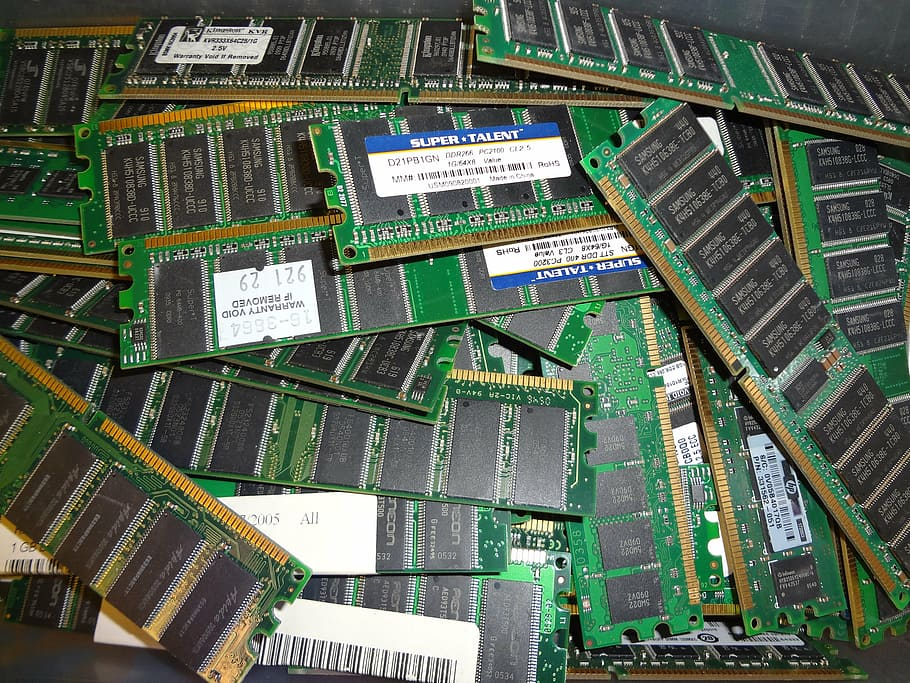
The numbers are staggering. TrendForce estimates that DRAM contract prices surged 90–95% in the first quarter of 2026 alone. Furthermore, HP has reported that RAM consumes approximately 35% of a PC’s total build cost — up from just 15–18% several months ago. According to IDC, pre-Iran War forecasts already projected that DRAM and NAND supply growth would run well below historical averages in 2026. Additionally, Samsung raised RAM prices by a further 30% on average for Q2 2026, on top of a 100% increase in the preceding months. Industry analysts warn the shortage could persist well into 2027.
Samsung Electronics co-CEO TM Roh acknowledged the situation plainly at CES 2026: “No company is immune” to the global memory shortage, including Samsung’s smartphone business.
The Iran War Piles On
The RAM shortage alone would have been painful enough. However, the Iran war added a second layer of disruption that nobody had priced in. The conflict, involving joint US-Israeli military operations, led to the closure of the Strait of Hormuz on 4 March 2026. As a result, Brent crude oil surged past $120 (£94 / €110) per barrel. Qatar’s natural gas export facility was attacked, forcing it to shut down. Furthermore, Qatar supplies approximately one-third of the world’s helium — a critical element in semiconductor manufacturing.
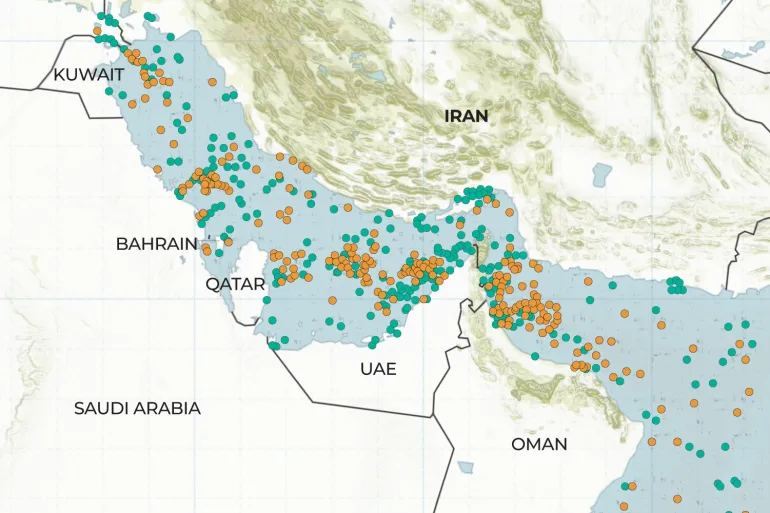
The helium impact is specific and serious. Helium is essential for cooling semiconductor fabrication equipment and producing the chips inside every consumer electronic device. Qatar‘s state-owned gas company confirmed the shutdown would slash helium exports by 14%. Therefore, chip manufacturers face both a demand problem and a supply problem simultaneously. Additionally, air freight rates spiked by as much as 400% in 48 hours on certain routes when sea lanes became too dangerous for commercial shipping.
Professor Patrick Penfield of Syracuse University described the supply chain consequence directly: “As this conflict keeps progressing, you’ll start to see some shortages, you’ll see some major price increases.” IDC devices analyst Isaac Ngatia added: “The Middle East conflict has injected a fresh layer of volatility into a fragile computing devices market, straining global logistics through a double-edged sword of rising energy costs and freight spikes.”
Microsoft Surface: A $500 Shock

Microsoft raised Surface prices on 13 April 2026 — silently, without a press release. The Surface Pro 12-inch, which launched in 2025 at $800 (£629 / €731), starts at $1,050 (£825 / €960). The Surface Pro 13-inch 11th Edition jumped from a 2024 launch price of $1,000 (£786 / €914) to $1,500 (£1,179 / €1,371). The flagship Surface Laptop 13.8-inch is up by as much as $500 (£393 / €457) compared to its original price. Furthermore, the UK market saw increases of £170–£220 across comparable configurations.
Microsoft’s explanation was brief. The company stated the hikes were “due to recent increases in memory and component costs” and committed to periodically reviewing pricing. However, the impact on the Surface lineup’s competitive position is stark. Previously, the Surface Laptop 7 was considered a strong alternative to Apple’s MacBook Air. Now, the MacBook Air starts at $1,099 (£864 / €1,005) for a significantly newer and faster chip platform — making Apple‘s laptops the better value proposition for the first time in years. A fully configured Surface Laptop 15-inch with 64GB RAM and 1TB storage costs $3,649 (£2,869 / €3,337) — exceeding comparable MacBook Pro configurations in price.
Gartner projects that overall PC shipments will decline by more than 10% in 2026, driven by rising memory costs. Moreover, Intel CEO Lip-Bu Tan has stated the PC industry should expect “no relief in 2026” on memory prices.
Samsung Slams Phones, Foldables, and Tablets

Samsung is raising prices across its entire premium device range. The Galaxy Z Fold 7 (512GB) jumped from $2,119.99 (£1,667 / €1,938) to $2,199.99 (£1,730 / €2,012). The Galaxy Z Flip 7 (512GB) moved from $1,219.99 (£959 / €1,115) to $1,299.99 (£1,022 / €1,188). Furthermore, Galaxy tablets saw some of the largest percentage increases. The 1TB Galaxy Tab S11 Ultra jumped from $1,619 (£1,273 / €1,480) to $1,899 (£1,493 / €1,736) — a $280 (£220 / €256) increase in a single adjustment. Additionally, Samsung‘s A-series mid-range phones in India have already seen five separate price hikes since January 2026.
According to TrendForce, memory accounts for 30–40% of a smartphone’s bill of materials — up from a historical norm of 10–15%. Therefore, raising end-product prices are unavoidable for brands protecting margins. Furthermore, the price increases are geographically consistent, occurring simultaneously across the US, South Korea, India, and Europe. This global uniformity confirms the cause is structural, not regional. Consequently, waiting for prices to fall before buying a new Samsung device is a strategy with no near-term payoff.
PlayStation 5: 30% More Expensive Than a Year Ago
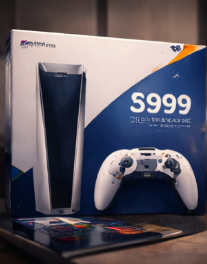
Sony‘s PlayStation 5 is $649.99 (£511 / €594) in the US — the second $100 increase in less than a year. The PS5 Digital Edition climbed to $599.99 (£472 / €549), while the PS5 Pro costs $899.99 (£708 / €823), up $150 (£118 / €137). Sony explicitly cited “continued pressures in the global economic landscape” without mentioning the Iran war by name. Nevertheless, the helium supply constraint from Qatar’s shutdown directly affects semiconductor fabrication costs for everything Sony produces. By the end of April, the PS5 will cost approximately 30% more than it did in April 2025.
Sony’s statement read: “We know that price changes impact our community, and after careful evaluation, we found this was a necessary step to ensure we can continue delivering innovative, high-quality gaming experiences to players worldwide.” Meanwhile, competitor Microsoft had already raised Xbox prices in September 2025 — well before the Iran war broke out — citing “changes in the macroeconomic environment.” Additionally, Gizmodo noted that Xbox gaming sales already dragged down Microsoft’s personal computing division by 3% year over year in January’s earnings report, making further price exposure a genuine business risk.
TF Summary: What’s Next
The convergence of the RAM crisis and Iran war disruptions has created a consumer electronics pricing environment unlike anything seen since the COVID-19 pandemic chip shortage of 2021–2022. However, the current situation carries additional complexity. AI infrastructure demand is a permanent, growing force consuming memory capacity. Furthermore, the Iran war’s ceasefire, announced in mid-April, does not immediately restore helium supply, reopen sea lanes, or rebuild freight confidence. Therefore, even an end to active hostilities will not quickly reverse the price trajectory already in motion.
MY FORECAST: Consumers shopping for laptops, phones, tablets, or gaming consoles in 2026 should act accordingly. Waiting for a price drop in the near term is, by most analyst projections, wishful thinking. Gartner‘s forecast of a 10% decline in PC shipments tells you what the market expects — fewer buyers, but not lower prices. The brands most likely to weather this well are those with vertically integrated supply chains and hardware ecosystems that give them pricing power. For everyone else — and for consumers — “RAMageddon” is only getting started.
— Text-to-Speech (TTS) provided by gspeech | TechFyle