


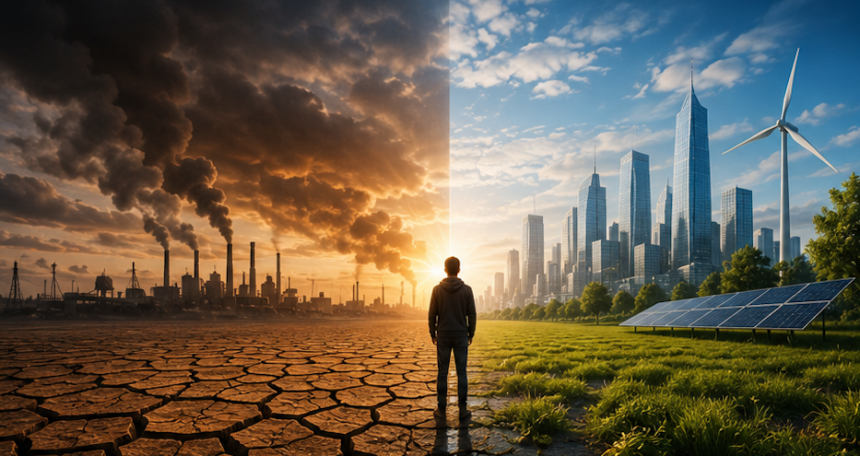
Solar and batteries are winning economically. Carbon removal is real but tiny. And a handful of well-funded companies are already testing whether to dim the sun — without anyone’s permission. Here is the honest state of climate technology in 2026: what works, what’s still speculative, and what should worry you.
The climate technology reckoning of 2026 arrives during a year that science says was inevitable. The World Meteorological Organisation puts the odds at 86% that at least one year between 2026 and 2030 will surpass 2024 as the hottest year on record, and 91% that global temperatures will temporarily breach 1.5°C above pre-industrial levels within that window. The last three years have each exceeded 1.4°C — a threshold the planet had never crossed before 2023. Meanwhile, oceans absorbed heat energy last year equivalent to nearly 10 Hiroshima bombs detonating every second, according to a recent scientific estimate. That is the backdrop against which every climate technology conversation happens. By contrast, the technology picture is not uniformly bleak. Some solutions are winning decisively on pure economics. Others are expensive, unproven at scale, or genuinely dangerous if deployed carelessly. This is where things actually stand — not the marketing version, the real one.
How We Got Here
The Core Problem: Emissions Have Been Flat, But Not Falling
The climate technology reckoning of 2026 exists because of one uncomfortable arithmetic fact. Global carbon dioxide emissions have stayed roughly flat since 2013. They need to reach zero before atmospheric CO2 concentrations stabilise — and only then does warming actually stop. Every year of flat emissions is a year the temperature keeps climbing, because CO2 accumulates rather than dissipates. That single fact explains why 2026’s technology conversation has split into two distinct tracks: reducing new emissions and removing what’s already there.
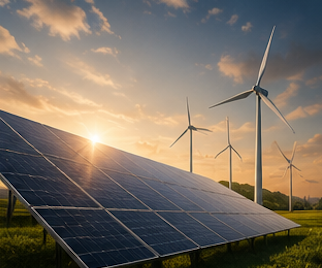
The reduction track has made genuine progress. Global solar generation has grown more than tenfold since 2015, roughly doubling every 3 years. Solar and wind are expected to overtake nuclear power globally in 2026 for the first time. Additionally, fossil-fuel generation fell in both China and India in 2025 — the first such decline this century in either country, driven by record renewable additions rather than economic slowdown. The removal track — actually pulling accumulated CO2 back out of the atmosphere — is, by contrast, almost embryonic. All operational direct air capture plants worldwide combined remove well under 1 million tonnes of CO2 annually. Global emissions run at approximately 37 billion tonnes per year. That gap is not a rounding error. It is the central unresolved question in climate technology.
What’s Working: The Economics Changed
Better Solar and Batteries Prices Are Not Ideology
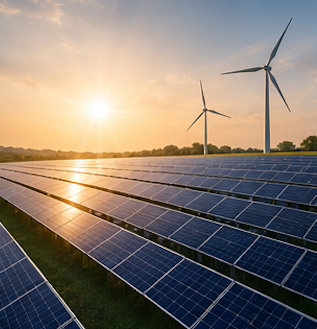
The climate technology reckoning of 2026 contains one unambiguous success story: renewable energy is the cheapest option in most of the world, purely on cost grounds. New solar farms already undercut new coal or gas generation in almost every Asia-Pacific market. Wind has displaced gas as the cheapest source of new-build generation in the US and Canada. In China — the world’s largest coal consumer — coal-fired power fell 2.6% in the first half of 2025, a structural decline rather than a weather anomaly. The IEA projects that China alone will account for almost 60% of global renewable capacity growth, helping it reach its 2035 wind and solar targets five years early.
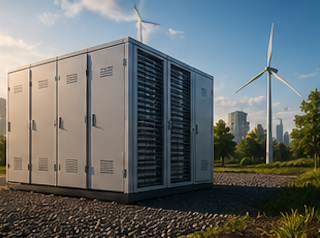
Battery storage costs have fallen even faster than solar itself. The global benchmark cost for a four-hour battery storage project dropped 27% year-on-year to $78 per megawatt-hour in 2025 — a record low since tracking began in 2009. Battery pack costs specifically fell a further 45% in 2025, after a 20% drop the year before. The collapse influences how storage solves renewables’ core weakness: intermittency. Co-located solar-and-battery systems added 87 gigawatts globally in 2025, delivering power at an average of $57 per megawatt-hour — cheaper than gas in an increasing number of markets. Chile and Australia have already installed enough grid storage to shift more than half of their new solar generation from midday to evening peak demand, cutting both curtailment and consumer prices. As Amar Vasdev, BloombergNEF’s lead energy economics analyst, put it: “Cheaper costs due to manufacturing overcapacity from the electric vehicle market and better system designs are transforming the economics for large energy storage projects.”
Where the Technology Is Real-ish: Carbon Removal
Direct Air Capture
The climate technology reckoning of 2026 confronts its hardest technical challenge in direct air capture — machines that pull CO2 directly from ambient air. The physics is sound and independently verified. The problem is dilution. CO2 makes up roughly 422 parts per million of the atmosphere — 0.04% of the air around you. Extracting a trace gas from a mixture that is 99.96% something else requires moving enormous volumes of air through chemical systems, which requires enormous energy: typically 1.5 to 2.5 megawatt-hours per tonne of CO2 captured.
Three companies lead the commercial field. Climeworks (Switzerland) operates Mammoth in Iceland — the world’s largest DAC plant at 36,000 tonnes annual capacity, using solid sorbents and geothermal power to mineralise CO2 permanently in basalt rock. 1PointFive, a subsidiary of oil major Occidental Petroleum, is commissioning Stratos in West Texas at a planned 500,000 tonnes per year — an 873% jump in global DAC capacity if it meetss the target. Heirloom Carbon uses accelerated limestone mineralisation and is targeting costs below $100 per tonne, though current pilot-phase credits price considerably higher. Costs across the industry currently are between $200 and $600 per tonne — four to ten times the roughly $100–150 per tonne most analysts consider necessary for viability. Climeworks’ own 2024 assessment does not project major cost reductions before 2030 — a sobering admission from the market leader. The IEA’s Net Zero Scenario requires DAC to reach 85 million tonnes annually by 2030. Current global capacity is a rounding error against that target.
The Solution’s Warning
DAC carries a specific and easily overlooked risk: using high-carbon electricity to power the capture process can erode or even negate its climate benefit entirely. A DAC plant powered by a coal-heavy grid may capture less CO2 than its own energy supply chain emits. Projects powered by renewables or very low-carbon grids — like Climeworks’ geothermal-fed Mammoth facility — deliver genuinely strong net removals. Projects that skip this step are, at best, an expensive accounting exercise.
Technology Most People Haven’t Heard Of
Solar Geoengineering: Cheap, Fast, and Mostly Ungoverned
The climate technology reckoning of 2026 includes one category that behaves nothing like the others: solar radiation management, most commonly through stratospheric aerosol injection (SAI) — scattering reflective particles into the upper atmosphere to bounce a small fraction of sunlight back into space. Unlike carbon removal, SAI does not address the underlying cause of warming. It masks the temperature symptom while atmospheric CO2 keeps accumulating underneath. And unlike almost every other climate technology in this article, it is cheap and fast enough that a single well-funded private actor could plausibly attempt it without government permission.
That is precisely what has already started happening. Israeli startup Stardust Solutions raised $75 million in 2025 specifically to develop and test aircraft-based aerosol deployment technology. The company has delivered sulphur dioxide gas to the stratosphere via balloon since 2022. It initially planned outdoor experiments as early as spring 2026, before backtracking under public pressure — CEO Yanai Yedbab has since said the company will only proceed “in collaboration with a government that would set ground rules and guardrails.” By contrast, the company has published no peer-reviewed research and offered no third-party oversight of its claims to date, while simultaneously lobbying the US government.
Why Scientisrs Are Frightened
The risk is not primarily technical failure — the core chemistry is well understood from studying volcanic eruptions, which have this exact cooling effect naturally. The risk is governance. There is currently no international legal framework governing solar geoengineering. A single country — or a sufficiently funded private company — could theoretically alter global temperatures unilaterally. If that action produced a regional drought or flood anywhere on Earth, there is no existing mechanism to determine responsibility or coordinate a response. Researchers call this the risk of “termination shock”: if aerosol injection were to stop suddenly — through funding collapse, war, or political change — the suppressed warming would return abruptly and far faster than the gradual warming that societies have had decades to adapt to.
The UN Environment Assembly rejected even a modest proposal to form a solar geoengineering study group earlier this year. Meanwhile, the Centre for International Environmental Law has directly criticised UNEP’s own recent working paper for characterising governance advocates as wishing to “silence discourse” — a view critics say sidelines precaution in favour of normalising deployment. This is the one climate technology in this piece where the primary danger is not whether it works, but who controls it and what happens if they get it wrong.
Fusion Tech Isn’t Coming in Time
Real Progress, Wrong Decade
The climate technology reckoning of 2026 includes a genuine physics success story that will not meaningfully affect climate outcomes this decade. Fusion energy — combining atomic nuclei rather than splitting them, as in conventional nuclear fission — achieved net energy gain reliably at the US National Ignition Facility following its landmark 2022 result. Private fusion companies have collectively raised nearly $10 billion. The US Nuclear Regulatory Commission has formally separated fusion regulation from fission regulation, recognising that it poses fundamentally different risks. Commonwealth Fusion Systems is building a commercial pilot plant targeting the early 2030s. Helion Energy signed a power purchase agreement with Microsoft, promising fusion electricity by 2028 — an aggressive target most independent analysts view sceptically.
By contrast, even optimistic industry roadmaps place first grid-connected fusion plants in the early-to-mid 2030s, with fusion contributing a meaningful share of global electricity only in the 2040s. Most knowledgeable observers place viable commercial fusion around 2040. First-generation plants will likely be expensive — closer in cost profile to first-of-a-kind fission reactors than to modular renewables. The honest conclusion from multiple independent energy analysts is identical: climate mitigation through 2030 will rely entirely on technologies that already exist — solar, wind, batteries, existing nuclear fission, and efficiency gains. Fusion is a legitimate long-term bet. It is not a reason to slow investment in what already works.
Pitfalls to Worry About
The climate technology reckoning of 2026 carries several specific traps worth naming directly, rather than folding into vague optimism or vague doom.
First: technology optimism as a delay tactic. Every emerging technology in this piece — fusion, DAC, geoengineering — carries real risk of being used rhetorically to justify slower near-term action. “We’ll fix it later with better tech” has been a genuine driver of policy inertia for two decades. The IEA and independent energy analysts are unusually blunt on this point: near-term climate outcomes depend almost entirely on deploying solar, wind, and storage faster — not on waiting for a future breakthrough.
Second: carbon credit integrity varies enormously. DAC credits sell for wildly different prices — from under $100 to over $800 per tonne — indicating real differences in verification quality, energy source, and storage permanence. A carbon offset purchase is not automatically equivalent to genuine atmospheric CO2 removal. Readers and corporate buyers alike should treat “carbon neutral” claims with the same scrutiny applied to any unaudited financial statement.
Third: geoengineering’s governance gap is not closing at the pace at which its deployment risk is growing. A technology cheap enough for a single mid-sized company to attempt, with no binding international framework restraining it, is a genuinely unusual category of risk in modern technology policy — closer to early nuclear weapons proliferation concerns than to typical clean-tech deployment questions.
Fourth: grid infrastructure is the quiet bottleneck behind everything else. The IEA notes that roughly $400 billion is spent on grids worldwide annually — falling far short of what’s needed to keep pace with clean power deployment. The cheapest solar panel and the cheapest battery in the world are worthless if the grid connecting them to demand doesn’t exist or can’t handle the load.
What is the Future State?
The climate technology reckoning of 2026 points toward a specific and unglamorous conclusion, not a single dramatic breakthrough. The next five years will be decided almost entirely by how fast solar, wind, and battery storage continue deploying — technologies that are already commercially proven and getting cheaper by the year. Carbon removal will grow substantially in absolute terms but are a supplement to emissions reduction, not a substitute for it, through at least 2035. Fusion will make genuine scientific progress without meaningfully affecting the climate trajectory before 2035–2040. And solar geoengineering is the single most consequential wildcard in the entire field — not because the technology doesn’t work, but because almost nobody currently has the legal authority to stop someone from trying it.
MY FORECAST: The climate technology reckoning of 2026 will resolve in favour of the boring, already-proven technologies — solar, wind, and batteries will do more to bend the emissions curve between today and 2030 than every speculative technology in this article combined. By contrast, the geoengineering governance gap is the story most likely to produce a genuine global crisis before this decade ends. A private company or single government attempting unilateral stratospheric injection — even at small, “reversible” scale — would create an international incident with no existing legal framework to resolve it. Expect renewed multilateral pressure for a binding geoengineering governance treaty within the next 24 months, driven less by environmental groups than by governments recognising that any country could unilaterally alter the weather of another with no recourse available to them. The technology that actually saves the most degrees of warming this decade will not be the one that makes headlines. It will be the boring solar farm and the battery next to it.

Related Stories
- 40 Mayors Demand Standards for AI Data Centres — the UN Wants Transparency Too
- China Tops Global Supercomputer Rankings and Opens the World’s First Underwater Data Centre
- AI for Good Summit: Countries Clash Over Who Governs AI Globally