


An engineer kept his Apple laptop, found a network storage bug, and texted a former colleague “LOL, I found out I can access the [network storage], so funny.” Apple’s chief hardware rival at OpenAI allegedly told job candidates to bring Apple parts to interviews. The lawsuit fractured a partnership announced with fanfare in 2024.
Apple’s trade secret lawsuit against OpenAI was filed in federal court in Northern California — a striking reversal for two companies that entered a high-profile partnership just two years earlier. Apple accuses OpenAI of trade secret misappropriation and breach of contract, alleging the AI lab took Apple‘s intellectual property to develop its own consumer hardware. “At every level, from members of its Technical Staff to its Chief Hardware Officer, and in coordination with business partners, OpenAI has been stealing Apple’s trade secrets and confidential information,” Apple wrote in the filing. OpenAI, IO Products, and two named individuals — Tang Tan and Chang Liu — are defendants. OpenAI responded through spokesperson Drew Pusateri: “We have no interest in other companies’ trade secrets. We remain focused on building innovative technology that empowers people everywhere.”
What’s Happening & Why It Matters
“LOL, I Found Out I Can Access the Network Storage”
Apple’s trade secret lawsuit against OpenAI centres on a specific and vividly documented allegation against former Apple engineer Chang Liu. Liu spent eight years at Apple as a senior systems electrical engineer before leaving for OpenAI in January 2026. He failed to return his Apple-issued laptop, did not respond to attempts to schedule an exit interview, and gained access to a former colleague’s work computer after departing. Liu allegedly discovered a bug that let him access Apple‘s cloud file storage remotely — and celebrated the exploit in a message to a former colleague still employed at Apple: “LOL, I found out I can access the [network storage], so funny.”
By contrast, the alleged consequences were far from funny for Apple. Liu accessed and downloaded “dozens of Apple’s confidential hardware-related files, including voluminous, detailed information about unreleased products, engineering presentations, technical specifications, and proprietary project data,” according to the lawsuit. Apple alleges Liu shared confidential information with other Apple employees who were applying for jobs at OpenAI — including advising at least one on what to study before their interview.
A 24-Year Apple Veteran Is Running OpenAI’s Hardware Division
Apple’s trade secret lawsuit against OpenAI places its most serious allegations against Tang Tan — OpenAI‘s Chief Hardware Officer and a former Apple vice president who spent 24 years at the company, most recently overseeing product design for iPhone and Apple Watch. Apple alleges Tan used Apple‘s internal project codenames to extract information from job candidates during OpenAI‘s recruiting process. “He has directed job candidates still working for Apple to bring ‘actual parts’ from Apple to their interviews for ‘show and tell’ sessions in which he and his team at OpenAI can elicit still more Apple confidential information,” the filing states.
Additionally, Apple alleges Tan circulated a “Need to Know” Apple offboarding document — either retained or obtained improperly — specifically to teach new OpenAI hires how to evade Apple‘s exit security checks. Tan co-founded IO Products alongside Apple‘s former chief design officer Jony Ive in 2023. OpenAI acquired IO Products for approximately $6.4 billion in May 2025, with Ive leading OpenAI‘s device work — though notably, Ive himself is not named as a defendant in the suit.
The Partnership Is Openly Fracturing
Apple’s trade secret lawsuit against OpenAI arrives against the backdrop of a genuinely surprising corporate relationship reversal. In 2024, Apple and OpenAI announced a high-profile partnership integrating ChatGPT directly into the iPhone‘s operating system — with Sam Altman visiting Apple headquarters for the announcement. As TF covered in its WWDC 2026 article, relations have chilled significantly since then — Apple‘s revamped Siri, launching in Fall, is built on Google‘s Gemini models rather than OpenAI‘s technology.
By contrast, the fracture goes both directions. Bloomberg reported that OpenAI had been preparing its own legal action against Apple, reportedly considering a breach-of-contract claim over allegations that Apple had not sufficiently integrated and promoted OpenAI‘s products across its devices. According to a CNN count of LinkedIn profiles, OpenAI has hired at least 10 engineers directly from Apple recently — part of a pattern Apple‘s complaint describes as more than 400 former Apple employees working at OpenAI.
What Apple Wants From the Court
Apple’s trade secret lawsuit against OpenAI seeks specific and substantial remedies. Apple is asking the court to bar OpenAI from using or disclosing its trade secrets, require the company to return any confidential Apple materials, and preserve evidence related to the case. The company’s language in the filing is notably aggressive for a corporate legal document. “This is the tip of the iceberg,” the filing states. “Apple lacks visibility into what’s been happening behind closed doors at OpenAI, where such misconduct is normalized and exemplified by leadership. As a natural result, OpenAI’s nascent hardware business now rests on the shakiest of foundations, rotten to its core by its illegal reliance on misappropriated trade secrets.”
Apple said it first raised concerns with OpenAI directly via a letter in February 2026 and received no response — establishing a documented timeline of attempted resolution before litigation. By contrast, Apple clarified the 2024 partnership agreement itself “is not an issue” in the specific case — this is a trade secrets claim, not a contract dispute over the existing ChatGPT integration.
Right Before OpenAI’s Hardware Reveal and IPO
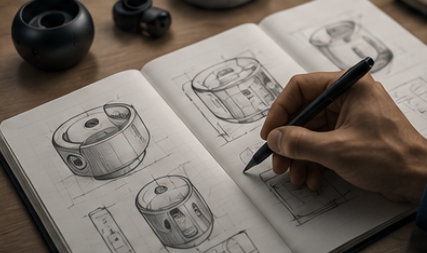
Apple’s trade secret lawsuit against OpenAI is at a particularly sensitive commercial moment for OpenAI. OpenAI‘s secretive hardware device — reportedly a smart speaker, according to The Information, and described by The Wall Street Journal as aware of a user’s surroundings — is expected to be unveiled. Sam Altman confirmed in November that OpenAI had finished its first hardware prototypes.
The lawsuit arrives as OpenAI prepares for what’s expected to be a historic IPO — as TF covered in its OpenAI government equity article. Mounting legal exposure presents a genuine risk to that offering. Additionally, Apple‘s complaint arrives roughly two months after OpenAI won a separate high-profile trial against Elon Musk, in which a federal jury found Musk had waited too long to sue over claims OpenAI‘s leadership reneged on running the organisation as a nonprofit — meaning OpenAI faces its second major legal battle involving core corporate integrity allegations within the same quarter.
TF Summary: What’s Next
The case proceeds in the US District Court for the Northern District of California. OpenAI has not yet filed a formal response beyond its public statement denying interest in trade secrets. Apple has not commented on whether the lawsuit affects the ongoing ChatGPT-Apple Intelligence integration. OpenAI‘s hardware device is expected to launch later in 2026, though the lawsuit could complicate that timeline.
MY FORECAST: Apple’s trade secret lawsuit against OpenAI will not derail OpenAI‘s hardware launch entirely — but it will delay it and force a defensive redesign process to insulate against evidence discovery. The specific, documented nature of the allegations — a celebratory text message, a named “Need to Know” offboarding document, a chief hardware officer allegedly instructing candidates to bring physical Apple components to interviews — gives the case unusually strong evidentiary footing compared to typical trade secret disputes. By contrast, the IPO timing pressure works in OpenAI‘s favour toward an eventual settlement rather than protracted litigation; a public offering cannot proceed cleanly with the exposure unresolved. Expect Apple to use the litigation leverage specifically to secure both financial damages and enforceable restrictions on OpenAI‘s hardware development timeline — a settlement structure that punishes the alleged theft while still permitting OpenAI to eventually ship a device built on genuinely independent design work.
Related Stories
- WWDC 2026: Siri Gets a Brain, macOS Drops Intel, Tim Cook Takes a Bow
- OpenAI Offers the US Government a 5% Ownership Stake
- OpenAI Is Retiring ChatGPT Atlas — Less Than a Year After Launch