



Twelve states just challenged a $111 billion deal the Trump DOJ approved without a single divestiture. California’s AG calls it “red flags in the air everywhere.” The combined company would control 27% of the cable distribution market. Elizabeth Warren already called the federal approval corrupt.
The state lawsuit against Paramount-WBD was filed in the Northern District of California — a direct legal challenge to a merger the Justice Department approved just weeks earlier with no conditions attached. A coalition of 12 state attorneys general, led by California, sued to block Paramount Skydance’s $111 billion acquisition of Warner Bros. Discovery, arguing the megamerger would substantially harm competition across Hollywood. California Attorney General Rob Bonta was direct about the reasoning: “This merger would snuff out competition, drive up prices, diminish content quality, and produce fewer movies and shows each year.” The states are Arizona, California, Colorado, Connecticut, Massachusetts, Minnesota, Nevada, New Jersey, New Mexico, New York, Oregon, and Washington — all represented by Democratic attorneys general. Paramount has vowed to “fight the lawsuit vigorously.”
What’s Happening & Why It Matters
The Market Concentration Numbers Behind the Suit
The state lawsuit against Paramount-WBD rests on specific market-share figures the coalition says demonstrate illegal concentration. “Warner Bros. is the second largest and Paramount is the third largest in the market, and they would combine for a 27% share,” the states’ filing states. The lawsuit challenges the transaction specifically as stifling competition in three distinct markets: wide-release theatrical film distribution, big-budget motion picture distribution, and licensing of basic cable television channels.
By contrast, Paramount disputes that. The company called the suit “wrong on both the facts and the law,” claiming the states are misrepresenting competition in today’s entertainment industry, and argued the merger “strengthens competition” rather than diminishing it. Paramount pointed to its commitment to release 30 films a year in theatres through the combined business — a pledge the company calls as evidence of expanded output, not consolidation-driven contraction.
The DOJ Approved It With Zero Divestitures — and That’s the Red Flag
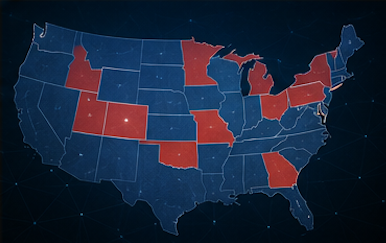
The state lawsuit against Paramount-WBD arrives with a specific and unusual regulatory backdrop. The Justice Department closed its investigation into the deal in June, finding that the merger “is not likely to result in harm to competition or American consumers.” The approval required no divestitures, behavioural remedies, or concessions of any kind — an unusually clean clearance for a deal. That absence of conditions has magnified speculation about political favouritism, given Paramount‘s close ties to President Trump and members of his administration.
Senator Elizabeth Warren did not mince words when the DOJ approved the deal in June: “This reeks of corruption.” Bonta echoed that scepticism at a press conference held at a Hollywood sign viewpoint, arguing the Trump DOJ had ignored its own antitrust division’s concerns. Oregon Attorney General Dan Rayfield separately sought court records of Paramount‘s lobbying of the Trump administration last week, suggesting the DOJ’s determination may have been the product of a “corrupt bargain” — though his office withdrew that specific request on Friday.
A Pattern of State AGs Filling the Federal Enforcement Void
The state lawsuit against Paramount-WBD is not an isolated action — it fits a documented and increasingly aggressive pattern of state-level antitrust enforcement stepping in where federal regulators have stepped back. More than two dozen bipartisan state attorneys general continued an antitrust lawsuit to break up Live Nation and Ticketmaster after the Justice Department’s surprise settlement with the combined company — and a jury ultimately ruled in the states’ favour. A coalition of states sued to block Nexstar and Tegna from merging on antitrust grounds, even though both the DOJ and FCC had already approved that deal; a federal judge subsequently blocked it until the lawsuit resolves, finding the states and DirecTV — which sued — were likely to prevail.
By contrast, Paramount has touted regulatory clearances from other jurisdictions, including China, Canada, and Australia. Reviews are in progress in the EU and UK, with Bloomberg reporting Paramount is open to selling some children’s TV network assets to help secure EU approval — a concession notably absent from the DOJ’s domestic clearance.
What’s at Stake for Hollywood Workers

The state lawsuit against Paramount-WBD is drawing direct union opposition beyond the states’ antitrust theory. Tom Fontana, president of WGA East, warned the deal will do “irreparable harm” to the guild’s members. “People will lose their jobs, their income, their homes,” he said. “The damage this deal would do to America’s entertainment and news industries would be an absolute, unmitigated disaster.” That labour concern connects directly to the deal’s underlying financial structure — concerns persist that the merger’s substantial debt burden could drive widespread layoffs at the combined company regardless of the antitrust outcome.
The stakes extend to journalism specifically. The merger would consolidate two powerhouse movie studios, several major streaming services, and the national news networks CBS and CNN under a single company controlled by the Trump-aligned Ellison family — Paramount CEO David Ellison‘s father, Oracle co-founder Larry Ellison, has cultivated a close relationship with President Trump that critics argue directly shaped the DOJ’s favourable review.
TF Summary: What’s Next
The states are expected to seek an injunction to block the transaction, which Paramount expects to close sometime after 22 July 2026. The lawsuit, filed in federal court in Sacramento, may stretch on for years given the scale of the transaction and the precedent set by the ongoing Nexstar-Tegna litigation. EU and UK regulatory reviews are in progress separately, with the UK signalling it may intervene independently.
MY FORECAST: The state lawsuit against Paramount-WBD will likely secure at least a temporary injunction before the 22 July closing date — the Nexstar-Tegna precedent, where a federal judge blocked that merger pending litigation despite DOJ and FCC approval, gives the coalition a directly comparable recent win to cite. By contrast, whether the states ultimately prevail on the merits is a genuinely open question; the DOJ’s finding that the deal increases rather than harms competition in streaming and linear TV gives Paramount real legal ammunition, however politically suspect the approval’s timing and lack of conditions appear. Expect Paramount to accelerate EU concession talks — including the reported children’s network divestiture — specifically to demonstrate good-faith competition remedies that strengthen its position in the domestic litigation, even though the EU and US cases proceed on entirely separate legal tracks.
Related Stories
- Fox Acquires Roku for $22 Billion — Streaming’s Biggest Deal in Years
- Sony Will Stop Making Physical PlayStation Game Discs in 2028
- Google Loses Its Appeal Against a Record €4.1 Billion EU Fine