


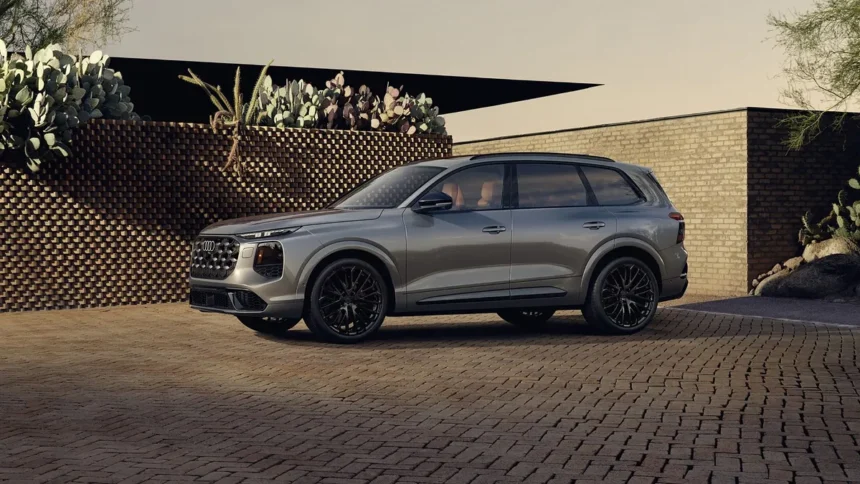
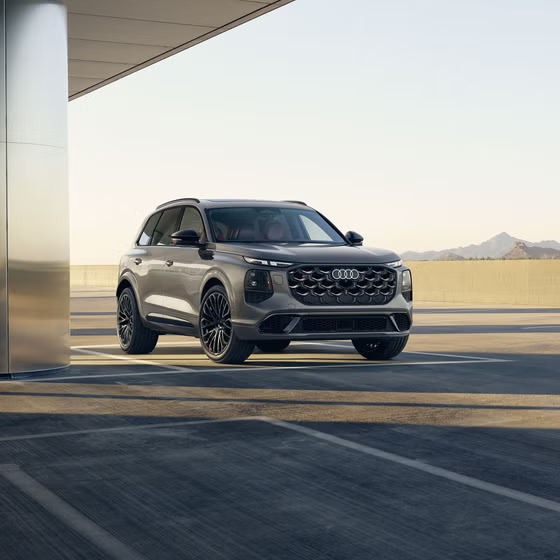
Audi revealed the third-generation Q7 on 9 June. The base V6 produces 429 horsepower and reaches 60 mph in 4.8 seconds. The SQ7’s V8 produces 591 horsepower and gets to 60 in 3.7 seconds. No hybrid. No electrification. Both arrive at US dealers in Q4 2026.
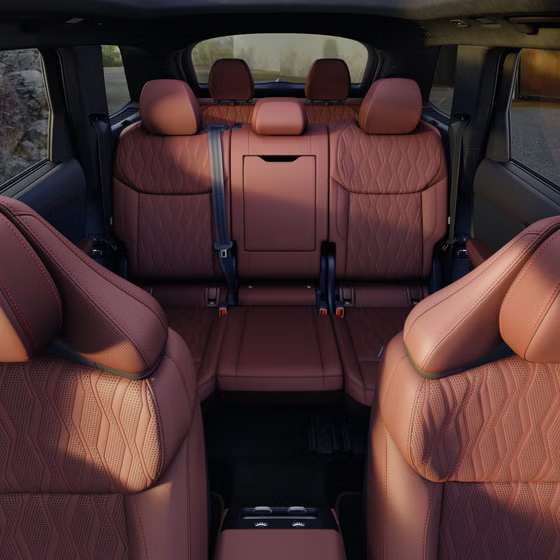
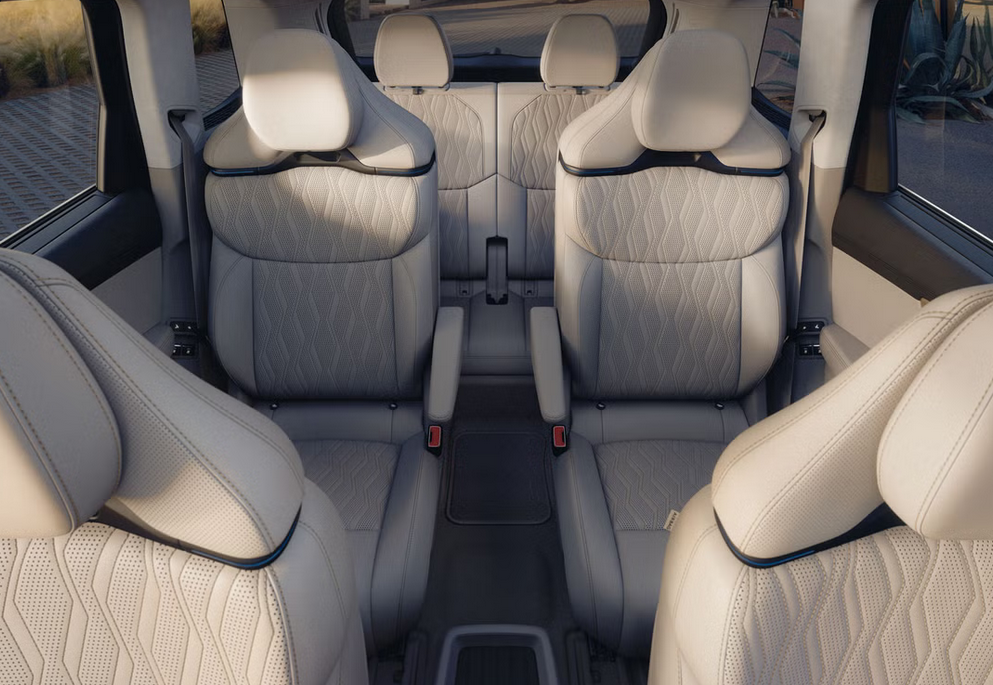
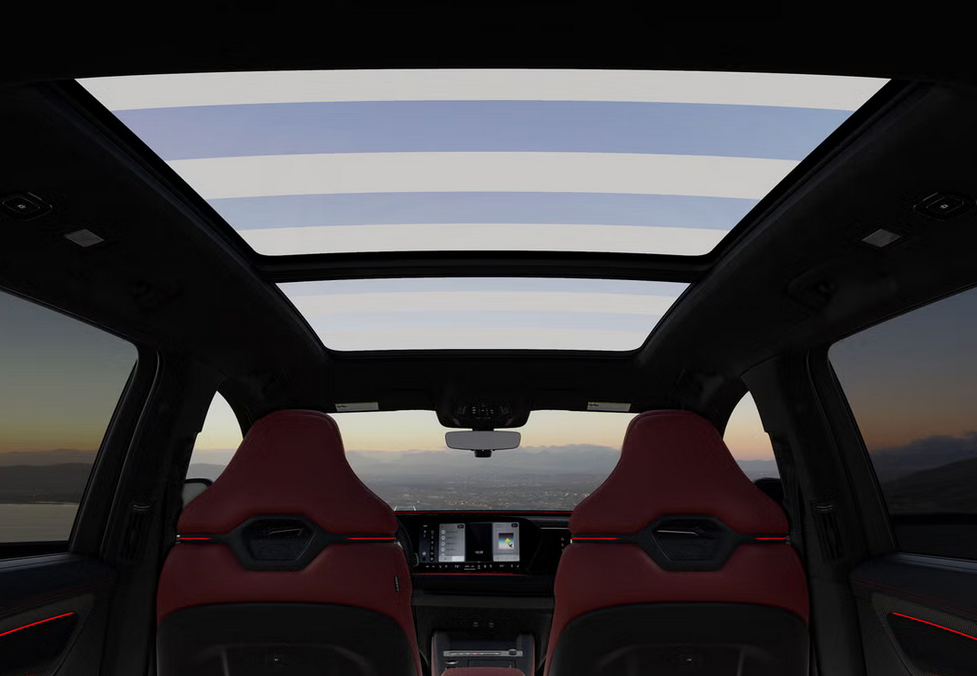
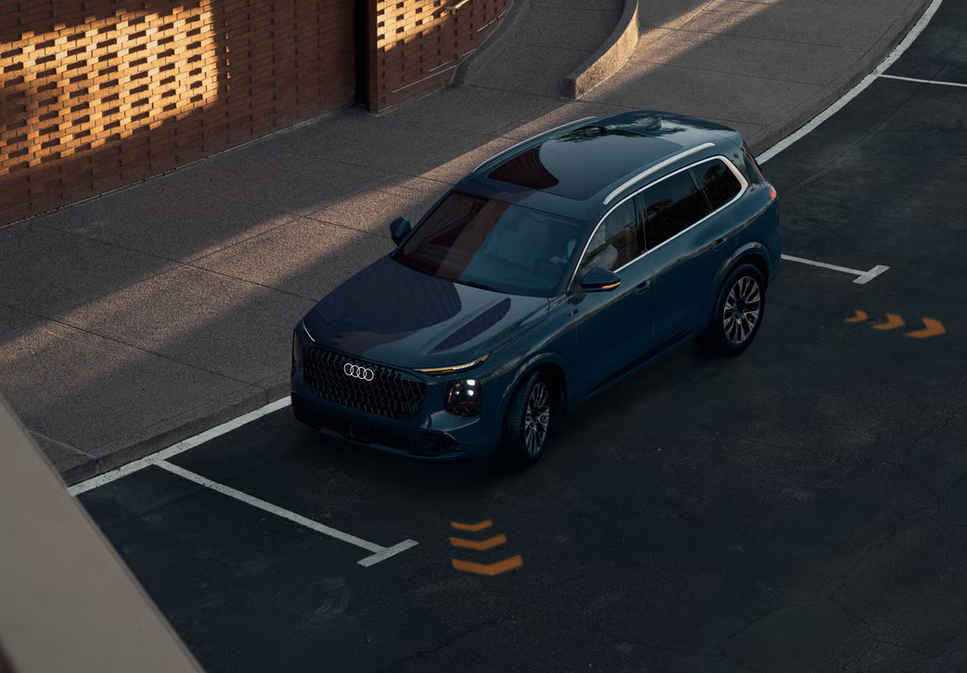
The 2027 Audi Q7 and SQ7 reveal delivers the most significant powertrain upgrade in the nameplate’s 20-year history. Audi unveiled the third-generation Q7 and SQ7 simultaneously — both three-row, seven-passenger SUVs targeting the US premium market. The standard Q7 carries a 2.9-litre twin-turbo V6 producing 429 horsepower (320 kW) and 442 lb-ft (599 Nm) of torque. That figure is nearly 100 horsepower more than the outgoing Q7’s optional V6. The SQ7 goes further — carrying the 4.0-litre twin-turbo V8 from the RS Q8 at 591 horsepower (441 kW) and 590 lb-ft (800 Nm). Neither model adds a hybrid system. Both arrive at US dealers in Q4 2026. Audi did not announce pricing.
What’s Happening & Why It Matters
The Q7: 429 HP, 4.8 Seconds, Best in Segment
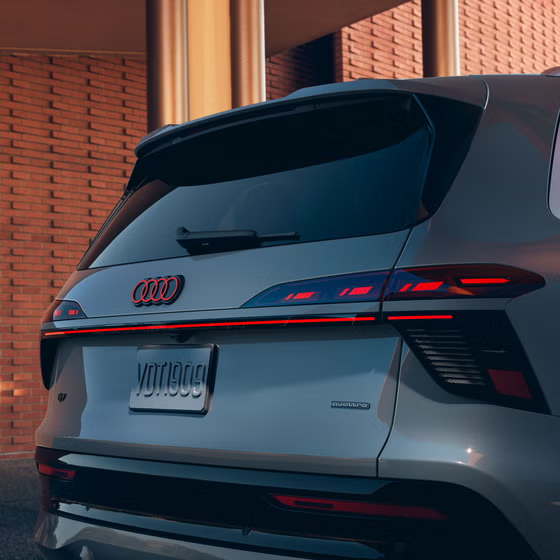
The 2027 Audi Q7 and SQ7 reveal establishes the Q7 as the fastest three-row SUV in its class at the standard level. The 2.9-litre twin-turbo V6 pairs with an eight-speed Tiptronic automatic transmission and Audi quattro permanent all-wheel drive. A new limited-slip centre differential with preload improves turn-in sharpness and load change stability. The result is a 0–60 mph (0–97 km/h) time of 4.8 seconds — faster than any comparable three-row luxury SUV in the segment at launch. Additionally, the suspension receives significant updates. Standard five-link independent suspension comes with optional adaptive air. The Q7 grows by more than 2 inches (5 cm) in height compared to the outgoing model.
The SQ7: RS Q8 Power in a Three-Row Body
The SQ7 is the vehicle most US buyers are waiting to order. Audi equipped it with the 4.0-litre twin-turbo V8 previously found in the pre-facelift RS6 Avant. In SQ7 specification, that engine produces 591 horsepower (441 kW) and 590 lb-ft (800 Nm) — gains of 91 hp and 23 lb-ft over the outgoing SQ7. Reach 60 mph (97 km/h) in 3.7 seconds. Top speed is 155 mph (249 km/h) on summer tyres. Towing capacity reaches 7,700 lbs (3,493 kg) with the optional towing package. By contrast, the SQ7 tips the scales at 5,467 lbs (2,480 kg) — a genuinely heavy three-row — so the adaptive air suspension as standard is the right engineering decision.
The SQ7’s quattro system differs from the Q7’s. Audi fitted it with a rear-biased, sportier AWD calibration and an electronically controlled locking rear differential. Wheel sizes range from 22 to 23 inches depending on specification. Front brake rotors measure almost 16 inches (406 mm) in diameter.
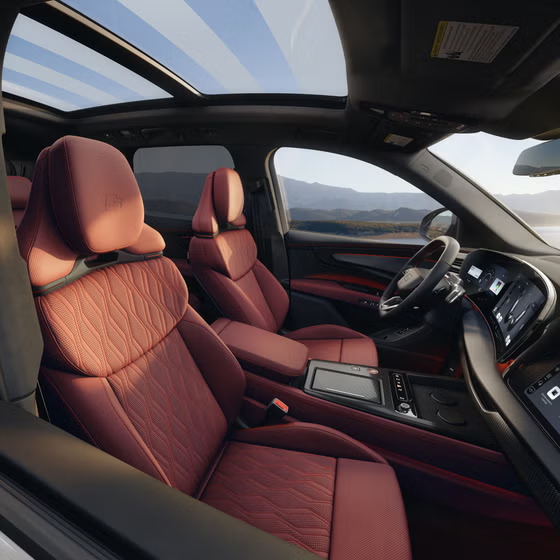
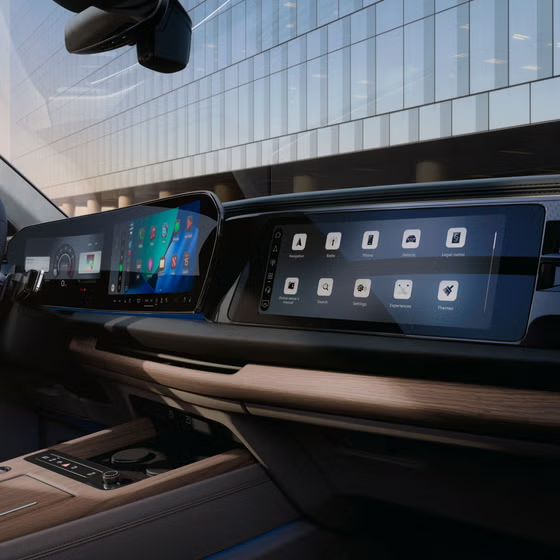
Lighting: World-First Ground-Projected Turn Signal
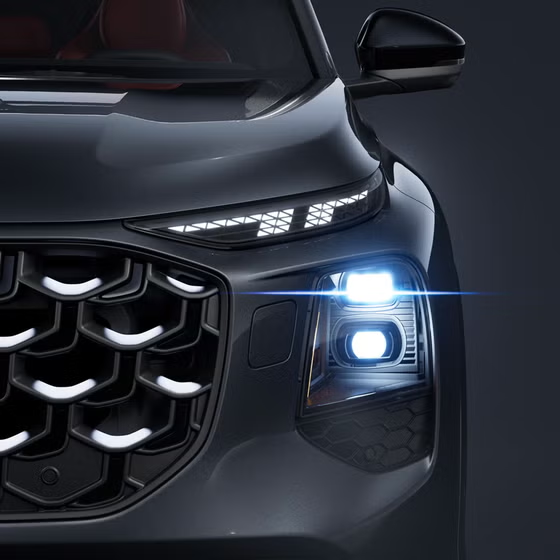
Beyond powertrain, the 2027 Audi Q7 and SQ7 reveal introduces two lighting technologies new to the US market. Digital Matrix LED headlights arrive on the Q7 for the first time in America — Audi redesigned its adaptive driving beam system to comply with US regulations, which previously blocked Matrix LED headlights. Additionally, Audi fitted a world-first ground-projected turn signal system. When the low beams are active, the turn signal projects onto the road surface ahead of the vehicle — giving pedestrians and cyclists advance warning before the vehicle turns. OLED taillights with a full-width light strip are also available, capable of displaying warning symbols including emergency stop indicators. Illuminated Audi rings appear at both ends.
No Hybrid — and Why That Decision Makes Sense for America
Audi chose not to offer a hybrid powertrain on the US Q7 and SQ7. That decision deserves attention. European Q7 variants may carry mild-hybrid systems. For the US market, however, Audi read customer demand accurately. American premium SUV buyers in 2026 consistently prefer internal combustion performance over hybrid complexity. The BMW X5 M benchmark — which the SQ7’s 3.7-second 0–60 mph time directly challenges — is also pure combustion. Furthermore, Audi avoided the weight penalty that full hybrid systems add to an SUV already pushing 5,500 lbs. The Q7’s strongest competitors now include not just BMW X5 and Mercedes GLE but also top-specification Hyundai Palisade and Mazda CX-90 models that have encroached on the premium space.
TF Summary: What’s Next
The 2027 Q7 and SQ7 go on sale at US dealers in Q4 2026. Both vehicles are built at Audi’s Bratislava plant in Slovakia — where Q7 production has run since 2005. Pricing will be announced closer to the on-sale date. The current Q7 runs out of production in late 2026. Audi will separately debut the larger Q9 flagship SUV — which shares technology with the new Q7 — later in 2026.
MY FORECAST: The 2027 Audi Q7 and SQ7 reveal will attract strong US pre-order demand, particularly for the SQ7. At 591 horsepower and 3.7 seconds to 60 mph, the SQ7 enters BMW X5 M competitive territory in a seven-seat package — something no rival currently offers at that performance level. By contrast, the pricing decision will determine whether Audi captures the buyers the specs deserve. The outgoing SQ7 started at $95,095. The new model’s performance gains are substantial enough to justify a price increase to $105,000–$115,000 — and US buyers in this segment will pay that range for the V8 and the 3.7-second time. The Q9’s debut later in 2026 will also redefine where the Q7 is in Audi‘s US lineup.
Related Stories
FOCUS KEYPHRASE:
META DESCRIPTION: Audi revealed the 2027 Q7 and SQ7 on 9 June 2026. The Q7 gets 429 HP. The SQ7 gets a 591 HP V8 and runs 0–60 in 3.7 seconds. Both arrive in Q4 2026. Here’s the full story