

Nvidia, Google DeepMind, OpenAI, and Anthropic, all in one room at his estate. No binding agreements expected. Just a monarch, days after his government’s AI minister sat through a UK Parliament report calling the current regulatory approach unfit for purpose, telling the industry’s most powerful people it’s time for “sufficient means of control before it is all too late.”
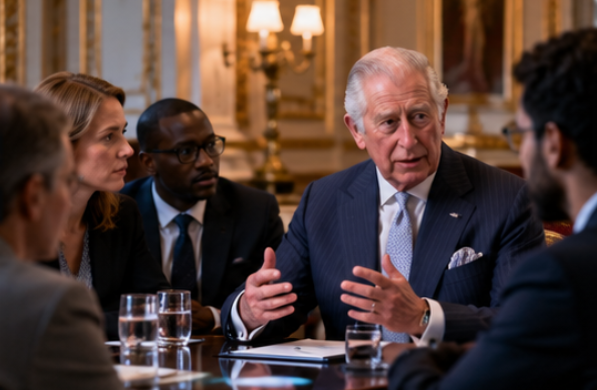
King Charles III hosted senior AI industry leaders Thursday at his Dumfries House estate in Scotland, warning that “existential dangers” could arise if the technology falls into the wrong hands. Attendees included Nvidia founder and CEO Jensen Huang, Google DeepMind co-founder Demis Hassabis, OpenAI’s Chief Financial Officer Sarah Friar, and representatives from Anthropic, alongside UK AI Minister Kanishka Narayan and an adviser to the Pope on AI ethics. “Those who have created these technologies are increasingly warning that AI risks developing darker capacities — perhaps even to take life,” the King told those gathered. “Surely, we need sufficient means of control before it is all too late?”
What’s Happening & Why It Matters
A Convener By Constitutional Design
Britain’s monarchy operates under a specific constraint that shapes what Thursday’s summit could and couldn’t produce. CNN’s framing captured it: “British royals tread when venturing into complex policy areas. Constitutionally bound to stay above politics, they can spotlight problems but not suggest any ways to solve them.” That’s why the summit convened at Dumfries House rather than Westminster, and why no binding agreements were expected from it. Charles’s role here is about attention and framing — bringing the industry’s most powerful figures into a single room under his name — not producing legislation.
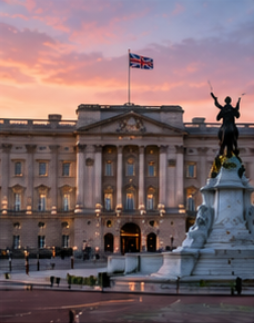
That’s not a new posture for Charles. As CNN noted, he’s made a consistent habit of framing existential-scale challenges — notably climate change — using language typically reserved for civilisational risks. His decision to apply that same framing to AI, three years after his pre-recorded video message at the original Bletchley Park AI Safety Summit in 2023, signals a monarch treating this technology as belonging in the same risk category he’s spent decades associating with environmental collapse.
The Warning and Coxon Aftermath
Thursday’s summit wasn’t happening in a vacuum — it arrived at the peak of a story TF has tracked for weeks. As covered in The Humans Will Be Dead: Death by AI in 10 Years?!, former Anthropic researcher Jacob Coxon’s resignation post went viral earlier this month, warning AI labs were “gambling with our lives.” Anthropic’s alignment lead Evan Hubinger corroborated Coxon’s warning, putting the odds of AI-caused human extinction above 10% within the next decade. Coxon later told the BBC that people working on the technology were “frightened” about how it’s advancing.
Charles’s language echoed that specific framing almost precisely — “darker capacities, perhaps even to take life” reads as a restatement of the concern Coxon and Hubinger raised weeks earlier. As TF covered, OpenAI’s Sam Altman responded to that wave of concern by saying people were right to worry, while asking the public to trust AI companies to manage the risk — a framing Charles’s summit challenges, by suggesting trust alone isn’t sufficient without external “means of control.”
The Environmental Cost

Charles didn’t limit his concerns to catastrophic misuse scenarios. He raised AI’s environmental impact during the summit — a dimension TF has covered throughout 2026, including the data centre water consumption disclosures and grid strain documented across multiple stories this year. That’s a notable addition to a gathering primarily framed around existential risk; Charles used his convening power to put resource consumption on the same agenda as catastrophic misuse, refusing to let the more dramatic extinction-risk framing crowd out the quieter, already-measurable environmental cost.
The King did balance his warning with acknowledgment of AI’s genuine potential. He noted the technology’s capacity to improve and save lives — a framing consistent with how TF has covered legitimate breakthroughs this year, including AI-assisted heart disease detection and drug discovery research. That balance matters for how industry attendees are likely to take the warning; a catastrophist message risks dismissal from executives already navigating genuine commercial pressure to keep building, while a message that acknowledges real benefit alongside real risk carries more credibility with the room it’s addressed to.
TF Summary: What’s Next
No binding commitments or formal agreements resulted from Thursday’s summit, consistent with expectations set beforehand. King Charles has not announced any follow-up gathering or ongoing role in AI governance discussions. The attending companies — Nvidia, Google DeepMind, OpenAI, and Anthropic — have not issued a joint statement following the meeting. UK AI Minister Kanishka Narayan’s attendance connects the summit to the domestic regulatory debate TF has covered, including Parliament’s recent kill-switch rejection.
MY FORECAST: Expect Thursday’s summit to generate considerable media attention without producing any concrete policy shift — a monarch’s convening power draws headlines and photographs, but carries no legislative or regulatory force under the UK’s constitutional framework, as CNN’s reporting anticipated. The more consequential outcome may be reputational rather than procedural: images of Huang, Hassabis, and Anthropic’s leadership sitting across from Charles while he names “existential dangers” will resurface in future Parliamentary debates and Congressional hearings as evidence the industry’s most senior figures have been warned, in formal settings, by prominent voices. Watch whether this summit is the template for a recurring annual gathering, given how it echoes Charles’s consistent pattern of returning to climate change messaging year after year.
Related Stories
- The Humans Will Be Dead: Death by AI in 10 Years?!
- Sam Altman: Be Weary of AI, But Trust Us
- UK Govt: No Kill Switch ‘Cause We Can’t Turn AI Off