


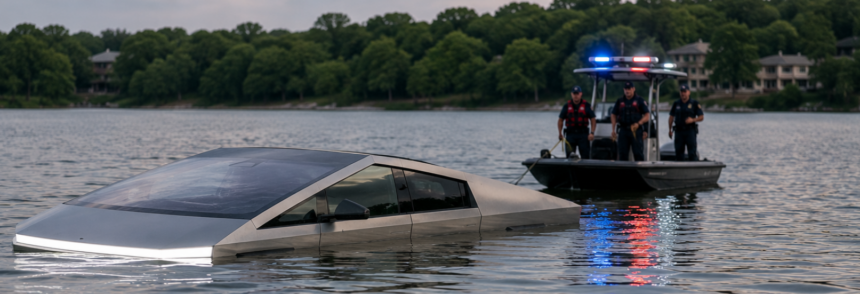
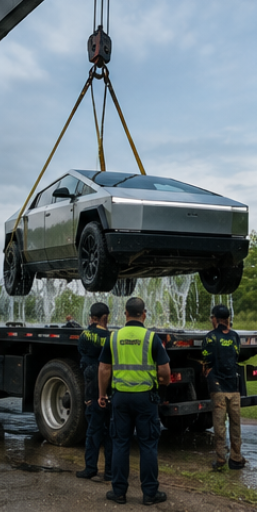
Tesla Cybertruck Wade Mode became a national punchline — and a serious moment for product education. Grapevine Police Department officers responded to the boat ramp at Katie’s Woods Park on Grapevine Lake, north of Dallas, Texas, at approximately 8 p.m. They found a silver Tesla Cybertruck half-submerged near the shoreline. The driver — Jimmy Jack McDaniel — told officers he intentionally drove the truck into the lake. His stated reason was to test the vehicle’s Wade Mode feature. He brought a passenger and two German tourists along for the attempt. The truck became disabled, started taking on water, and the group abandoned it. All four walked safely to dry land. The truck did not. McDaniel was arrested. Grapevine Fire Department‘s Water Rescue Team worked through the night. The Cybertruck came out on a heavy crane the following morning.
What’s Happening & Why It Matters
What Wade Mode Is — and What It Is Not
Tesla‘s Cybertruck includes a feature called Wade Mode. The feature raises the vehicle’s ride height using the air suspension system. At the same time, it pressurizes the battery pack against water intrusion. Tesla‘s online owner’s manual describes the purpose plainly. “Wade Mode allows Cybertruck to enter and drive through bodies of water, such as rivers or creeks.” The critical word in that sentence is “rivers or creeks.” Not lakes or reservoirs. Not any open body of water without a measured, stable depth. The manual specifies a maximum wade depth of approximately 32 inches — measured from the bottom of the tire. It also warns explicitly that “soft or muddy underwater surfaces can cause the vehicle to sink, increasing the water level on it.”
Those warnings are not buried in fine print. By contrast, the phrase “Wade Mode” does carry an aspirational ring. It suggests serious off-road water capability. That gap — between what the name implies and what the feature actually delivers — is at the center of the incident.
McDaniel Said He Had Done It Before
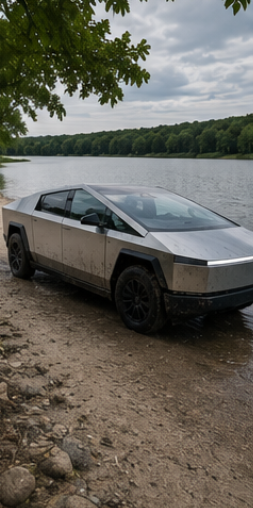
McDaniel told officers he had previously driven the Cybertruck into water using Wade Mode — with success. That claim is plausible. Wade Mode works as designed in the right conditions. A shallow river crossing with a firm gravel or sandy bed, below the 32-inch (81-centimeter) maximum depth, is exactly the use case Tesla designed it for. Grapevine Lake is a different environment entirely. It is a 7,380-acre (29.9 km²) reservoir managed by the US Army Corps of Engineers. The boat ramp at Katie’s Woods Park drops into open lake water. The bottom drops quickly. Underwater conditions are variable. Grapevine Lake is not a creek crossing.
By the time McDaniel’s passengers realized the truck was sinking, the situation was beyond recovery. The vehicle lost power, water entered the cabin, and all four occupants made it to shore. The Cybertruck stayed behind. The Grapevine Fire Department Water Rescue Team responded and began the extraction process. That process ran through the night. The heavy crane operation did not complete until the following morning.
Legal Consequences: Multiple Charges
Grapevine Police charged McDaniel with three categories of offences. The first charge is operating a vehicle in a closed section of a park and lake — the area where he drove was already off-limits to vehicle use. Texas state law strictly governs motorized access to public parkland and lake areas. Signs mark the restricted zones. McDaniel drove past them.
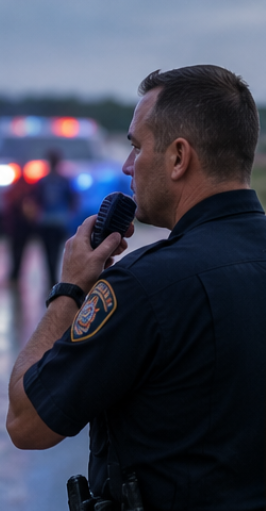
The second category is the boat registration charge — and it carries its own legal logic. Under Texas law, when a motor vehicle enters a body of water, it is legally treated as a watercraft. At that point, the driver is the operator of an unregistered vessel. McDaniel had no valid boat registration for the Cybertruck. The third category covers violations of water safety equipment. In Texas, any vessel on navigable water must carry life jackets for all passengers and a fire extinguisher. The Cybertruck carried neither. McDaniel remained in Grapevine Jail on Tuesday afternoon. Tesla has not commented on the incident.
What Tesla’s Manual Actually Says
Tesla‘s Cybertruck owner’s manual includes multiple warnings about Wade Mode that are worth reading before the next attempt. Beyond the 32-inch maximum depth, the manual instructs owners to “gauge the depth of any body of water before entering.” It also warns that “damage to the vehicle as a result of driving in water is not covered by the warranty.” That last point is financially significant. The Tesla Cybertruck starts at $74,990 (€69,100). Crane recovery, water damage repairs, and the potential write-off cost of a flooded electric vehicle adds up quickly. The manual also instructs drivers to “check water conditions before entering and use best judgment.” Grapevine Lake at night, from a boat ramp, with an open-ended depth profile, is an unlikely setting for best judgment to arrive at a positive outcome.
The Feature’s Legitimate Use Case
Wade Mode is a real feature with genuine practical value. It is designed for specific off-road and rural scenarios — crossing a seasonal creek that floods a farm track, navigating a flooded road after heavy rain, or making a river crossing on a trail where the depth is known and manageable. In those conditions, the pressurized battery, raised suspension, and sealed undercarriage work as designed. Several Cybertruck owners have documented successful Wade Mode crossings on YouTube and social media. Those videos typically show shallow, visible water with firm bottoms and measured depths well within the 32-inch limit.
At the same time, the feature’s name and marketing carry an implied ruggedness that can misalign expectations. Tesla‘s marketing has positioned the Cybertruck as a near-indestructible machine — one that starred in a reveal event where a thrown steel ball famously cracked its “armored” window in front of a live audience. The vehicle’s aesthetic communicates capability at the limits. Wade Mode sounds like the feature that enables that capability in water. For anyone who does not read the manual carefully, “32 inches maximum depth, hard surface only, known conditions” is a significant gap from the implied promise.
Misunderstood EV Features
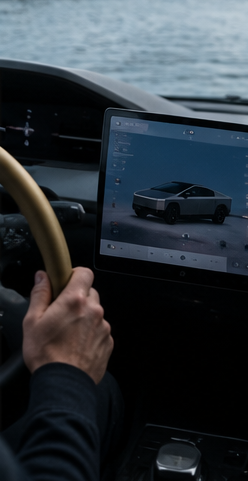
The Grapevine Lake incident is the most visually dramatic example of a pattern that appears regularly across the EV industry. Autonomous driving features are engaged in conditions that they cannot handle. Battery range estimates are tested against real-world results that differ significantly. Charging speeds are measured against marketing figures that are based on specific conditions. Wade Mode joins that list. The feature works. The parameters that define when it works are specific, documented, and frequently overlooked.
As TF covered in its article on Tesla’s FSD hardware limitations, the gap between what Tesla’s marketing implies and what the vehicles deliver in specific edge cases has repeatedly generated controversy. Wade Mode is a smaller-scale version of the same dynamic. The owners who use it correctly have no incidents to report. The owners who push past its designed limits end up in a lake — with an arrest, a crane bill, and a Cybertruck that spent the night on the bottom of Grapevine Reservoir.
TF Summary: What’s Next
Grapevine Police recovered the Cybertruck the following morning. McDaniel’s case will proceed through Tarrant County’s court system. The specific charges — operating in a closed area, unregistered watercraft, and safety equipment violations — each carry their own penalties under Texas law. Tesla has not issued updated guidance on Wade Mode following the incident. The existing owner’s manual warnings are in place.
MY FORECAST: The Tesla Cybertruck Wade Mode incident will not result in any immediate regulatory or product changes from Tesla. It does not need to. The manual already contains the relevant warnings. The legal charges already exist. What the incident will produce is a wave of social media content — both from those who find it funny, and from those who want to demonstrate the feature used correctly. That second category is genuinely useful. The best outcome from Grapevine Lake is not a legal warning. It is a generation of accurate, well-documented Wade Mode demonstrations that give Cybertruck owners a realistic picture of the feature before they activate it. McDaniel’s attempt was poorly planned, illegally executed, and visually spectacular. At minimum, it has expanded the market for accurate Cybertruck water-crossing content — and provided a global reminder that wade means shallow, not submarine.