


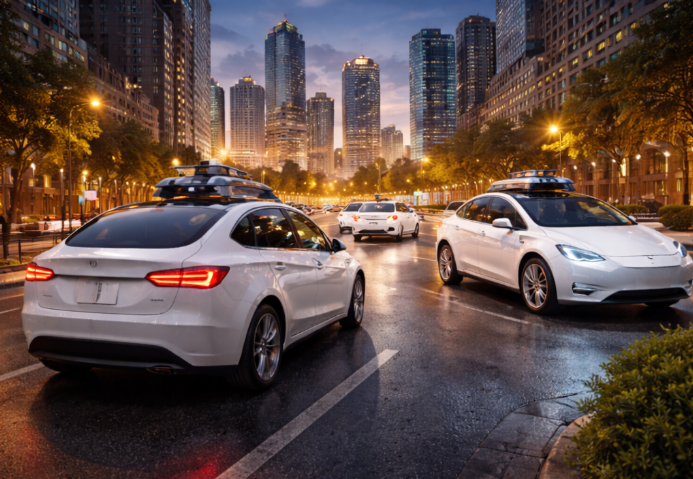
The Lone Star State Is the Ultimate Proving Ground for Unsupervised Autonomy
Tesla officially expanded its unsupervised Robotaxi service to Dallas and Houston on 18 April 2026. The company originally launched its commercial ride-hailing pilot in Austin back in June 2025. This latest move followed a successful transition to fully driverless operations in the state capital earlier this year. Elon Musk and his team confirmed the rollout via social media, sharing videos of Model Y vehicles navigating city streets without a single human in the front seats.
The expansion arrived just four days before the electric vehicle (EV) giant’s Q1 2026 earnings call. This timing specifically allowed management to present a concrete win to investors amidst growing questions about the global fleet size. The service previously operated in the San Francisco Bay Area but required a safety driver at the wheel. By contrast, the new Texas locations launched as “unsupervised” from day one. This reflects a significant gain in confidence regarding the Full Self-Driving (FSD) software stack.
What’s Happening & Why This Matters
Claiming the Texas Triangle
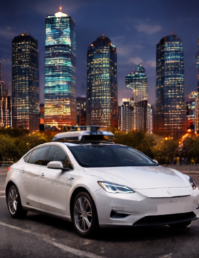
Tesla operates a concentrated autonomous ride-hailing network across three of Texas’s largest metropolitan areas. The Dallas service area currently centers around the upscale Highland Park neighborhood and parts of the downtown core. In Houston, the geofenced zone covers roughly square miles ( square km) in the northwest corridor, including Jersey Village. While these zones are smaller than the square-mile (square km) range in Austin, they represent a strategic footprint.
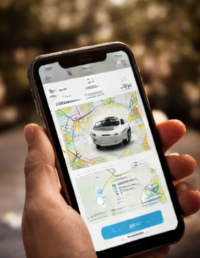
This expansion creates a “Texas Triangle” of operational data for the firm. Engineers use these diverse urban environments to train the neural networks on everything from sprawling suburban highways to dense city traffic. Success in these markets provides essential validation for the business model before a wider national release. Riders can summon a driverless vehicle through the Tesla Robotaxi app on iOS and Android. This convenience brings unsupervised autonomy directly to the consumer’s doorstep.
Scaling Beyond the Model Y
The current fleet in Dallas and Houston appears modest, with reports suggesting only a few vehicles are active in each city. However, these units serve as the advance guard for the Tesla Cybercab. The company plans to begin volume production of this dedicated two-seater vehicle at Giga Texas later this year. The Cybercab removes the steering wheel and pedals entirely, lowering manufacturing costs to roughly $30,000 (€27,600).
Tesla intends to use the Cybercab as the primary scaling platform for the entire network. This move aligns with a shift away from traditional car ownership. Elon Musk previously stated that riding in a robotaxi would eventually be cheaper than taking a public bus. By establishing the infrastructure in Texas, the company prepares the market for a massive influx of dedicated autonomous hardware. This transition marks the beginning of a new era for urban transportation.
Stiff Competition in the Sun Belt
Tesla does not have the Texas roads to itself. Google-owned Waymo already offers commercial driverless rides in both Dallas and Houston. Furthermore, Uber recently partnered with Avride to offer autonomous deliveries and rides in the Dallas market. Amazon is also preparing to launch its Zoox robotaxi service in the region shortly. This creates a crowded field of autonomous vehicles (AVs) all vying for the same passenger base.
The competition forces each player to rapidly improve the reliability of their software and services. Tesla’s advantage lies in its massive existing fleet of consumer vehicles, which serve as data-collection points. Every Model 3 and Model Y on the road helps refine the path for the Robotaxi network. However, local authorities in Dallas and Houston will monitor these new arrivals closely. They want to ensure that driverless tech does not interfere with emergency response protocols or public safety.
The Path to Seven Cities
The rollout is part of a larger plan to reach seven U.S. cities during the first half of 2026. Tesla previously named Phoenix, Miami, Orlando, Tampa, and Las Vegas as the next targets. Each city offers a unique set of challenges, from the desert heat of Arizona to the heavy tourist traffic in Florida. Meeting this aggressive timeline requires a flawless execution of the unsupervised rollout strategy seen in Texas.
The Las Vegas launch is particularly anticipated due to the high demand for tourism-related transport. Integrating robotaxis into these high-traffic hubs proves the technology’s utility in the gig economy. As the company adds more cities, the recurring revenue from ride-hailing fees is a major part of its financial health. This pivot away from simple EV manufacturing transforms Tesla into a diverse technology and services firm.
Safety Data and Public Trust
Public trust is a hurdle for the entire AV industry. Tesla’s February financial report noted that its autonomous vehicles have been involved in road incidents since their initial launch. While the company did not disclose specific details, it maintains that its software is safer than a human driver. FSD technology continuously monitors the environment in degrees, which prevents many common accidents caused by human distraction.
Providing an “unsupervised” experience from the start in Dallas shows that Tesla believes its safety models are ready for prime time. Passengers can sit in the back seat and watch the world go by at mph ( km/h) without any intervention. This bold approach seeks to win over skeptics through direct experience. If the Texas rollout is incident-free, it will likely accelerate regulatory approval in more conservative states.
TF Summary: What’s Next
Tesla currently focuses on increasing the vehicle density in Dallas and Houston to reduce wait times for riders. We expect to see a significant update on the Phoenix and Las Vegas launches during the upcoming earnings call on 22 April. The company will likely provide more details on the volume production of the Cybercab and its integration into the existing app.
Rivals like Waymo and Zoox will continue to expand their own geofenced areas in a race for market dominance. This competition will drive down the cost of autonomous rides for consumers across the Sun Belt. Expect to see the first dedicated “Robotaxi Hubs” appearing in major Texas cities by the end of 2026 to handle cleaning and charging for the growing driverless fleet.
MY FORECAST: I predict that Tesla will successfully launch in all seven promised cities before the end of June 2026. You will see a massive surge in “Zero-Ownership” households in Texas as the cost of a Robotaxi subscription drops below the cost of a monthly car payment. By 2027, the Cybercab will dominate the ride-hailing market, forcing traditional taxi companies to make a complete digital retreat. The “Texas Triangle” will serve as the global blueprint for how AI eventually takes the wheel for good.
— Text-to-Speech (TTS) provided by gspeech | TechFyle