

The Musk v. Altman trial’s second week delivered a failed settlement text, a diary read aloud to the jury, a bank robber comparison, secret Tesla AI work, and the most complicated witness in Silicon Valley history.
The Musk v. Altman trial entered its second week with revelations that made the first week seem restrained. The courtroom in Oakland produced four days of extraordinary material between 4 and 7 May 2026. A settlement text was sent two days before the trial began. There were Greg Brockman‘s personal diary entries — read aloud to a jury in a federal courthouse. His claim that Elon Musk secretly used OpenAI employees to advance Tesla’s self-driving technology. A lawyer who compared Brockman to a bank robber. And there was Shivon Zilis on the witness stand — simultaneously Musk‘s partner, the mother of four of his children, a former OpenAI board member, and a key witness in a trial between her past employer and the man she lives with. The Musk v. Altman trial does not lack for drama.
What’s Happening & Why It Matters
The Text That Almost Ended It All
On 4 May 2026, OpenAI filed a late Sunday court document revealing an attempt to settle. Musk had texted Brockman on 25 April — two days before the trial began — to gauge his interest in settling. Brockman responded with a counter-proposal. He suggested both sides drop their respective claims. Musk‘s reply was not measured. “By the end of this week, you and Sam will be the most hated men in America. If you insist, so it will be,” Musk wrote. OpenAI entered the text message as evidence.
The settlement approach tells the jury something important. A man who reaches out to settle two days before trial is not entirely certain he wants the trial to happen. The threat that followed tells them something else. The phrase “most hated men in America” is not contractual language. It is personal warfare dressed up as legal strategy. Judge Yvonne Gonzalez Rogers had already rejected at least one other late attempt by Musk‘s team to introduce new evidence, signalling her determination to control both sides’ behaviour in the courtroom.
Brockman Takes the Stand: A Founding Story Without Musk at Its Centre
Greg Brockman testified for most of Monday, 4 May, and concluded on Tuesday, 5 May. His account of OpenAI‘s founding contradicted Musk‘s version on nearly every significant point. In Brockman‘s telling, the real catalyst for OpenAI was a private agreement between himself and Sam Altman at a dinner party in Menlo Park in July 2015. Musk was there. But the spark came from Brockman and Altman agreeing that starting an AI lab to compete with Google’s DeepMind was “the most important thing we could imagine doing.”
Brockman testified that he never made any commitment to Musk about OpenAI‘s corporate structure. He also stated that he never heard anyone else make such a commitment. On the open-sourcing claim — which Musk repeatedly advanced on the stand — Brockman was direct. “Honestly, it was not a topic of conversation,” he said. He told the jury: “This entity remains a nonprofit” — referring to the OpenAI foundation. On Musk‘s general involvement, Brockman was measured. “Elon’s time was relatively hard to get,” he said. “There were a lot of decisions to make that we weren’t able to broadcast to him.”
The Diary: Every Entry Read Aloud to a Jury
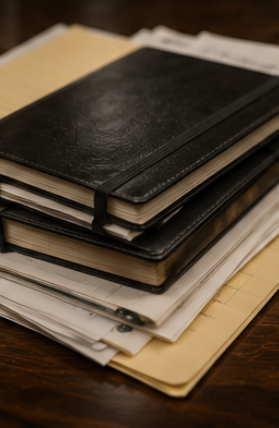
The most damaging phase of Brockman‘s cross-examination came when Musk‘s lead attorney Steven Molo turned to the diary. Brockman kept a personal journal throughout his years at OpenAI. Those entries — unsealed during discovery — covered events from 2015 through 2023. Molo spent the first full day of Brockman‘s testimony isolating passages and demanding explanations.
The entries are striking. In 2017, Brockman wrote: “We’ve been thinking that maybe we should just flip to a for-profit. Making the money for us sounds great and all.” In another 2017 entry, he asked himself: “Financially, what will take me to $1B?” In November 2017, he wrote: “Cannot say that we are committed to the nonprofit. Don’t wanna say that we’re committed. If three months later we’re doing B-Corp then it was a lie.” In yet another entry, he wrote: “It’d be wrong to steal the nonprofit from Musk and turn it into a B-Corp without him — doing so would be pretty morally bankrupt.” Molo asked Brockman whether he would consider returning $29 billion to the nonprofit. Brockman said no — pointing out that he received the stake before ChatGPT‘s release drove OpenAI‘s valuation to its current level. More than a dozen times, Molo returned to the entries and pressed Brockman to justify his $30 billion stake. Molo then deployed an analogy. He compared Brockman to a bank robber who rationalises stealing $1 million because there’s much more left in the vault.
Brockman’s Defence: “Cherrypicked” and Context-Free
Brockman charged back throughout, though not always with the same rhetorical force as his accuser. He described the excerpts Molo cited as “cherrypicked” — stripped of the context in which they were written. He repeatedly returned to the phrase “We were solving for the mission.” On the “making the money for us sounds great” entry, Brockman argued the passage reflected a moment of private uncertainty, not a definitive position. On the “if three months later we’re doing B Corp then it was a lie” entry, Brockman offered a careful reimagining. “I think I meant it would actually serve the mission, but it would be hard to look at yourself in the mirror,” he told the court. On the “morally bankrupt” entry, he presented it as evidence of his ethical seriousness — not as a confession of wrongdoing. He emphasised the outcome. OpenAI is, he told the jury, “the most well-resourced nonprofit in history,” backed by more than $150 billion in equity value. Molo’s bank robber metaphor is memorable. Brockman‘s defence is more nuanced but less vivid.
Musk Wanted OpenAI to Fund a City on Mars
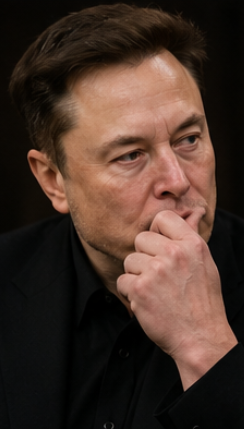
One exchange produced a detail that generated significant attention outside the courtroom. Brockman testified that during 2017 negotiations over OpenAI‘s future structure, Musk told him he wanted control of OpenAI — in part to help finance building a “city on Mars.” At the time, Musk was reportedly estimating that Mars ambitions would require approximately $80 billion. SpaceX is targeting a 2026 IPO aiming to raise $75 billion. Brockman testified that Musk issued an ultimatum in 2018: either Musk would gain full control of a for-profit arm of OpenAI, or OpenAI would be purely non-profit. Brockman said the ultimatum “devastated” him. “It felt like we were so close to something that could actually succeed at the mission … and it was all blown up,” he told the jury.
Tesla’s Secret AI Work — and a Stolen Researcher
Brockman‘s most operationally explosive claim was this: Musk enlisted several OpenAI employees to do months of free work for him at Tesla. That work targeted Tesla‘s Autopilot self-driving development — primarily to overhaul its approach in 2017. The claim directly contradicts Musk‘s self-portrait as a donor who gave everything and received nothing. If OpenAI‘s engineers worked on Tesla’s problems while on OpenAI‘s payroll, the relationship was not as one-sided as Musk described.
On the researcher Andrej Karpathy — whom Musk had cited as someone he recruited to Tesla — Brockman offered a different account. Musk had come to him “with an apology and a confession” after the hire. Neither Musk nor Karpathy had told Brockman the researcher intended to leave OpenAI first.
Shivon Zilis: The Trial’s Most Complicated Witness
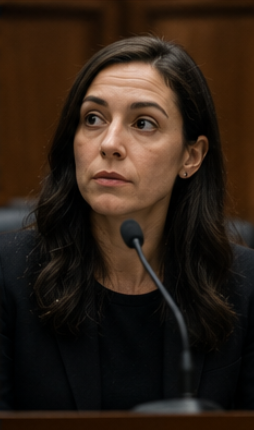
On 6 May, Shivon Zilis took the stand. No single witness in the Musk v. Altman trial occupies a more structurally complex position. Zilis served on OpenAI‘s board from approximately 2016 to 2023. She works at Neuralink. and previously worked at Tesla. She lives with Musk and is the mother of four of his children — twins born in 2021, a daughter in 2023, and a son in 2024.
Zilis testified that her relationship with Musk began as a “one-off” at a corporate event. She later decided to have children as a single mother, at which point Musk offered to be a platonic sperm donor. That relationship evolved. Musk‘s lawyer Jennifer Schubert asked whether it was Zilis’s job “to funnel information to Elon.” Zilis replied: “Funnel? Absolutely not.” On the “trust game” message — a text Zilis sent to Musk describing the “trust game” as “about to get tricky” — Zilis said: “I would have preferred it if I’d written ‘trust framework.'” She described the period as “a weird half-breakup” and said she was trying to figure out “how to navigate” her role as facilitator. She also stated that she had “an allegiance to the best outcome, AI for humanity” throughout her board service. Brockman had testified that the board considered removing Zilis because of her relationship with Musk. “We actually had a board vote and decided to let her stay,” he said. Zilis informed the board about the relationship only after Business Insider told her they planned to publish a story about it.
TF Summary: What’s Next
Sam Altman has not yet taken the stand. His testimony — the most anticipated session of the entire trial — is expected later this week. Microsoft CEO Satya Nadella, former OpenAI co-founder Ilya Sutskever, and former OpenAI President Mira Murati are all still on the witness list. Phase One deliberations are expected to conclude in mid-May. If the jury finds OpenAI liable, Phase Two begins 18 May.
MY FORECAST: The Musk v. Altman trial has established two competing narratives for the jury to weigh. Musk‘s team argues that Brockman‘s diary proves what the co-founders planned all along: use the nonprofit as a vehicle for personal enrichment. Brockman‘s team argues that the diary proves the opposite: a man who wrote through his doubts transparently, committed to the mission, and built something extraordinary. Both readings rely on the same documents. The jury must decide which reading is more persuasive — and Judge Gonzalez Rogers will decide what, if anything, actually to do about it.