

Musk called himself a fool. OpenAI’s lawyer called him a liar. The judge told everyone to stop posting on social media. Day Two of the trial that could reshape AI was anything but dull.
Day Two of Musk v. Altman delivered everything a courtroom drama needs. Elon Musk returned to the stand on 29 April 2026 at the Ronald V. Dellums Federal Building in Oakland. He stayed for more than five hours. By the end, he had called himself a fool, accused OpenAI‘s lawyer of asking unfair questions, and been told by Judge Yvonne Gonzalez Rogers to answer simply and directly. He did not always comply.
The day’s central tension was blunt. OpenAI lead counsel William Savitt spent hours trying to show that Musk had not been cheated — he had simply not gotten his way. Musk spent those same hours insisting that $38 million in donations entitles him to more than he received. Both things can be simultaneously true. That ambiguity is precisely why this case is going to a jury.
What’s Happening & Why It Matters
Musk Under Cross-Examination: “You’re Being Misleading”
Savitt began the day’s cross-examination by targeting the gap between what Musk promised and what he delivered. In the early years of OpenAI, Musk committed to contributing up to $1 billion to the nonprofit. He actually contributed $38 million. When Savitt pressed him on that shortfall, Musk explained he had “lost confidence in the team.” That admission is significant. It directly undercuts the claim that OpenAI leaders betrayed his trust. His own confidence in them had already collapsed before the for-profit transition.
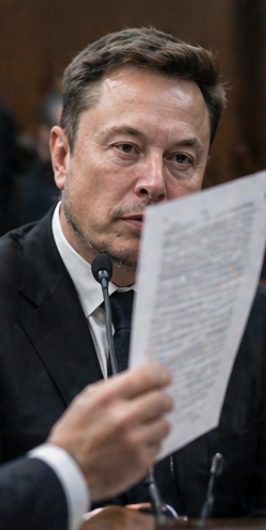
The cross-examination grew testy quickly. Savitt asked Musk to answer with simple yes or no responses. Musk refused repeatedly. “Your questions are definitionally complex,” he told Savitt from the stand. “It’s a lie to say they’re simple.” Judge Gonzalez Rogers intervened more than once to instruct Musk to answer directly. He accused Savitt of asking “mostly unfair questions.” At one point, he said: “You’re being misleading.” The judge reminded both sides that her courtroom, not X, is where this case gets decided.
The Haunted Mansion and the Pivot That Wasn’t
One of the day’s most memorable exchanges involved a 2017 video game tournament. Savitt described how a competitive AI defeating human players at Dota had alarmed Musk — convincing him that OpenAI was falling behind better-funded rivals like Google. Shortly after watching that result, Musk gathered Altman, Brockman, and others — including Shivon Zilis, then an OpenAI board member — for a meeting at what Savitt described as a “haunted mansion” in San Francisco.
Savitt suggested the meeting was where Musk first pushed for a pivot toward a for-profit structure. Musk said he did not recall urging that pivot or whether Zilis took notes. The haunted mansion meeting is relevant because it undermines Musk’s core narrative. If he himself proposed a for-profit structure in 2017 — the same year OpenAI was exploring those options — his lawsuit loses its moral foundation. Musk denied being the advocate for profit. The jury will need to decide who to believe.
The $10 Billion That Broke Musk’s Trust
The most substantive part of the day’s testimony focused on the Microsoft relationship. In 2022, OpenAI announced a $10 billion (€9.2 billion) investment from Microsoft — a deal that valued the company at approximately $20 billion. Musk testified this was the moment he “lost trust in Altman” and concluded that “they were really trying to steal the charity.”
He messaged Altman directly. Evidence shown to the jury included a text from Musk linking to an article about OpenAI‘s valuation — and describing it as “a bait and switch.” Altman’s response, entered into evidence, read: “I agree this feels bad. We offered you equity when we established the cap profit, which you didn’t want at the time. We are still very happy to do any time you’d like.” That message from Altman is a problem for Musk. It suggests Altman tried to address his concerns directly — and that Musk declined. Savitt pointed to it as evidence that Musk had the opportunity to participate in the upside and chose not to.
“I Was a Fool”: Musk’s Most Damaging Admission
Day Two’s most memorable quote came from Musk himself. “I actually was a fool who created free funding for them to create a startup. I literally was,” he told the jury. Later, he added: “I gave them $38 million of essentially free funding which they then used to create an $800 billion for-profit company.”
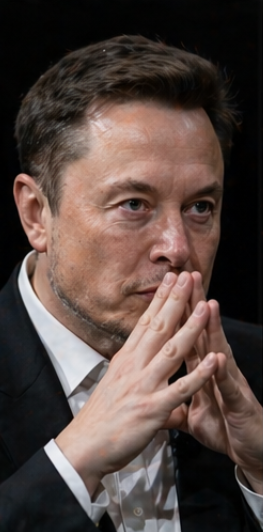
The admission cuts both ways. On one hand, it supports his argument that he was exploited — that his charitable donation powered a commercial empire without his consent. On the other hand, it raises the question of why a sophisticated entrepreneur and serial company founder failed to protect himself legally. Savitt leaned on that question throughout the cross-examination. If Musk believed so strongly that OpenAI would remain a non-profit, why did he not insist on enforceable commitments in writing? Musk did not provide a satisfying answer.
Control, Tesla, and a Critical Email
Savitt also introduced an email Musk sent during early discussions about who would run OpenAI‘s emerging for-profit entity. In that email, Musk stated that he should have “initial control” and the largest share of equity — because he had provided most of the funding. He told the jury: “Basically, if they want to get rich, they should go do so as a for-profit. But what they should not do is have me continue to fund a non-profit and get rich off of that.”
That email is double-edged. It supports Musk’s claim that he expected the non-profit structure to hold. At the same time, it directly contradicts his portrayal of himself as a selfless benefactor. The email shows him actively negotiating for personal control and equity. Savitt tried to press Musk on whether the real dispute was that Altman and Brockman refused to give him that control. Musk denied it. “I just needed to make sure it would go in the right direction,” he said. Beyond that, Savitt highlighted Musk’s 2023 founding of xAI — his own for-profit AI company — as a direct contradiction of his stated principled opposition to AI commercialisation. Musk acknowledged the structure directly. “I formed many tech companies. I could have done so with OpenAI. I chose not to; I chose to do something that would be a charity.”
The Judge, the Social Media Warning, and the Tone of the Room
Judge Gonzalez Rogers kept the proceedings tightly controlled. Early in the day, she addressed the social media behaviour of both sides. Before testimony began Tuesday, she had already warned: “All of you try to control your propensity to use social media to make things worse outside this courtroom.” On Day Two, Musk continued posting on X between sessions — prompting a second reminder from the bench that the courtroom is the only relevant venue.
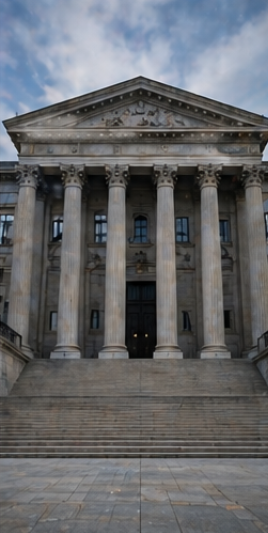
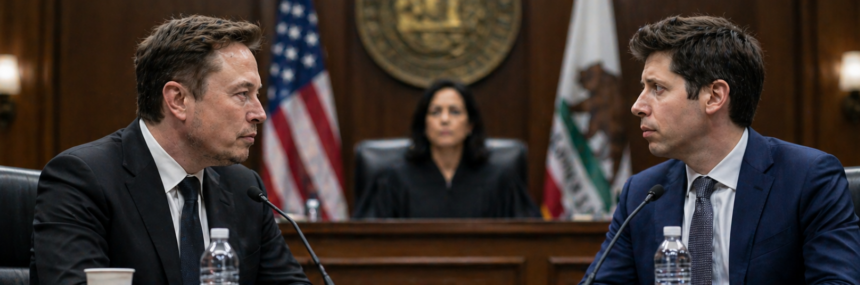
The physical presence of both principals adds to the room’s charged atmosphere. Sam Altman sat in the courtroom as Musk testified on Day Two. Greg Brockman was also present. The nine-person jury watches both the witness and the principals’ reactions. That dynamic — two former colleagues seated metres apart while one testifies under oath about the other’s alleged betrayal — is the drama beneath the legal one.
What Musk Is Still Seeking
Despite the bruising cross-examination, Musk’s position on remedies has not shifted. He still seeks the removal of both Altman and Brockman from OpenAI. He still wants the for-profit conversion unwound. He still seeks up to $130 billion (€119.9 billion) in damages directed to OpenAI‘s non-profit arm. All of those remedies are structural — not personal financial gain. That point influences how the jury evaluates his credibility and motivation.
Prediction markets at the close of Day Two give Musk approximately 33% probability of winning — slightly lower than before testimony began. Legal analysts widely expect that even a partial liability finding would produce a fraction of the damages Musk is claiming. Judge Gonzalez Rogers has already flagged that the damages methodology appears speculative. The real stakes, at this stage, are structural — not financial.
TF Summary: What’s Next
Musk returns to the stand on Thursday 30 April for a third consecutive day. OpenAI‘s attorneys will complete their cross-examination. Musk’s own legal team then conducts a second round of direct questioning. The final content of Musk’s testimony will shape how the jury evaluates the central question — did OpenAI leadership make enforceable commitments to maintain a non-profit structure, or did Musk simply assume those commitments existed?
After Musk leaves the stand, the trial moves to other witnesses. Sam Altman, Greg Brockman, Microsoft CEO Satya Nadella, and former OpenAI co-founders Ilya Sutskever and Mira Murati are all scheduled to testify. Altman’s testimony will likely be the most-watched single session of the entire trial. Phase One deliberations are expected to conclude in mid-May. If the jury finds liability, Phase Two — remedies — begins 18 May. Judge Gonzalez Rogers controls all structural outcomes. The jury advises. She decides.