

Musk spent four days on the stand. He left having admitted that xAI used OpenAI’s own tech to build Grok. It is the most damaging thing — and he said it himself.
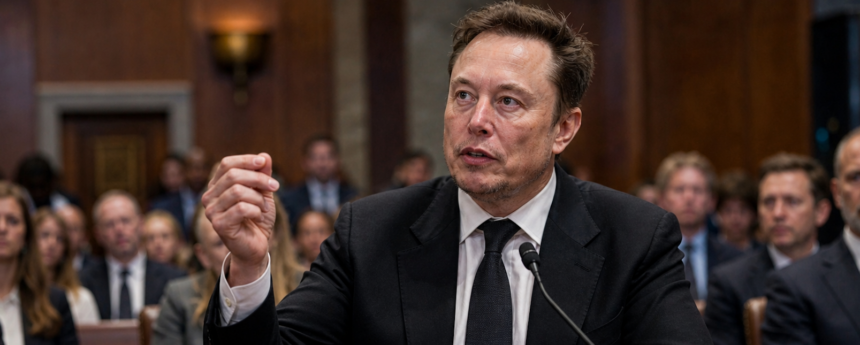
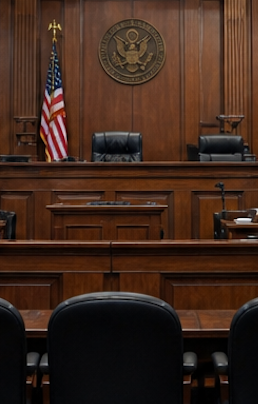
Elon Musk wrapped up his testimony at the Oakland federal courthouse on 30 April 2026 — the fourth consecutive day of his appearance in Musk v. Altman. The trial is now in its second week. What began as Musk’s case against OpenAI for abandoning its nonprofit mission ended with a revelation that no one in the courtroom saw coming. Musk admitted, under oath, that xAI used OpenAI‘s models to help train Grok — the AI model at the heart of his own for-profit AI company. He called it “partly” true. The admission may be the most consequential moment of the entire trial.
What’s Happening & Why It Matters
Days Three and Four: From Heated to Historic
Days Three and Four of Musk’s testimony moved through several distinct phases. On Day Three — Wednesday 29 April — OpenAI lead attorney William Savitt continued his aggressive cross-examination. Savitt pressed Musk on his involvement in early negotiations about OpenAI‘s corporate structure. He also questioned Musk about a term sheet from several years ago. Musk denied reading it in detail. Savitt suggested Musk knew more about the for-profit transition than he admitted. The exchange grew heated enough that Judge Yvonne Gonzalez Rogers intervened multiple times — asking Musk to answer questions directly rather than turning each response into an argument.
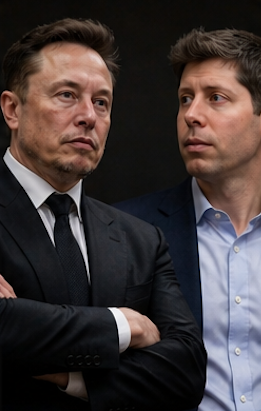
By Day Four — Thursday 30 April — Savitt’s cross-examination resumed for roughly two final hours. His questioning covered three areas: the capped nature of Microsoft‘s investments in OpenAI, Musk’s involvement in negotiations over OpenAI’s company structure, and OpenAI‘s recent nonprofit initiatives. On that last point, Savitt asked Musk to confirm specific charitable programmes the nonprofit had run. Musk’s answer was telling. “I don’t know everything they’ve done,” he said from the stand. “I don’t know what’s going on at OpenAI.” That statement directly undercuts the moral authority behind his lawsuit. A man suing an organisation for betraying its mission admits he does not know what that organisation is currently doing.
The Grok Admission That Changes Everything
The most significant moments of Days Three and Four were unexpected. Savitt asked Musk whether xAI had used distillation techniques on OpenAI models to train Grok — the AI model xAI released as a direct competitor to ChatGPT. Distillation is a process where one AI model learns by systematically querying another, extracting its capabilities, and using its outputs to train a new, cheaper model. The practice is controversial. It may violate the terms of service for the models being queried. It allows newer companies to build competitive AI products without the massive compute investment that frontier labs like OpenAI require.
Musk said it was “partly” true. Pressed on whether that meant yes, he confirmed it — while suggesting that distillation is a general industry practice. He is not wrong that the practice is widespread. OpenAI, Anthropic, and Google have reportedly launched a joint initiative through the Frontier Model Forum to combat distillation attempts — particularly from Chinese AI developers. The admission puts Musk in a deeply contradictory position. He is suing OpenAI for misappropriating a charitable mission — while simultaneously running a company that used OpenAI‘s own technology without authorisation to compete against it. OpenAI has not commented on the admission. The jury heard it clearly.
The Reputation Argument: “I Contributed My Reputation”
Another Day Three exchange became widely discussed by legal commentators. Savitt asked Musk about the nature of his contributions to OpenAI beyond the $38 million in donations. Musk argued he contributed far more than money. “I contributed my reputation!” he insisted at one point. The statement drew immediate attention — both inside the courtroom and online. Musk’s legal team centred the damages argument on the idea that his early credibility as the world’s most successful entrepreneur helped OpenAI attract top talent, early investment, and regulatory credibility. In that framing, the $38 million understates his actual contribution.
Savitt challenged that framing. He pointed to the donor-advised funds (DAFs) through which Musk channelled his contributions. OpenAI attorney Bradley R. Wilson later questioned whether Musk had any legal right to direct where those funds went once he placed them in DAFs managed by Vanguard and Fidelity. Jared Birchall — Musk’s family office manager who also serves as an executive at xAI and Neuralink — acknowledged he did not know precisely whether Musk retained legal direction over those DAF contributions. That testimony directly weakens the argument that Musk’s donations came with binding charitable restrictions.
Microsoft’s Cross-Examination: Brief but Pointed
Microsoft attorney Russell Cohen cross-examined Musk for approximately 10 minutes — the briefest examination of the trial. Cohen focused on two specific exhibits. The first showed Musk writing that OpenAI should be more open — an open-source argument that aligns with xAI‘s own positioning as a more transparent alternative. The second showed texts between Musk and Altman in which Altman explicitly assured Musk that users other than Microsoft would continue to access OpenAI‘s models. That assurance from Altman — entered into evidence — provides Microsoft with additional grounds to argue that it did not facilitate a scheme against Musk’s interests.
Cohen’s brevity was itself a message. Microsoft‘s legal strategy throughout this trial has been minimalist. The company is not a primary defendant in Musk’s core claims. Its lawyer is limiting exposure rather than building a counter-narrative.
Birchall Takes the Stand
After Musk left the witness stand, his lawyers called Jared Birchall as their next witness. Birchall manages Musk’s personal fortune through his family office, Excession LLC. He also holds executive roles at xAI and Neuralink. On the stand, Birchall testified about his knowledge of Musk’s specific OpenAI donations. He also discussed xAI‘s bid to acquire OpenAI — an offer the OpenAI board rejected. Birchall said he became convinced that Altman had inappropriately negotiated “on both sides of the table” during OpenAI‘s restructuring. Under cross-examination, he acknowledged this belief came primarily from public news sources and lawyers — not from direct inside knowledge of OpenAI‘s internal negotiations.
Judge Gonzalez Rogers herself questioned Birchall during his testimony. After the jury left for the day, she heard arguments from lawyers on both sides about whether portions of Birchall’s testimony — specifically those referencing xAI‘s acquisition bid — should be struck from the record before the jury considers its verdict.
What the Week of Testimony Actually Established
Four days of Musk testimony produced a mixed record for both sides. Musk’s strongest moments came in direct examination — particularly his description of OpenAI‘s founding as a deliberate choice to build a nonprofit for humanity’s benefit rather than a for-profit company. The founding documents, incorporation language, and early public statements all support his characterisation of the founding intent. Those documents are in evidence. The jury heard them read aloud.
His weakest moments came in cross-examination. The $1 billion promise he never fulfilled. The early discussions about a for-profit structure in which he participated. The DAF contributions may not have had the legal authority to restrict. The “I don’t know what’s going on at OpenAI” admission. And the Grok distillation revelation — which invites an obvious counter-question: why should a jury award moral authority over charitable missions to a man who used the charity’s own technology to build his own for-profit competitor?
TF Summary: What’s Next
The trial resumes on Monday, 4 May 2026. The next witnesses are likely to include Greg Brockman, who received a 48-hour notice to testify during Week One, and possibly Ilya Sutskever and former OpenAI President Mira Murati. Sam Altman is still expected to take the stand — a moment that will likely define the trial’s public perception more than any other single session. Altman’s testimony will be the jury’s first opportunity to assess his version of the founding story directly against Musk’s account.
Judge Gonzalez Rogers will rule on whether Birchall’s xAI acquisition testimony remains in evidence. That ruling will shape how broadly OpenAI‘s lawyers can argue that xAI — not a charitable principle — is the real motive behind the lawsuit. Phase One deliberations are expected in mid-May. If the jury finds liability, Phase Two begins on 18 May. The structural remedies — removing Altman and Brockman, unwinding the for-profit conversion — are Judge Gonzalez Rogers’ decision alone. The jury advises. She decides.