

Tesla beat earnings estimates this week. Then Musk told millions of owners their cars need new hardware to get full self-driving. Here is the full story.
Tesla reported its Q1 2026 financial results on 22 April 2026. Furthermore, the company beat analyst expectations on earnings per share. However, the earnings call contained a significant announcement that overshadowed the numbers. CEO Elon Musk confirmed that millions of Tesla vehicles equipped with the older Hardware 3 (HW3) computers will never receive unsupervised Full Self-Driving capability. Additionally, Musk described Tesla‘s ongoing transformation from an electric vehicle company into an AI and robotics business — and the spending that transformation requires.
The stock initially rose approximately 4% in after-hours trading following the earnings beat. Consequently, it gave up those gains as investors processed the call’s details. Furthermore, the company disclosed that spending this year will be $5 billion (€4.6 billion) above prior guidance. Consequently, the earnings beat and the spending escalation came simultaneously — pulling the stock in opposite directions.
What’s Happening & Why It Matters
The Q1 Numbers: A Beat With Complications
Tesla reported total Q1 2026 revenue of $22.4 billion (€20.7 billion) — a 16% year-over-year increase from $19.3 billion in Q1 2025. Furthermore, the company reported adjusted earnings per share of $0.41, beating the consensus estimate of $0.37. Analysts had expected revenue of approximately $22.6 billion, so the top line came in slightly below expectations while the bottom line beat them.
Operating income reached $0.9 billion (€830 million) on a GAAP basis. Furthermore, non-GAAP net income came in at $1.5 billion (€1.38 billion). Free cash flow was $1.4 billion (€1.29 billion). Additionally, cash, cash equivalents, and short-term investments grew to $44.7 billion (€41.2 billion). Consequently, Tesla is profitable and cash-rich — but the profit margins are well below the levels the company achieved during its peak years.
Vehicle deliveries reached 358,023 units in Q1 — a 6% year-over-year increase. Furthermore, production was 408,386 units, meaning Tesla built significantly more cars than it sold. Additionally, the company accumulated approximately 50,000 units of inventory during the quarter. Consequently, delivery growth is modest, and inventory is building. Energy revenue came in at $2.4 billion (€2.21 billion), while services and other revenue reached $3.7 billion (€3.41 billion).
The Hardware 3 Bombshell: Millions of Cars Left Behind
The most consequential announcement from the earnings call was Musk’s confirmation about Hardware 3. Furthermore, this disclosure carries both technical and legal weight. Tesla launched HW3 in April 2019. The company sold Full Self-Driving packages to HW3 owners on the explicit understanding that the hardware was sufficient to eventually achieve full autonomy. Some owners paid between $8,000 (€7,360) and $15,000 (€13,800) for FSD during that period — a premium add-on that Musk repeatedly promised would work on those vehicles.
Musk confirmed on the Q1 2026 call that HW3 vehicles will never receive unsupervised FSD. Furthermore, he clarified that those cars cannot support the forthcoming systems designed to enable fully driverless operation. Consequently, millions of customers who purchased FSD on HW3 hardware have been told their cars will not deliver the core feature they paid for.
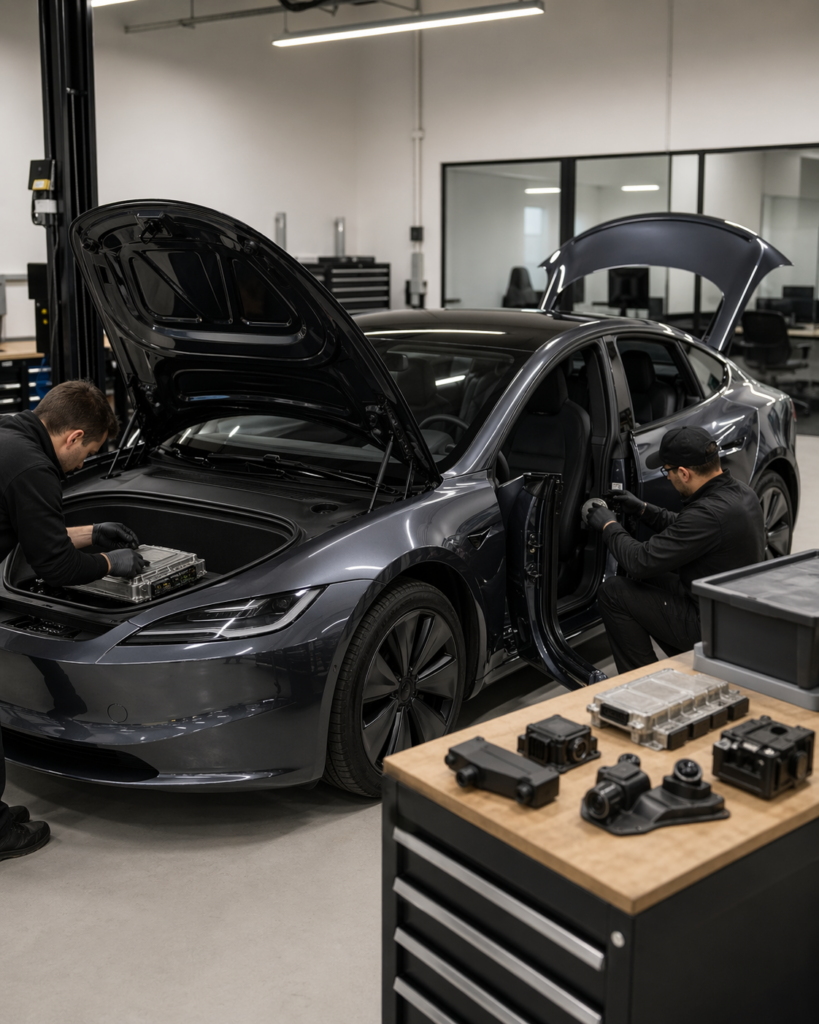
Tesla‘s response is a discounted trade-in programme. Furthermore, the company is offering affected customers the ability to upgrade their vehicle’s computer and cameras to enable future self-driving capability. Additionally, a V14-lite software update is planned for HW3 owners arriving in late June 2026 — providing some improvement, but not unsupervised operation. Consequently, HW3 owners face a choice: accept a discounted trade-in for a newer vehicle, pay for a hardware upgrade, or continue using the supervised version of FSD with its current limitations.
FSD Subscriptions Surge — on Newer Hardware
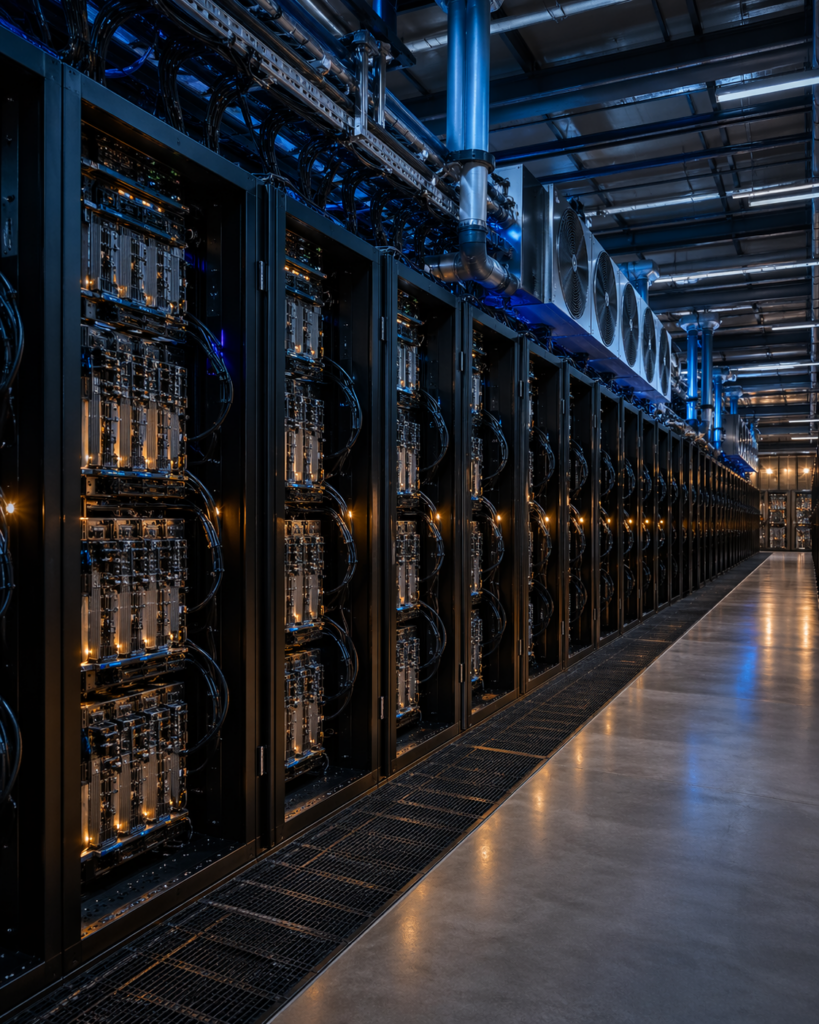
Despite the HW3 setback, Tesla‘s FSD subscription business is genuinely growing on supported hardware. Furthermore, active FSD subscriptions climbed 51% year-over-year to 1.28 million globally. That growth drove higher automotive ancillary revenue and contributed meaningfully to the Q1 top-line beat. Additionally, FSD is moving to a subscription-only model, with record net-new subscriptions in Q1.
Furthermore, Tesla secured regulatory approval to deploy FSD (Supervised) in the Netherlands. Musk stated the company expects FSD to launch across Europe this summer. Additionally, FSD V15 is targeted for the end of 2026 or early 2027, incorporating a total architectural overhaul. Musk described the V14 software as already safer than human drivers. Furthermore, he stated that unsupervised FSD would become available on a version of V14 or V15 where legally permitted. Consequently, the FSD roadmap is advancing — but only for vehicles on the newer AI4 hardware and beyond.
Robotaxi: Austin, Dallas, Houston — and No Accidents Yet
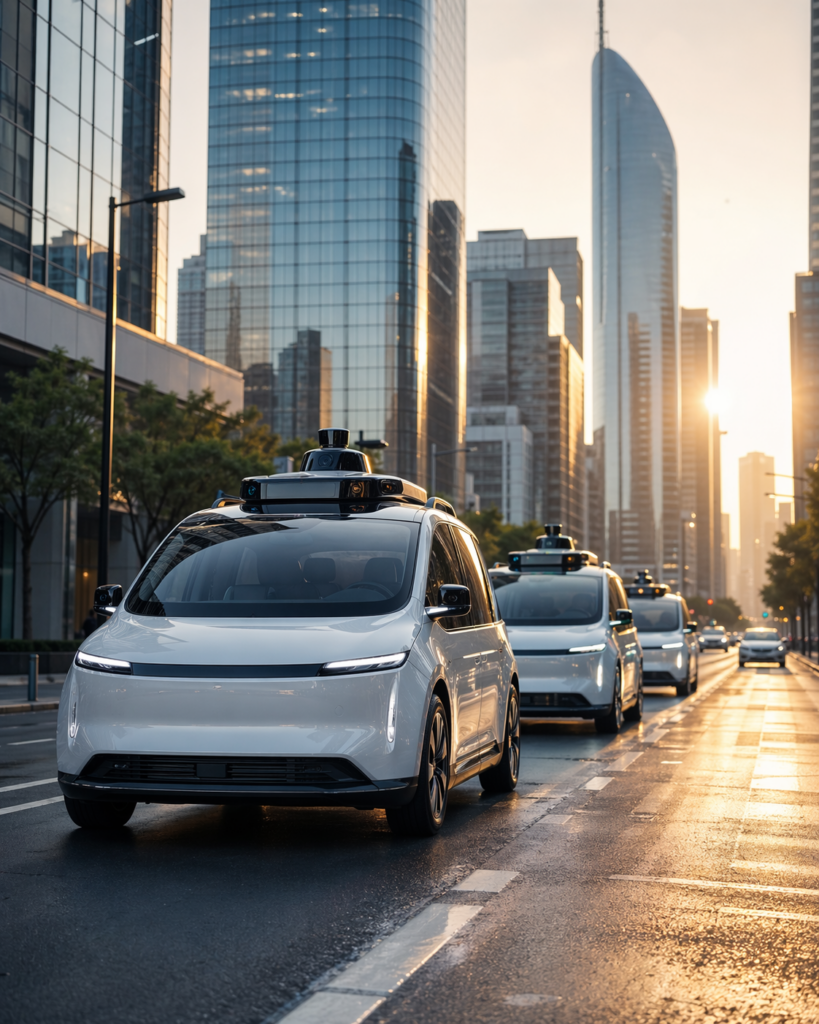
Tesla‘s Robotaxi service is operating in Austin, Texas, without a human safety operator. Furthermore, the company officially launched the service in Dallas and Houston in April 2026. However, access to vehicles in both cities is severely limited. Musk confirmed there have been no accidents or injuries in the unsupervised program to date. Additionally, paid Robotaxi miles nearly doubled sequentially from Q4 2025 to Q1 2026.
Musk stated the company hopes to have unsupervised FSD and Robotaxi operating in “a dozen or so” US states by the end of 2026. Furthermore, he described Tesla’s approach to the rollout as “very cautious.” The Cybercab — Tesla’s dedicated robotaxi vehicle — is expected to eventually replace the Model Y as the highest-volume vehicle on the network. Additionally, Robotaxi expansion into Europe is under active discussion, given the Netherlands regulatory approval. Consequently, the network is growing, but from a very small base.
Optimus: The Pivot That Changes Everything
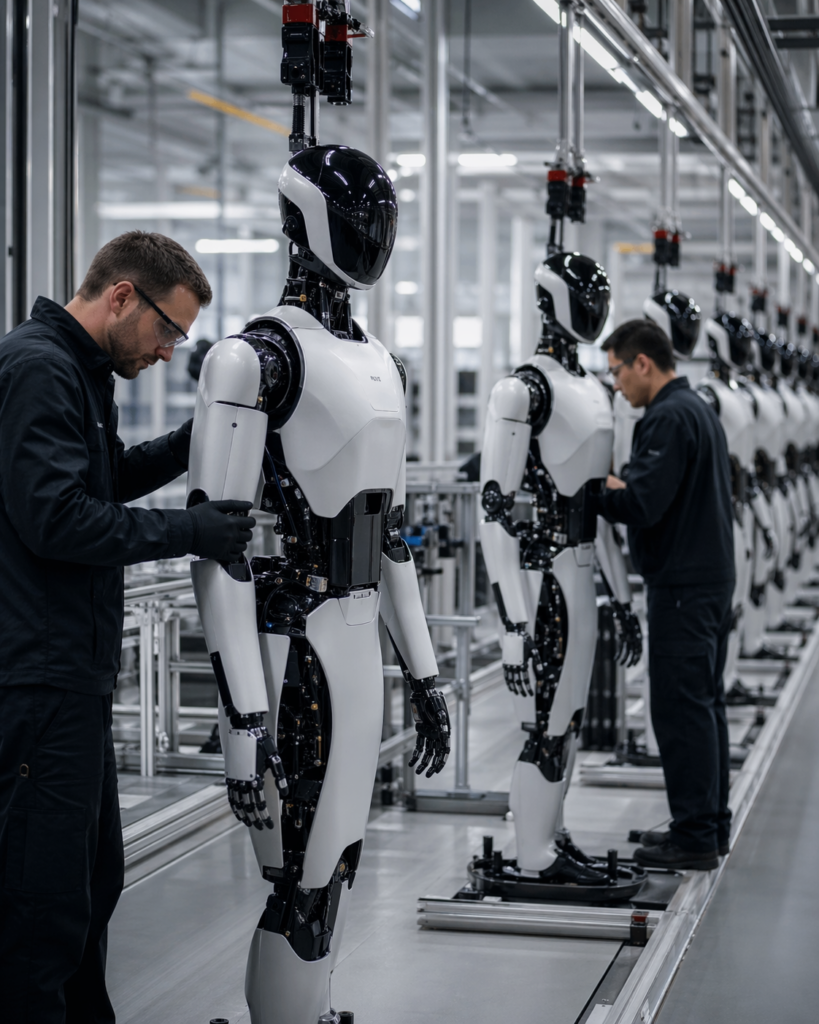
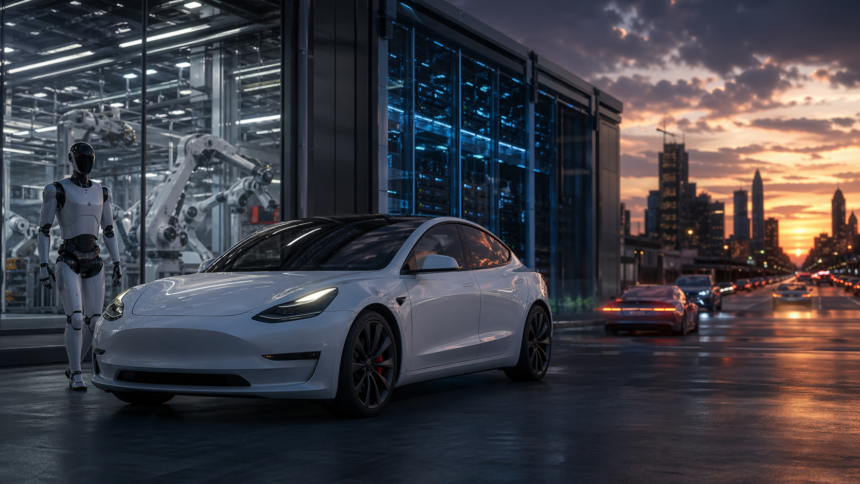
The most strategically significant news from the Q1 call may not be the FSD update. Furthermore, it may be what Tesla is building instead of cars. The company confirmed that its Fremont, California factory — previously home to the Model S and Model X — will be repurposed to manufacture Optimus humanoid robots. Tesla ended Model S and Model X production in January 2026. Furthermore, preparations for the first large-scale Optimus factory will begin in Q2 2026. The plan calls for a first-generation production line capable of producing 1 million robots per year.
Additionally, Tesla confirmed completion of the AI5 chip tape-out in April 2026. AI5 is the inference processor specifically designed to power Optimus units in the field. Furthermore, Musk indicated that Gigafactory Texas is intended to house Optimus V4 production at full scale — targeting 10 million Optimus robots per year at maximum capacity. Musk stated at the World Economic Forum in January that Tesla plans to sell Optimus to the public by the end of 2027 at a price between $20,000 (€18,420) and $30,000 (€27,630).
When asked about plans to demonstrate the next Optimus version, Musk was deliberately guarded. “Competitors literally do a frame-by-frame analysis and copy everything we’re doing,” he said. Consequently, he plans to unveil the next version closer to the start of production — which he estimated would occur “somewhere around the late July, August time frame.”
The Spending Problem
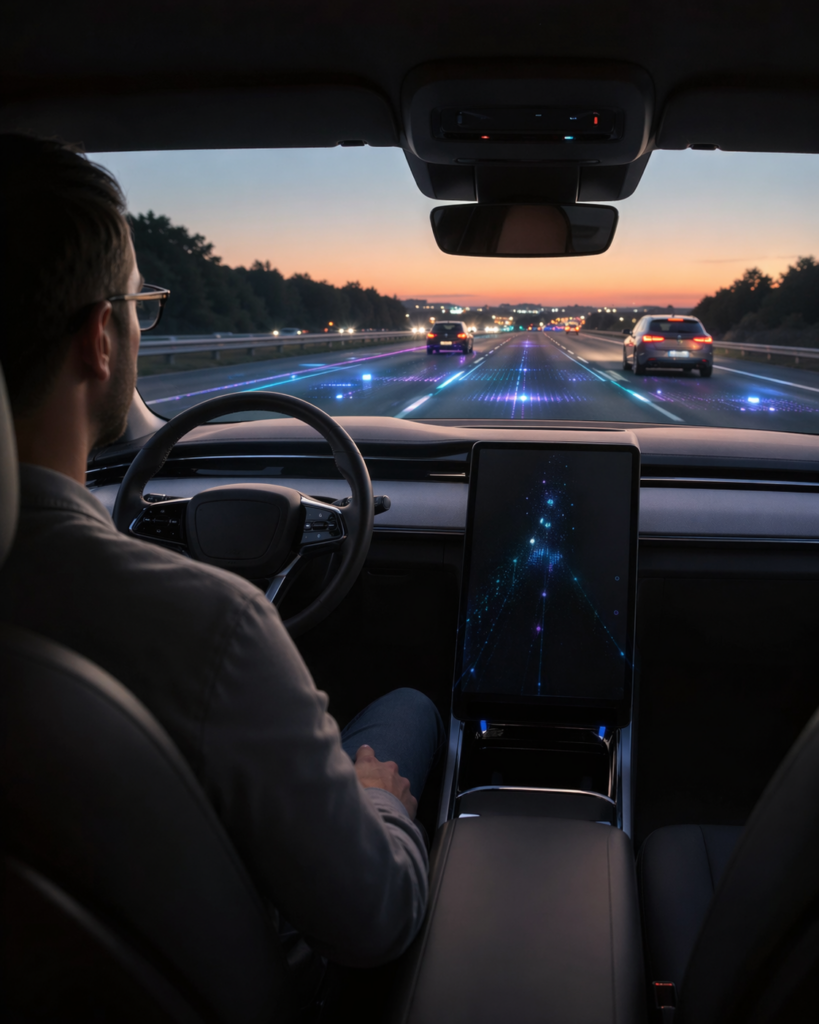
The earnings call also disclosed a substantial spending increase. Furthermore, Tesla confirmed that capital expenditure for 2026 will be $5 billion (€4.6 billion) above prior guidance. This increase reflects the scale of the AI and robotics infrastructure build-out. Furthermore, xAI — a SpaceX subsidiary after the February 2026 merger — is burning approximately $1 billion per month in compute infrastructure. Consequently, the Musk empire’s AI ambitions are expensive. Additionally, Tesla‘s own AI training infrastructure expansion, Optimus factory preparation, and FSD development all require capital simultaneously.
Musk has repeatedly described Tesla as being in an “awkward and potentially financially painful” transition from its core EV business to an AI and robotics company. Furthermore, the Q1 results reflect exactly that tension. Revenue grows at a solid 16% clip. However, margins are compressed. Additionally, inventory builds faster than deliveries grow. Consequently, the financial profile of this transition period does not yet match the ambition’s narrative.
TF Summary: What’s Next
Tesla faces its most complex quarter ahead in Q2 2026. Furthermore, several timelines converge simultaneously. Optimus factory preparations begin in Q2, FSD V14-lite reaches HW3 owners in late June, and FSD (Supervised) launches across Europe this summer. Additionally, the Robotaxi network continues its cautious expansion across US states. Musk targets a dozen states for unsupervised FSD and Robotaxi operations by year’s end. Consequently, the second half of 2026 is when the AI and robotics narrative must begin converting into measurable revenue at scale.
MY FORECAST: Furthermore, the HW3 trade-in programme will face scrutiny — both from affected owners and from regulators. Millions of customers paid premium prices for FSD on the explicit promise that their hardware was sufficient. The discounted trade-in and upgrade offer addresses the practical gap, but it does not resolve the underlying trust issue. Additionally, FSD V15’s architectural overhaul, targeted for late 2026 or early 2027, will be a defining technical milestone. Consequently, Tesla‘s credibility as an AI company depends on whether Unsupervised FSD delivers at scale — not just in Austin, but across the country and eventually the world.