



Keir Starmer summoned Meta, TikTok, Snap, X and YouTube to Downing Street. The message was blunt — and long overdue.
On 16 April 2026, Prime Minister Sir Keir Starmer did something no British Prime Minister had done before. He summoned the senior leaders of Meta, TikTok, Snap, Google (representing YouTube), and X to a formal meeting at 10 Downing Street. Together with Technology Secretary Liz Kendall, Starmer delivered a direct message to the companies whose platforms shape the daily lives of millions of British children. Furthermore, the meeting was no diplomatic courtesy call. It was a warning.
The Prime Minister stated plainly: “Social media shapes how children see themselves, their friendships and the world around them. When that comes with real risks, looking the other way is not an option. I will take whatever steps are necessary to keep children safe online. The consequences of failing to act are stark. We owe it to parents, and to the next generation, to put children’s safety first — because they won’t forgive us if we don’t.” Consequently, the tech industry heard the message it had been quietly resisting for years: the current situation is not acceptable and will not continue.
What’s Happening & Why It Matters
What Starmer Actually Put on the Table
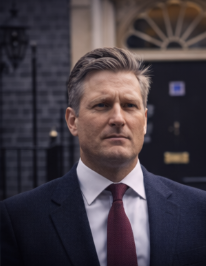
The Downing Street meeting did not occur in isolation. Furthermore, it arrived midway through the UK government’s active three-month public consultation — titled “Growing Up in the Online World” — which launched on 2 March 2026 and closes on 26 May 2026. By the time of the meeting, the consultation had already attracted more than 45,000 responses, including from nearly 6,000 young people. Therefore, ministers arrived with considerable public mandate.
The consultation is examining a broad range of potential measures. These include an Australia-style ban on social media for children under 16, digital curfews that restrict platform access during overnight hours, limitations on addictive design features such as infinite scrolling and autoplay, stronger controls on AI chatbots, and stricter enforcement of existing minimum age rules. Additionally, the government is conducting real-world pilots with families and teenagers to test how specific restrictions would operate in practice before committing to legislation.
Starmer’s government has already acted ahead of the consultation’s conclusion. Under emergency powers secured prior to the meeting, ministers can move quickly to implement restrictions once the consultation ends. Furthermore, ministers confirmed they have the legal powers to act — and intend to use them.
The Parliamentary Battle Running in Parallel
The Downing Street meeting took place against a fractious parliamentary backdrop. The Children’s Wellbeing and Schools Bill has been the key legislative vehicle for child online safety measures. Furthermore, it has become a flashpoint between the two chambers. The House of Lords voted twice to introduce an immediate social media ban for under-16s as an amendment to the bill — led by Lord Nash, a former Conservative schools minister. Both times, the House of Commons rejected the amendment. The bill remained in “ping pong” between the chambers as of 16 April 2026.
Education Minister Olivia Bailey defended the government’s rejection of the Lords amendment, explaining: “Instead of the narrow amendment proposed in the House of Lords, our consultation allows us to address a much wider range of services and features.” Therefore, the government’s position is not that a ban is off the table. Rather, a consultation-based approach allows for a more comprehensive regulatory response than a single blunt instrument.
Significantly, however, the government has agreed to amendments that enable it to make regulations requiring internet service providers to prevent or restrict children’s access to specified features or functionalities of social media platforms. Consequently, the legal scaffolding for sweeping action is now in place — even without an outright age ban passing into law.
The Evidence Behind the Urgency

The scale of the problem documented in the sources behind this meeting is stark. The Independent Inquiry into Child Sexual Abuse (IICSA) estimated that approximately 500,000 children per year experience child sexual abuse of some kind in the UK, with around 100,000 incidents reported annually. Of those, 40% involve online offending. Furthermore, the Internet Watch Foundation (IWF) confirmed that 2025 was the worst year on record for child sexual abuse material online. IWF analysts confirmed 312,000 reports in 2025 — a 7% increase on the previous year. Additionally, the number of AI-generated child sexual abuse videos rose from 13 in 2024 to an astonishing 3,440 in 2025 — an increase of over 26,000% in a single year.
The Molly Rose Foundation — named after 14-year-old Molly Russell, who took her own life in 2017 after social media algorithms served her more than 2,000 harmful posts in her final six months — has been one of the most prominent voices demanding stronger action. Foundation CEO Andy Burrows responded to the Downing Street meeting with a direct call for Starmer to “decisively commit to strengthening regulation to make unsafe and addictive design a thing of the past.” Furthermore, Molly Rose Foundation research found that 95% of recommended posts on certain teenage accounts contained content related to suicide or self-harm. Additionally, nearly half of the girls (49%) had been exposed to suicide, self-harm, depression, and eating disorder content on social media.
The figures do not describe a niche or edge-case problem. They describe a systemic failure that is occurring at the heart of everyday childhood experience in the UK.
What Ofcom Is Already Enforcing
The Online Safety Act 2023 is the legal framework underpinning all of this activity. Furthermore, its children’s safety duties came into force on 25 July 2025. Ofcom is actively using its new enforcement powers. In March 2026, Ofcom fined 4chan £450,000 for failing to implement effective age checks to prevent children from accessing pornography. Additionally, it fined AVS Group £1 million in December 2025 for the same failure. X (formerly Twitter) is under formal investigation for alleged failures to protect users from illegal content, following concerns about Grok AI generating content that may constitute child sexual abuse material.
Furthermore, Ofcom has written directly to Facebook, Instagram, Roblox, Snapchat, TikTok, and YouTube — the platforms children use most — setting four clear demands for further action. Platforms had a 30 April 2026 deadline to report on the steps they will take. Additionally, the National Crime Agency‘s Child Sexual Exploitation and Abuse Industry Reporting Portal came into mandatory operation on 7 April 2026, requiring all regulated user-to-user service providers to report detected child sexual abuse and exploitation content.
However, Ofcom‘s own industry bulletin acknowledged the limits of progress to date: “While there are many examples of progress to be welcomed, the industry has not done enough.” Consequently, the regulator’s tone is no longer conciliatory.
The Industry Pushes Back — With Caveats
Not all pushback from the platforms is cynical. Google UK‘s Managing Director Kate Alessi warned against blanket age bans, stating: “We believe blanket bans take choices away from parents and push kids out of supervised spaces.” Furthermore, she argued that such bans drive young people toward less-regulated, more dangerous corners of the internet. Several platforms have taken meaningful voluntary steps, including disabling autoplay for younger users, introducing parental screen time controls, and establishing digital curfews on a product-by-product basis. Consequently, the meeting did not simply pit the government against an entirely resistant industry.
Nevertheless, voluntary measures operating at different standards and covering different platforms create the exact fragmented protection environment that child safety campaigners consistently criticise. Furthermore, the arrival of US court verdicts finding Meta and YouTube liable for designing deliberately addictive platforms that caused harm to a young user — decided by a California jury in March 2026 — significantly changed the political atmosphere. Lord Nash described those cases as “game changers” for the campaign in favour of a mandatory under-16 ban. Therefore, the platforms’ resistance to stronger regulation is increasingly difficult to sustain in public.
TF Summary: What’s Next
The public consultation closes on 26 May 2026, after which the UK government will publish its findings and set out the regulatory actions it intends to take. Furthermore, Ofcom is due to publish its report to the government on the effectiveness of age assurance by July 2026, and an expert panel on children’s online safety is expected to deliver recommendations by summer 2026. Consequently, the second half of 2026 will see concrete legislative and regulatory actions emerge — shaped by both the consultation responses and whatever commitments Meta, TikTok, Snap, X, and Google gave at Downing Street.
The broader trajectory is clear. The UK is moving — with greater speed than many predicted — toward significantly stronger online safety requirements for platforms that reach children. Whether those requirements take the form of an outright age ban, mandatory feature restrictions, enhanced age assurance, or a combination of all three, the political will to act is evidently present. Furthermore, the Online Safety Act 2023‘s enforcement powers give the government and Ofcom the tools to back words with consequences. As Starmer made clear — no platform gets a free pass, and looking the other way is no longer an option.
— Text-to-Speech (TTS) provided by gspeech | TechFyle