


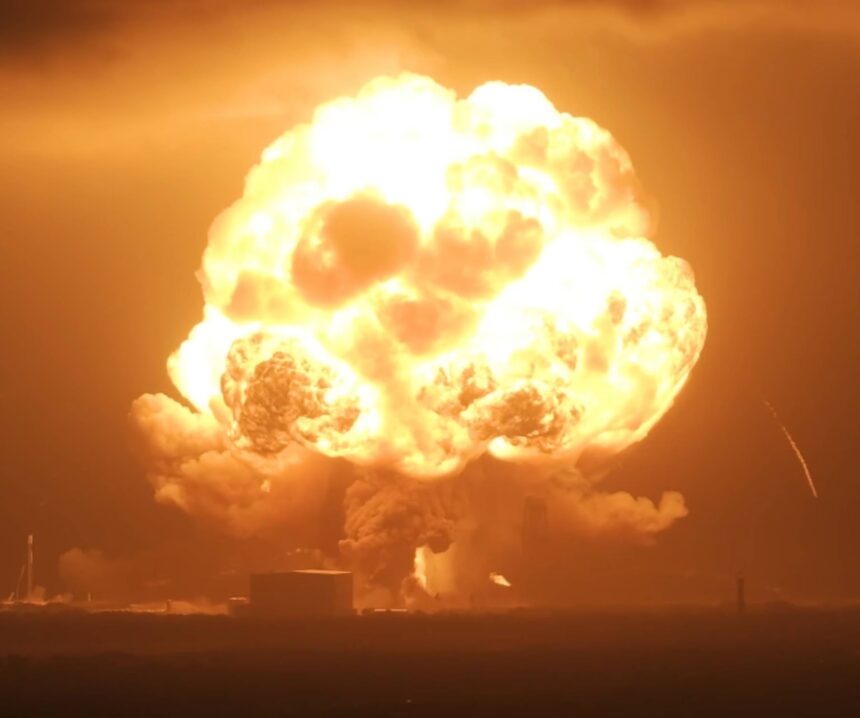
The Blue Origin New Glenn explosion is the worst failure in Blue Origin‘s history — and one of the largest rocket explosions on a US launch pad in decades. At approximately 9 p.m. EDT, Blue Origin began what it expected to be a routine pre-launch static fire of the New Glenn rocket’s seven BE-4 first-stage engines at Launch Complex 36 at Cape Canaveral Space Force Station in Florida. The rocket was fully fuelled. A fully fuelled rocket is carrying hundreds of thousands of kilograms of liquid oxygen and liquid natural gas. When ignition went wrong, the result was not a failed engine test.
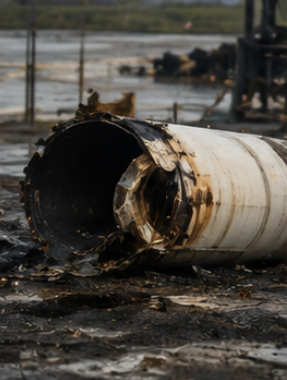
It was an explosion that sent a fireball skyward, scattered debris consistent with the rupture of composite overwrapped pressure vessels (COPVs) across the pad. It shook homes miles away along Florida’s Space Coast. No injuries were reported. The rocket — and significant portions of the launch pad infrastructure — were destroyed. Jeff Bezos posted on X: “All personnel are accounted for and safe. Very rough day, but we’ll rebuild whatever needs rebuilding and get back to flying.”
What’s Happening & Why It Matters
What a Static Fire Test Is — and Why This One Failed
A static fire — also called a hotfire — is a routine pre-launch test where a rocket’s engines are ignited briefly while the vehicle is secured to the launch pad. It is the final major verification step before a launch attempt. All seven of New Glenn’s BE-4 engines fire for a controlled duration. Engineers evaluate propulsion performance, confirm ground system integration, and clear the vehicle for flight. SpaceX conducts static fires before every Falcon 9 launch. NASA conducts them for SLS. They are designed to be low-risk events precisely because the vehicle is restrained. They occasionally go wrong, but not usually like this.
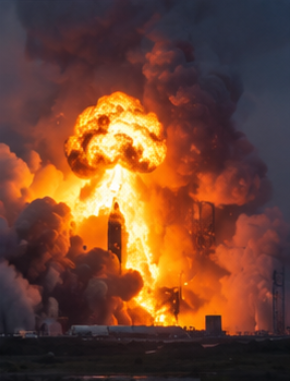
The specific cause of the Blue Origin New Glenn explosion was not immediately confirmed. Blue Origin‘s initial statement described only “an anomaly.” What the videos clearly showed was not a controlled abort. The explosion produced a large fireball visible from miles away. Fires continued at the pad for hours. Aerial analysis suggested the tank farm — the ground-side propellant infrastructure — sustained significant damage alongside the vehicle itself. A fully fuelled rocket exploding on a pad creates a cascading failure profile that is qualitatively different from an anomaly during a low-propellant test.
The Mission That Won’t Fly: Amazon’s Project Kuiper
New Glenn’s planned fourth mission — NG-4 — was scheduled to carry 48 Amazon Project Kuiper broadband satellites to orbit. Amazon‘s Project Kuiper is the company’s answer to SpaceX Starlink — a low Earth orbit satellite internet constellation targeting global broadband coverage. NG-4 was supposed to be the first of 24 launches that Amazon has contracted Blue Origin to conduct. Those 24 launches represent a major commercial anchor contract — the revenue foundation on which Blue Origin‘s business case for New Glenn rests.
At the same time, NG-4 was not just a commercial milestone. It was a return-to-flight mission. New Glenn’s third mission in April 2026 ended with a cryogenic failure in the upper stage — the same failure mode that the FAA previously attributed to a cryogenic leak freezing a hydraulic line. That failure caused the second stage to fail to deliver an AST SpaceMobile satellite to the correct orbit, resulting in its premature re-entry. NG-4 was supposed to demonstrate that Blue Origin had identified and corrected that failure. Instead, the vehicle that was meant to prove its reliability was destroyed on the pad.
The Problems Building Since January 2025
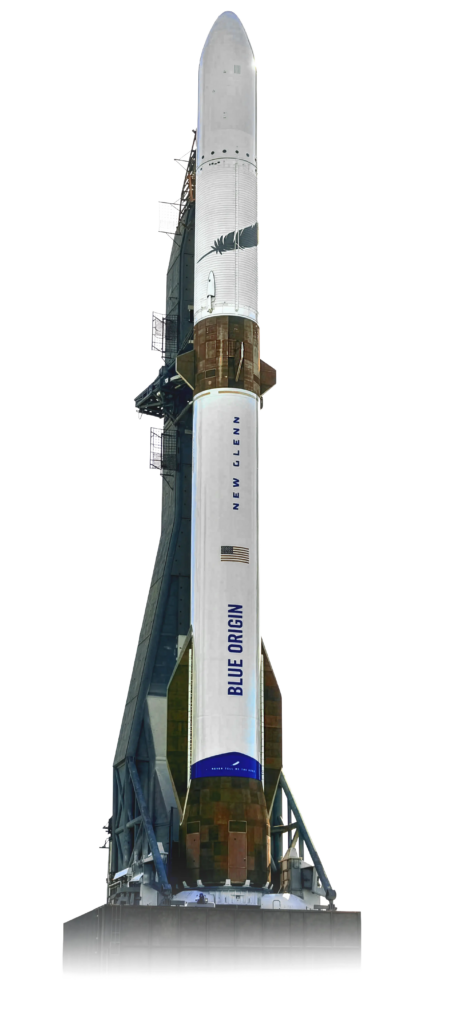
The Blue Origin New Glenn explosion did not occur in isolation. New Glenn’s debut flight on 16 January 2025 was declared a success — reaching orbit — but the company missed its bonus goal of recovering the first-stage booster after failing to reignite the landing engines. Mission two in November 2025 achieved the first successful booster landing on Blue Origin’s ocean drone ship. Mission three in April 2026 reused that booster — landing it again successfully — but lost the upper-stage payload due to a cryogenic failure. Today, the fourth vehicle has been destroyed before it could fly at all.
Beyond the flight history, a secondary incident several weeks before the explosion had already indicated systemic risk. A Glenn Stage 2 test article at a Kennedy Space Center facility experienced a smaller explosion that breached the roof of the building. That incident should have placed the programme under heightened scrutiny heading into the NG-4 static fire. Blue Origin had planned as many as 12 New Glenn launches in 2026. That schedule is now unachievable.
The NASA Moon Base Implications
The timing of the Blue Origin New Glenn explosion could not be worse from a NASA perspective. As TF covered in its NASA moon base article, NASA awarded Blue Origin a Moon Base I contract worth up to $280 million — using the Blue Moon Mark 1 Endurance Lander to deliver scientific payloads to the lunar south pole. That mission launches “no earlier than fall 2026” using the New Glenn launch vehicle. With the NG-4 booster destroyed and the launch pad infrastructure significantly damaged, the fall 2026 timeline for Moon Base I is in serious jeopardy.
NASA Administrator Jared Isaacman acknowledged the incident publicly. “Spaceflight is unforgiving, and developing new heavy-lift launch capability is extraordinarily difficult. We will work with [Blue Origin] as they investigate and look ahead.” That statement is warm — and does not address the operational consequences for Artemis programme planning. Beyond Moon Base I, Blue Origin holds the Blue Moon Mark 2 crewed lander contract — the vehicle that will eventually land astronauts on the lunar surface. Mark 2 depends on New Glenn as its launch vehicle. Every delay to New Glenn is a delay to the crewed lunar landing timeline.
SpaceX’s Response — and What It Reveals
SpaceX CEO Elon Musk responded to the explosion on X with characteristic brevity. “Most unfortunate. Rockets are hard.” That response — simultaneously sympathetic and pointed — is the competitive reality. Every month Blue Origin spends investigating and rebuilding is a month in which SpaceX extends its launch market lead. SpaceX conducted 165 Falcon 9 launches in 2025. Blue Origin had conducted three successful New Glenn missions in 18 months before the explosion. The commercial gap between the two companies — already vast — just widened significantly.
Space expert Ken Kremer, founder of Space UpClose, offered a more measured take. “They will recover. You can’t just give up when something goes wrong. But it also means you have to redouble your efforts.” That optimism is appropriate — Blue Origin has Jeff Bezos‘ personal capital and a deep engineering bench behind it. By contrast, rebuilding a destroyed rocket and a damaged launch pad is not a weeks-long project. It is a multi-month undertaking at minimum.
The Amazon Project Kuiper Commercial Pressure
The commercial stakes extend beyond Blue Origin itself. Amazon‘s Project Kuiper needs satellites in orbit. The 24-launch Blue Origin contract was designed to accelerate that deployment. Amazon is working with United Launch Alliance and Arianespace for additional Kuiper launches. By contrast, losing Blue Origin as an active launch provider for an extended period increases the programme’s dependence on those alternative vendors. SpaceX‘s Starlink — which already has 10.3 million subscribers — does not slow down while Kuiper waits for New Glenn to return to flight.
TF Summary: What’s Next
Blue Origin has launched an internal investigation. The FAA confirmed the static fire was not within the scope of its licensed activities — meaning no new FAA investigation is triggered. However, Blue Origin must complete its investigation and implement corrective actions before the FAA will allow the next New Glenn launch to proceed. No timeline for the investigation’s completion or return to flight has been announced. NASA has not confirmed whether the Moon Base I fall 2026 timeline is achievable. Pad infrastructure damage assessment is ongoing.
MY FORECAST: The Blue Origin New Glenn explosion will delay the NG-4 mission by at least six months, and more likely nine to twelve months. Rebuilding a destroyed booster, repairing significant damage to pad infrastructure, identifying the root cause of the static-fire anomaly, implementing corrective actions, successfully conducting a new static fire, and receiving FAA clearance for a return-to-flight launch is not a 90-day process. Moon Base I’s fall 2026 launch window is effectively closed. The more likely timeline is spring or summer 2027 — assuming the investigation produces clear corrective actions and the pad rebuild proceeds without additional complications. Amazon’s Project Kuiper will accelerate its reliance on ULA and Arianespace in the interim. Blue Origin will recover. That much is certain. The question is whether New Glenn can recover quickly enough to remain commercially relevant in a launch market that SpaceX dominates more decisively with each passing quarter.