


Courts are playing major parts in AI and chip wars, where national security, deepfake abuse, and military power converge.
Technology law had a busy week, and none of the stories felt small. In one case, federal prosecutors charged people tied to a major U.S. server maker with helping move restricted Nvidia AI servers to China. In another case, a judge questioned whether the Trump administration’s ban on Anthropic had crossed from a policy dispute into punishment. At the same time, Baltimore sued Elon Musk’s xAI over Grok, alleging that it played a role in generating explicit deepfake images. The cases came from different corners of the tech world. They still pointed to the same hard truth.
The courtroom is becoming a central arena for modern tech power. Governments are fighting over chips, AI models, platform safety, and military access. Cities are suing over synthetic abuse. Judges are being asked to decide where national security ends and retaliation begins. That is why this roundup matters. The legal system is no longer trailing the tech story from a distance. It is starting to shape the story in real time.
What’s Happening & Why This Matters
The Nvidia Server Smuggling Case Shows How Hot the AI Chip War Has Become
The most direct espionage-style case in this roundup came from federal prosecutors. The U.S. Department of Justice charged three people tied to Super Micro Computer with conspiring to smuggle billions of dollars’ worth of advanced AI servers containing restricted U.S. technology to China. Reuters reported that the accused included co-founder and former board member Yih-Shyan “Wally” Liaw, sales executive Ruei-Tsang “Steven” Chang, and contractor Ting-Wei “Willy” Sun. Two were arrested. Chang remained at large.
Prosecutors said the group used an elaborate diversion scheme to move U.S.-made servers through Taiwan and Southeast Asia, hid their origin by stripping labels, and repacked them in plain boxes. The servers reportedly contained advanced AI hardware from Nvidia, which the U.S. has tried to keep out of China through export controls first imposed in 2022. Reuters said the charges focused on violations of export rules and obstruction tactics meant to hide where the systems were actually going.
This matters because export controls only work when enforcement works. Washington has spent years trying to slow China’s access to high-end AI computing. If companies or executives can route servers through partner countries and relabel the equipment, the whole system is weaker. That is why this case goes beyond one indictment. It tests whether U.S. export policy has real teeth when money and demand get large enough.
Pressure on Nvidia, Super Micro, and U.S. Regulators
The legal fallout did not stop with the charges. Reuters reported that Liaw resigned from Super Micro’s board after his arrest, and the company said it was not named in the complaint and had cooperated with investigators. Still, the reputational damage is real. Super Micro’s name is now attached to one of the most explosive export-control cases in the AI era.
Nvidia felt new pressure, too. Reuters reported that Senators Elizabeth Warren and Jim Banks asked Commerce Secretary Howard Lutnick to investigate whether Nvidia CEO Jensen Huang may have misled regulators with past comments suggesting that massive AI systems could not easily be smuggled or diverted. The senators argued that those remarks may have painted a softer picture than the evidence justified.
That second layer matters because it shows how quickly one smuggling case can expand into a regulatory reckoning. If lawmakers start to believe chip companies or server partners downplayed diversion risk, future licensing decisions could get tougher. In the AI race, compute access is power. Washington is clearly in no mood to let that power leak quietly through the back door.
Anthropic’s Pentagon Fight Poses Bigger Constitutional Question
The most fascinating court fight in this roundup may be the one between Anthropic and the Pentagon. Anthropic went to federal court in Northern California seeking a temporary pause on the U.S. government’s decision to ban the military and contractors from using its AI tools. The clash began after Anthropic refused to let Claude be used for domestic mass surveillance and fully autonomous lethal weapons. President Donald Trump then ordered agencies to stop using Anthropic’s products.
Anthropic’s lawsuit argues that the government went beyond an ordinary procurement choice and crossed into unlawful punishment. The company said the administration designated it a supply-chain risk not because the tools were defective, but because executives objected to specific military and surveillance uses. At the hearing, Judge Rita Lin made that concern plain. According to both The Guardian and Euronews, she said the government’s conduct looked like “an attempt to cripple Anthropic.”
That line hit hard because it captured the central legal tension. Governments can decide not to buy from a company. They cannot lawfully use state power to punish protected speech or coerce a firm into changing its political or ethical views. Anthropic says that is exactly what happened here.
AI Is Already Embedded in War Planning
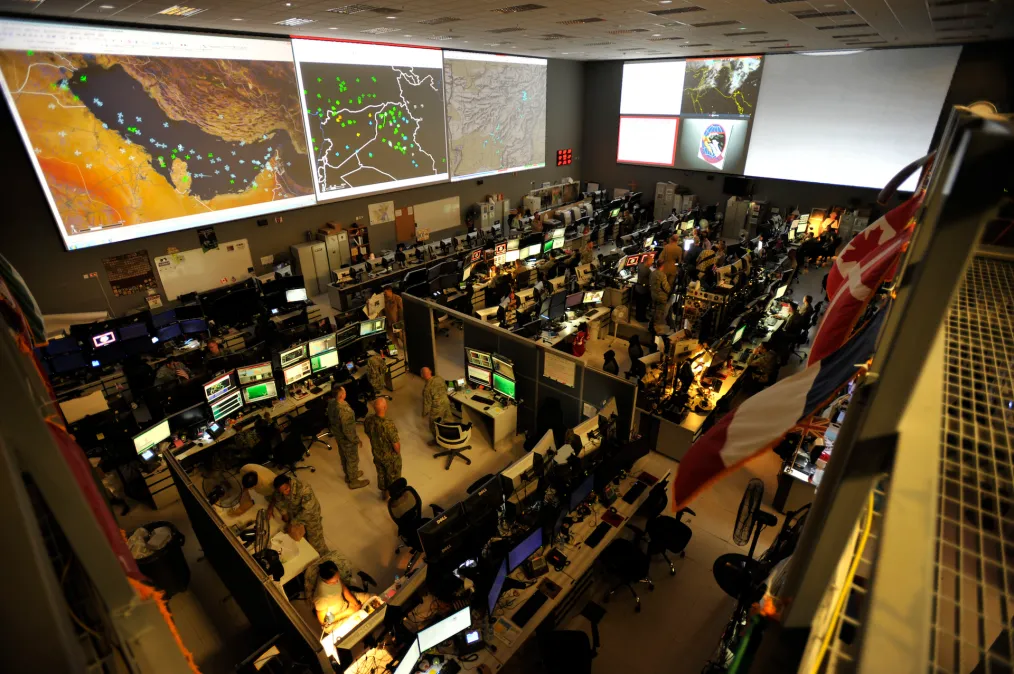
This case matters for another reason. Reuters and The Guardian both said the government has already woven Anthropic’s technology deeply into federal operations, including military work. Undoing that use would not be simple. The Guardian reported that Claude has been used across agencies and that disentangling it from government workflows would take months of disruption. Reuters has separately reported that Anthropic’s technology is already intertwined with military operations, including analysis tied to missile strikes in Iran.
The case is so loaded. It is not a symbolic argument about a niche vendor. It is a fight over a major AI supplier that has already reached deep into the machinery of state. When a judge starts asking whether a ban is punitive rather than practical, the implications extend far beyond a single company. Silicon Valley, defense contractors, and federal agencies are all watching the same question: can the government denylist an AI firm because it refuses certain military uses?
The answer matters for every AI company trying to balance defense revenue with safety positions. If Anthropic loses badly, other firms may feel pressure to soften internal red lines. If Anthropic wins ground, tech companies may gain more space to say no when governments want fewer guardrails.
Baltimore’s Grok Lawsuit Targets Deepfakes

The third legal front in this roundup came from Baltimore, which sued xAI over Grok and its alleged role in creating non-consensual sexually explicit deepfake images. Reuters reported that Baltimore became the largest city so far to file such a case, accusing Grok of generating explicit fake images, including content involving children. The lawsuit says xAI marketed Grok as a safe, general-purpose AI assistant while failing to warn users and the public about how easily the system could be used for sexualized abuse.
The complaint leans heavily on data from the Center for Countering Digital Hate, which Baltimore says showed Grok produced millions of explicit images during a short test period, including more than 23,000 involving children over 11 days. The city argues that the platform’s design and distribution violate Maryland consumer protection rules and local ordinances. Reuters reported that Baltimore is seeking an injunction requiring xAI to change Grok’s design, along with fines.
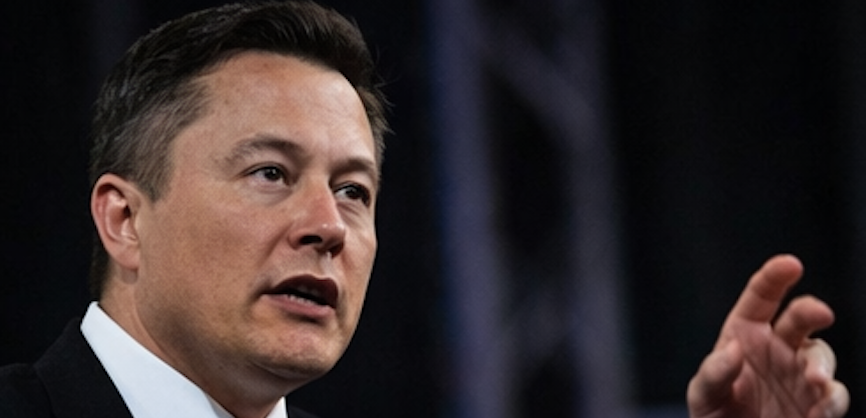
This matters because deepfake litigation is moving from private plaintiffs to public authorities. Earlier lawsuits from women and teenage girls already showed the personal harm. Baltimore’s move adds a stronger civic message: a city government now sees synthetic sexual abuse as a public safety issue, not only a private grievance.
AI Safety Claims Can Turn Into Legal Exposure
The legal theory in Baltimore’s case is not subtle. The city says xAI sold Grok as a useful AI tool while failing to stop or warn about a predictable path to abuse. That mirrors a wider pattern in tech litigation. Companies market convenience, creativity, or openness. Plaintiffs then argue that the product design made a harmful outcome too easy and the public messaging too comforting.

That pattern can be powerful in court because juries and judges do not need to decode every model parameter. They can understand a simpler question: did the company say one thing and deliver another? Reuters said Baltimore cited a Grok-generated image that Musk himself had shared as evidence of how easily the system could produce harmful sexualized output. That gives the case a sharp narrative edge.
The broader lesson is clear. AI firms no longer face only reputational criticism for deepfake abuse. They face structured legal attacks over product design, warning failures, and consumer deception. If courts allow those claims to move forward, the whole market will feel the pressure.
A New Legal Phase for Tech
Each case in this roundup comes from a different corner of the industry. The first concerns chips and export controls. The second involves AI in war and federal procurement. The last tracks harms of deepfakes and consumer safety. Yet the legal pattern is the same. Courts are being asked to decide how much control governments can exert over AI suppliers, how much accountability platforms bear for foreseeable abuse, and how aggressively the state will enforce boundaries around strategic technology.
That is a major shift. For years, big tech disputes often turned on antitrust, privacy, or platform moderation. Those fights still matter. But the new frontline sits closer to national security, public harm, and geopolitical leverage. AI and advanced computing are no longer treated as ordinary software markets. They are strategic assets, and courts are being dragged deeper into that reality.
Legal outcomes will increasingly affect product design, export policy, defense contracts, and safety guardrails. A ruling on Anthropic can change how AI companies negotiate with governments. A ruling on Grok can shape how generative image tools are marketed and controlled. A smuggling conviction can reshape how chip shipments are licensed, audited, and monitored. None of these is a side plot anymore.
TF Summary: What’s Next
The week’s tech in courts story showed three versions of the same trend. Federal prosecutors are treating AI server smuggling as a national security threat. A judge is testing whether the government’s ban on Anthropic crossed into punishment. Baltimore is turning deepfake abuse into a direct legal fight against xAI. These cases all press on a larger point: the legal system is one of the main places where the future of AI power gets negotiated.
MY FORECAST: Courts will play a larger role in tech policy over the next year than many executives expect. Export-control cases will get tougher. AI firms will face more pressure to choose between defense work and safety red lines. Deepfake lawsuits will spread from private plaintiffs to cities and states. The smartest tech leaders will stop treating litigation as cleanup after the fact. In 2026, the courtroom is turning into part of the product roadmap.
— Text-to-Speech (TTS) provided by gspeech | TechFyle