



The Wall Street Journal analysed 1,105 videos. None of the bets were real. Creators filmed on near-perfect copies of the Polymarket website, celebrated $900,000 in fabricated wins, and were told not to say they were paid. The videos racked up 140 million views. The actual bets would have lost $166,000.
Polymarket’s fake viral video campaign is the most damaging investigation the prediction market has faced since its 2022 CFTC fine. A Wall Street Journal investigation found none of the roughly $1.9 million in bets shown across 1,105 videos were real. Polymarket paid mostly college-age creators between $2,000 and $3,000 per month to film themselves making trades and winning — on near-perfect clone websites that were not the live exchange. Creators placed trades on clones that they never made on the live exchange. The campaign targeted American users specifically — despite the fact that Polymarket has barred US access since a 2022 CFTC settlement. Marketing agency Virality paid influencers only if at least 60% of their viewers were in the US. The videos reached 140 million views on TikTok, YouTube, and Instagram. Across 118 videos showing creators celebrating wins, those wagers would have lost more than $166,000 in reality.
What’s Happening & Why It Matters
How the Clone Sites Worked
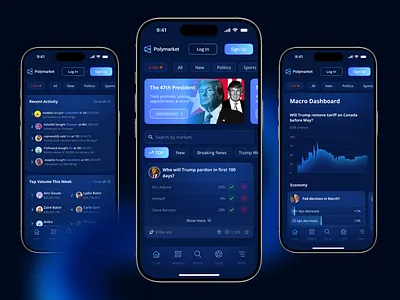
Polymarket’s fake viral video campaign relied on infrastructure that Polymarket built specifically to deceive viewers. Polymarket built near-perfect copies of its own website for the shoots. One ran at the misspelled address poiymarket.com — which reads like the real polymarket.com when the “i” sits in capitals. That specific detail is not a minor footnote. Polymarket registered a misspelled domain designed to be visually indistinguishable from the real site in a video thumbnail. Creators filmed on these clones, placed trades that never hit the blockchain, and showed winning reactions to bets that never existed.
The creator videos were then amplified by a “social-media army” deployed by a marketing contractor. The campaign was systematic and coordinated. By contrast, it ran entirely off Polymarket‘s public blockchain — the very infrastructure the company markets as its core trust mechanism. Polymarket settles every real trade on a public blockchain that anyone can audit. Its growth campaign relied on the opposite — staged trades on fake sites that no ledger could verify.
The Disclosure Failure — and the Late-Added Disclaimer
The deception extended beyond the fake trades themselves. Creators were told to hide the deal. Some only added “@polymarket partner” to their bios after Journal reporters began asking questions. That sequence is important. The disclosure did not precede the campaign. It arrived after journalists contacted creators. The WSJ said the company also told those creators not to specify that they had been paid by Polymarket.
One creator defended the practice to the Wall Street Journal. Razeen Khan, a college student and creator who worked with Polymarket until March, compared the practice to commercials that make fast food look more appealing than it is in real life: “We’re depicting what actually happens.” That comparison does not hold. A fast food commercial is labelled as advertising. These videos were explicitly not labelled — and the platform told creators not to label them.
The Regulatory Stakes — US Entry Plans Now Complicated
Polymarket’s fake viral video campaign is particularly damaging given Polymarket‘s stated strategic ambitions. The company has been working toward regulated US market re-entry since its 2022 CFTC fine and Panama reincorporation. The fake campaign specifically targeted American users, who can still reach the offshore site through a VPN. Trust questions are not new. A separate Journal analysis found most users lose money, even as the videos sold easy profit
Furthermore, the regulatory environment is tightening. Minnesota recently became the first US state to make running a prediction market a felony, and the Trump administration sued to stop the law before it takes effect in August. Additionally, federal officials are using AI tools to hunt suspicious trades on both Polymarket and Kalshi, including offshore accounts reached through VPNs. A company that wants regulated US re-entry just ran a campaign that specifically targeted the American users it is legally prohibited from serving — using fake content and undisclosed paid partnerships.
The NYSE Investment — and the Timing Problem
The revelation is awkward for Polymarket‘s most prominent recent backer. The staged-win campaign cuts against the pitch Polymarket has been making to serious investors, among them the parent company of the New York Stock Exchange, which agreed to commit billions to the firm at a valuation near the time the campaign was running. The Intercontinental Exchange — parent of the NYSE — committed to Polymarket during the same period the WSJ investigation documents the fake video campaign running.
By contrast, Polymarket responded to the investigation with a commitment to audit its promotional content. “Committed to maintaining accurate, fair, and transparent markets” is the phrase the company used. That language applies to its betting markets. Whether it applies to its marketing materials was not addressed.
Competitor Kalshi — Gaining While Polymarket Defends
The timing benefits Polymarket‘s primary competitor. Kalshi has reportedly tripled its annualised revenue since November, bringing that figure to $2 billion. The company is now in talks with banks about going public, though that is not likely to happen until late 2027 or 2028. Kalshi operates under CFTC authorisation within the United States — a regulatory status Polymarket does not hold. Every week Polymarket spends defending its marketing practices is a week Kalshi spends converting prediction market interest into legally accessible US market share.

TF Summary: What’s Next
Polymarket has pledged to audit its promotional content. No timeline for that audit has been given. The FTC could open a deceptive advertising investigation under Section 5 of the FTC Act — undisclosed paid promotions are a clear enforcement priority. The CFTC already has Polymarket in its regulatory history. US regulators using AI to detect suspicious trades on the platform will now also have the WSJ investigation as documented evidence of deceptive consumer marketing.
MY FORECAST: Polymarket’s fake viral video campaign will produce a formal FTC investigation within 90 days. The combination of undisclosed paid partnerships, clone websites, and targeted reach to legally prohibited US users is a near-perfect FTC enforcement profile. By contrast, the larger commercial consequence is Polymarket‘s US re-entry timeline. Every prediction market regulator considering a Polymarket application will now read the WSJ investigation alongside the CFTC’s 2022 settlement. That reading produces one conclusion: the company ran a coordinated deception campaign against the specific user population it wants regulatory permission to serve legally. That argument will be made in every regulatory hearing Polymarket attends for the next three years. The audit it announced will not erase the campaign that ran. It will simply document that Polymarket decided the campaign was a problem after journalists found out about it.